

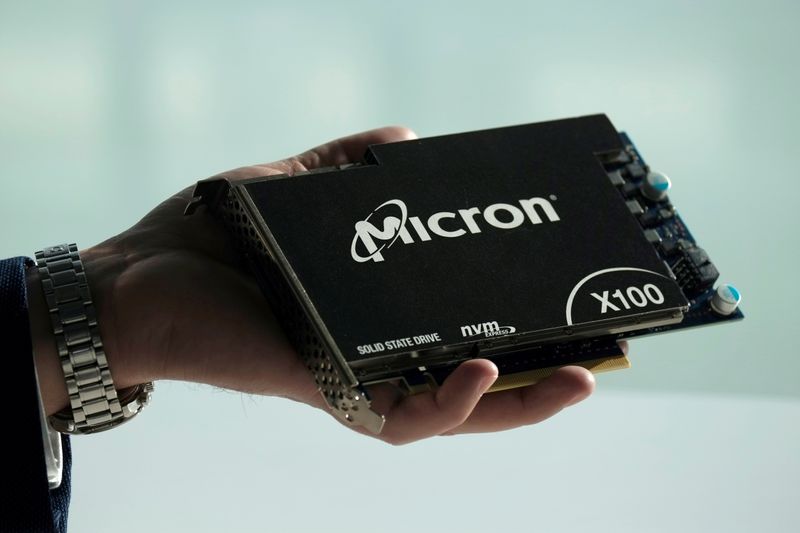
Micron Executive VP Sumit Sadana sold 24,000 shares on April 10, 2026 at $421.00-$421.865, totaling $10.11 million and leaving him with 224,021 shares. The article also cites a mix of bullish and cautious analyst actions, including price targets ranging from $535 to $825 and a downgrade to Hold amid concerns about free cash flow and capital spending. Micron shares were trading at $465.42, near a 52-week high of $471.34, after a 557% gain over the past year.
The signal here is less about the one insider sale and more about positioning at the end of a reflexive re-rating cycle. When a stock has already repriced on the assumption that supply tightness persists for multiple years, insider distribution—especially by a senior operator with direct knowledge of capex, customer negotiations, and margin normalization—often marks a shift from narrative expansion to execution risk. The market is still pricing scarcity as if it were permanent; the first-order issue is that memory is one of the fastest semiconductor subcycles to revert once incremental wafer starts and pricing discipline loosen.
The deeper risk is that consensus is extrapolating peak pricing power into 2027 while ignoring second-order capex drag and customer pushback. If hyperscalers and OEMs have already locked in supply with floors and prepayments, that supports near-term visibility but can also cap upside by turning future demand into an amortization exercise rather than a pricing windfall. In that setup, the marginal increment to earnings comes from utilization and mix, not price, which makes the stock much more sensitive to any disappointment in gross margin than to continued revenue growth.
Contrarian read: the stock may be expensive even if it is not “overvalued” on static fair-value models, because those models underweight cycle inflection risk and capital intensity. The best risk/reward likely sits in the next 3-6 months, where the setup can still grind higher on analyst target revisions, but the asymmetry worsens as investors realize free cash flow conversion is the real bottleneck. If memory pricing merely stabilizes instead of reaccelerating, the multiple can compress well before fundamentals deteriorate visibly.
AI-powered research, real-time alerts, and portfolio analytics for institutional investors.
Overall Sentiment
neutral
Sentiment Score
0.05
Ticker Sentiment
