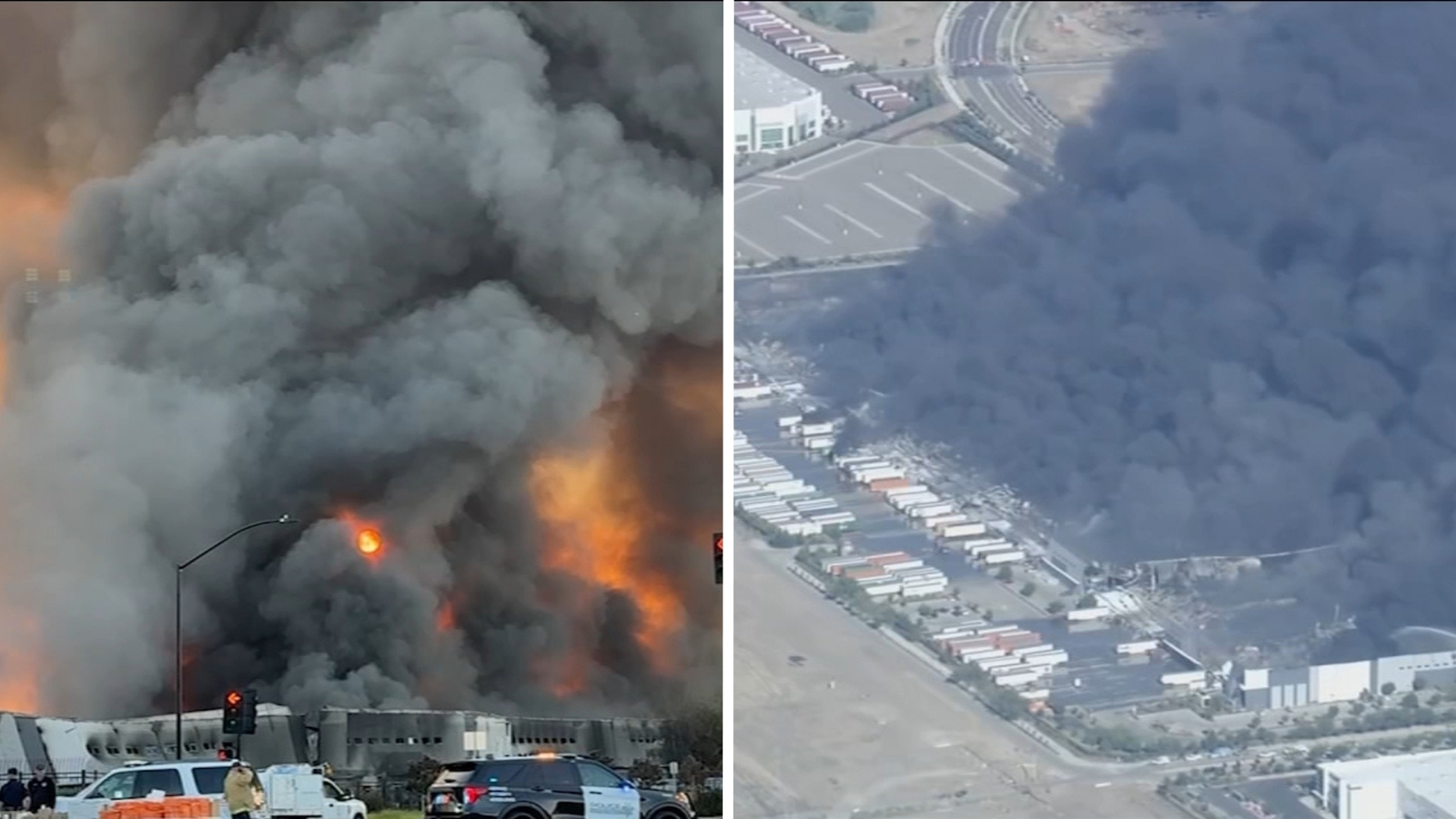
A major fire at Medline's Tracy, California distribution warehouse disrupted operations at a facility of over 1 million square feet, with officials saying the site employs 900 people but had only 120 workers present at the time. Firefighters reported sprinkler failure and nonfunctioning yard hydrants, while hazardous materials concerns included lithium-ion batteries that can generate hydrogen fluoride gas when burned. The incident threatens supply-chain continuity for Medline's medical goods distribution across Northern California and may cause near-term operational disruption.
The immediate market read is not the fire itself, but the fragility it exposes in a mission-critical node of the healthcare distribution network. A single-site interruption at a large, centralized fulfillment hub can create a multi-week service gap even if inventory is eventually recovered, because re-slotting, lane re-prioritization, and regulatory handling of damaged or contaminated product all slow recovery. That makes this more than a local property loss event: it is a stress test for hospital, clinic, and nursing-home replenishment buffers across Northern California.
For logistics peers, the bigger second-order effect is operating discipline around fire suppression, hazardous storage, and battery-bearing automation equipment. Expect insurers to push through higher premiums, tougher exclusions, and more stringent engineering requirements for large-box distribution centers over the next 1-3 renewal cycles, which raises opex and capex for warehouse owners and third-party logistics operators. The liability overhang is also asymmetric: even if direct damage is contained, any finding that suppression systems or site maintenance failed could expand into litigation, business interruption disputes, and customer contract churn.
FDX is not a direct fundamental loser from the incident, but it can become a short-term beneficiary if it absorbs diverted medical freight and time-sensitive replenishment volume. The near-term risk is more about network congestion and expedite costs than lost demand; if adjacent routes are re-routed through more expensive air or less efficient ground capacity, margins can get pressured for a few quarters. The contrarian angle is that the market may over-rotate on a single-event narrative; unless there is evidence of systemic facility control failures across the sector, the durable implication is higher risk premium, not a broad collapse in logistics throughput.
AI-powered research, real-time alerts, and portfolio analytics for institutional investors.
Request DemoOverall Sentiment
strongly negative
Sentiment Score
-0.55
Ticker Sentiment
