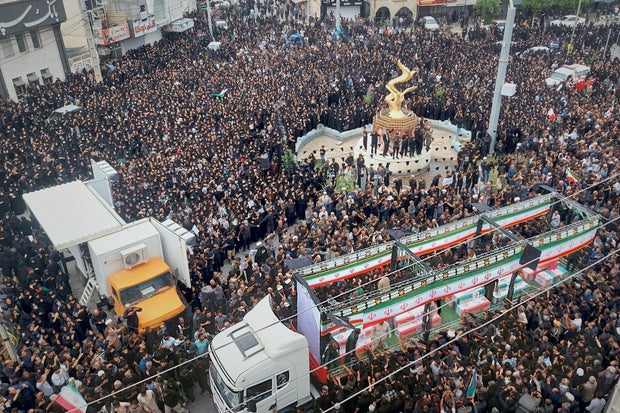
An explosion at the Shajareh Tayyebeh girls' school in Minab, southern Iran—which Tehran says killed as many as 175 people, mostly young schoolgirls—has been blamed by Iranian authorities on U.S.-Israeli strikes; both Washington and Israel deny responsibility and the Pentagon is investigating. The site lies near IRGC facilities and close to the Strait of Hormuz, raising risks of regional escalation and potential disruptions to oil and shipping flows, though independent verification is limited. Markets should monitor developments for geopolitical spillovers that could pressure energy prices and trigger risk-off positioning among investors.
Market structure: Immediate winners are oil exporters and defense/security services (XOM, CVX, LMT, RTX) as risk to Hormuz-driven seaborne flows (~20-30% of Gulf exports) lifts near-term Brent/WTI volatility; losers include airlines (JETS/AAL), regional EM assets (EEM, Gulf banks) and shipping-dependent supply chains as insurance and rerouting raise costs 5-15%+. Cross-asset: expect a classic risk-off move—gold (GLD) and USD up, 10y Treasuries rally (TLT), and corporate credit spreads (HYG/JNK) widen by 25–75bps in days.
Risk assessment: Tail risks include closure/major disruption to the Strait of Hormuz (low prob, high impact) that could remove 3–5% of global oil supply and spur a $20+/bbl jump; U.S./Israeli direct involvement would trigger broader sanctions and EM capital flight. Time horizons: immediate (0–7 days) volatility spikes; short-term (1–3 months) tactical commodity and FX dislocations; long-term (3–12 months) potential structural uplift to defense budgets and insurance/shipping costs. Hidden deps: shipping insurance, OPEC spare capacity, and attribution findings (Pentagon/UN) will reprice risk quickly.
Trade implications: Tactical options on oil (1–3 month call spreads, 0.5–1.5% portfolio) and buying defensive cyclicals (2–3% in LMT/RTX, 6–12 month horizon) hedge the shock; pair trades—long defense vs short airlines (long LMT/short JETS, 2:1 notional) capture relative winners. Use short-duration sovereign/EM protection (buy 3-month EEM puts or CDS) to guard against 5–15% EM drawdowns.
Contrarian angles: The market often overshoots on attribution uncertainty—2019 tanker incidents gave only transient oil moves (~$5–10). If investigations in 7–14 days fail to implicate a state actor, oil and defense premiums could retrace 30–60%. Prefer structured/optioned exposure and threshold-based scaling (buy more only if Brent > +$10 from today's level or if confirmed attacks on commercial shipping occur).
AI-powered research, real-time alerts, and portfolio analytics for institutional investors.
Request TrialOverall Sentiment
strongly negative
Sentiment Score
-0.60
