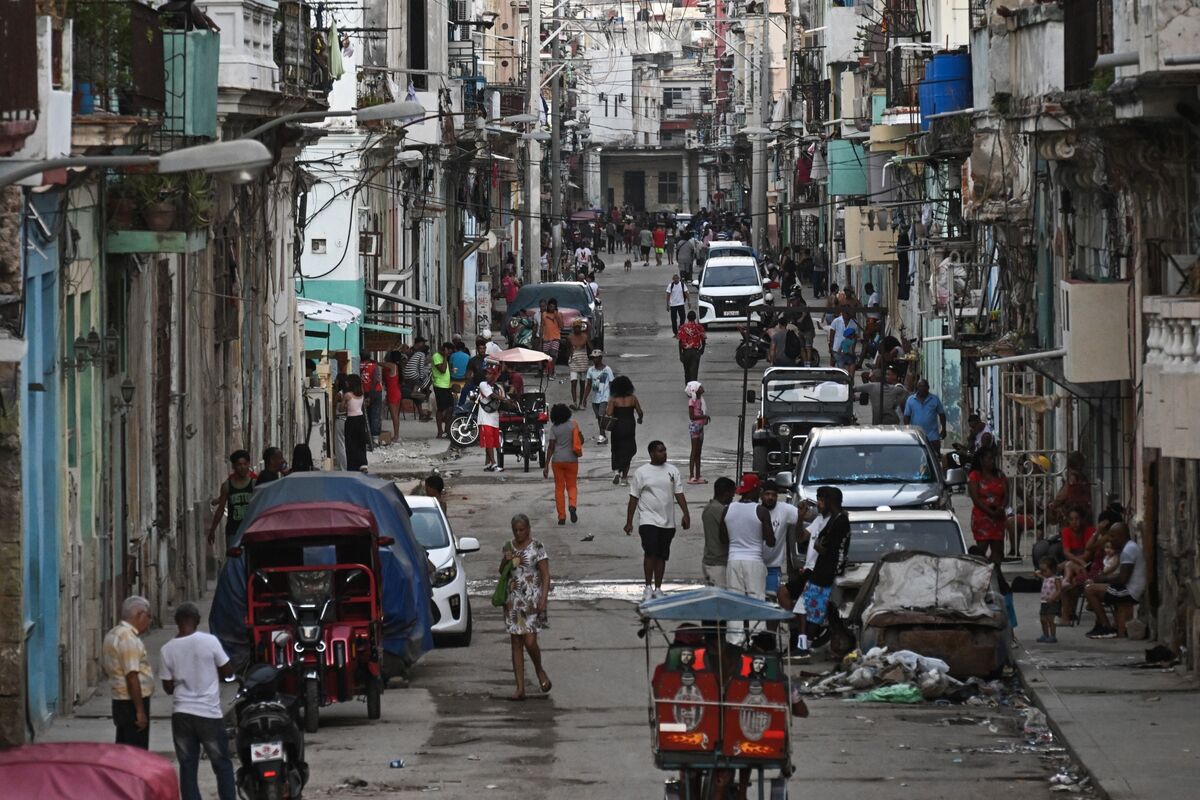
Cuba has not received fuel for more than three months under a US-imposed economic blockade, according to President Miguel Díaz-Canel. On March 16 President Donald Trump said he believed he could 'free' and 'take' Cuba following US actions in Venezuela and Iran, signaling heightened risk of further sanctions or intervention. The immediate effect on global markets is limited, but the situation materially raises geopolitical and regional energy-supply risk and threatens Cuba's economic stability.
A targeted energy-supply disruption to a small, import-dependent Caribbean state will have outsized local humanitarian impact but only modest direct crude-flow consequences for global markets; the real market signal is the escalation of sanctioning tools and insurance/frieght premia that ripple across regional logistics. Expect bunker and short-haul tanker dayrates to rise first — a 20-40% move in Aframax/Suezmax short-haul rates would effectively add $0.50–$3.00/bbl to delivered costs for refiners sourcing heavy/sour barrels from nearby suppliers within 30–90 days.
Refiners with coking capacity and flexible slate economics (Gulf Coast complex refineries) are second-order beneficiaries: they can capture the widening heavy-sour premium if alternative sources tighten, translating each $1/bbl tightening into roughly $50–120M incremental EBITDA across the largest complexes over a 3-month window. Conversely, light-sweet focused producers and regional traders who relied on low-cost, sanctioned barrels will suffer margin compression and inventory valuation hits in the same timeframe.
Tail risks are asymmetric: kinetic escalation or a broader naval interdiction could create a short, sharp oil-risk premium spike of $5–$15/bbl within days; diplomatic accommodation or rapid re-routing of cargoes would likely reverse 60–120 days later. Political spillovers matter for positioning — migration/political shocks can trigger rapid policy tightening (export controls, port denials) that are binary catalysts for shipping and commodities desks.
Consensus currently prices this as a localized, protracted disruption; the contrarian angle is that market participants underprice the mobility of crude supply and the speed of alternative commercial re-routing. That suggests buyable, short-dated convexity (options on Brent/WTI, freight optionality) and relative-value exposure to refiners vs. upstream names rather than outright long crude for a long-dated structural thesis.
AI-powered research, real-time alerts, and portfolio analytics for institutional investors.
Request DemoOverall Sentiment
strongly negative
Sentiment Score
-0.60
