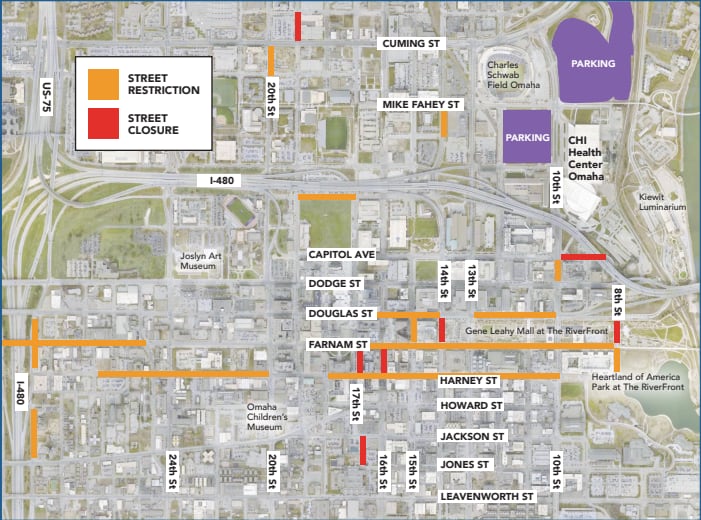
Berkshire Hathaway’s 2026 annual meeting weekend in Omaha is set for Friday-Sunday, with Greg Abel presiding after Warren Buffett’s retirement in December. The event will be complicated by major Omaha Streetcar and Eppley Airfield construction, while shareholders also face clear-bag rules, credential pickup, shopping events, a Saturday meeting, and a Sunday 5K. The article is largely logistical and event-oriented, with no material financial update on Berkshire’s operations.
The near-term beneficiary set is less about Berkshire itself and more about the local scarcity economy created by the event under construction. The combination of transit disruption and high visitor density should tighten short-duration demand for premium downtown lodging, ride-hail, food service, and airport throughput, which can create outsized temporary pricing power even if aggregate tourist counts are unchanged. For a few days, the relevant trade is on operational bottlenecks, not fundamentals.
For BRK.B, the larger second-order issue is signaling around succession rather than the meeting mechanics. A smooth, credible handoff to Greg Abel reduces governance overhang and could compress the Buffett-dependent “key-man discount” over months, but that benefit is already partially anticipated and likely to show up first in lower implied volatility rather than a sharp directional rerate. The bigger medium-term risk is any indication that capital allocation discipline changes, since Berkshire’s valuation premium is anchored more in trust than in growth.
The transport/logistics angle is the cleaner short-term catalyst: airport, shuttle, and last-mile providers should see temporary volume spikes, but anything constrained by labor or fleet availability may actually be the winner through surge pricing. The contrarian point is that disruption can be additive to local spend; if attendees are forced to cluster around fewer viable routes and venues, wallet share per visitor can rise even as convenience falls. The market may be underestimating how much of the weekend’s economic value gets shifted from transportation efficiency into discretionary spend and premium services.
Catalyst window is immediate to one week, with the only meaningful reversal being an operational easing or weather-related attendance miss. Over a longer horizon, the meeting’s post-Buffett framing matters more than the weekend traffic itself, because it can influence how investors think about BRK.B’s capital returns and conglomerate premium into the next 2-3 quarters.
AI-powered research, real-time alerts, and portfolio analytics for institutional investors.
Request DemoOverall Sentiment
neutral
Sentiment Score
0.05
Ticker Sentiment
