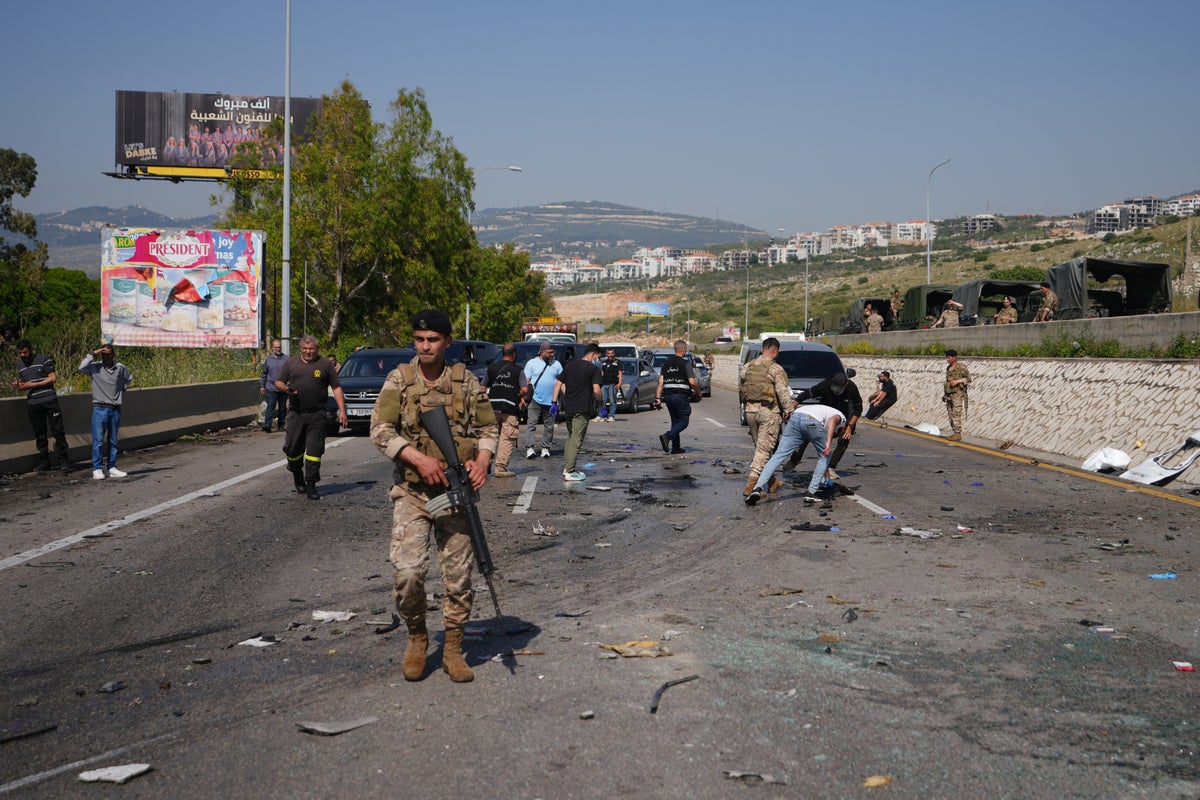
Israeli strikes in Lebanon killed at least 13 people, including four in drone attacks south of Beirut and a man and his 12-year-old daughter in Nabatiyeh, marking a sharp escalation despite the ceasefire. The Health Ministry said one airstrike in Saksakiyeh killed at least seven and wounded 15, while Israel said Hezbollah drone attacks wounded three soldiers near the border. The renewed violence raises regional conflict risk and could weigh on broader Middle East markets and sentiment.
This is less about the headline casualty count and more about the market shifting from a contained border conflict to a recurring capital-region security premium. Once strikes repeatedly reach the Beirut corridor, the probability distribution changes for Lebanon’s sovereign trajectory: capital flight accelerates, FX pressure intensifies, and any fragile reconstruction/IMF narrative becomes harder to underwrite. The second-order effect is on logistics and insurance rather than direct military assets — road transit, port adjacencies, and civil aviation risk premia can reprice quickly even if energy infrastructure is not directly targeted.
The main beneficiary is Israel’s deterrence posture in the near term, but the tradeable winners are more nuanced: regional defense suppliers, ISR/drone-adjacent names, and maritime insurance/war-risk underwriters if escalation spills toward Lebanese ports or shipping lanes. The losers are Lebanese banks, dollar funding channels, and any EM credit with quasi-contagion exposure to Levant risk; the move is especially toxic for any asset dependent on a ceasefire-enabled normalization path. If this remains a tit-for-tat pattern, the market impact will be episodic; if one strike triggers a mass-casualty event or hits a high-visibility Beirut asset, you get a sharp regime shift in risk pricing within hours.
The contrarian view is that the market may already be discounting “permanent instability” for Lebanon, but not enough decay in medium-term reconstruction optionality. That creates asymmetric downside in local equities and credit, yet limited downside for global risk assets unless the conflict broadens into Syria or energy/shipping chokepoints. The key catalyst to watch over the next 2-6 weeks is whether Washington-mediated talks constrain escalation; if they fail, expect higher odds of sanctions tightening, humanitarian aid diversion, and a further deterioration in Lebanese external funding conditions.
AI-powered research, real-time alerts, and portfolio analytics for institutional investors.
Request DemoOverall Sentiment
extremely negative
Sentiment Score
-0.90
