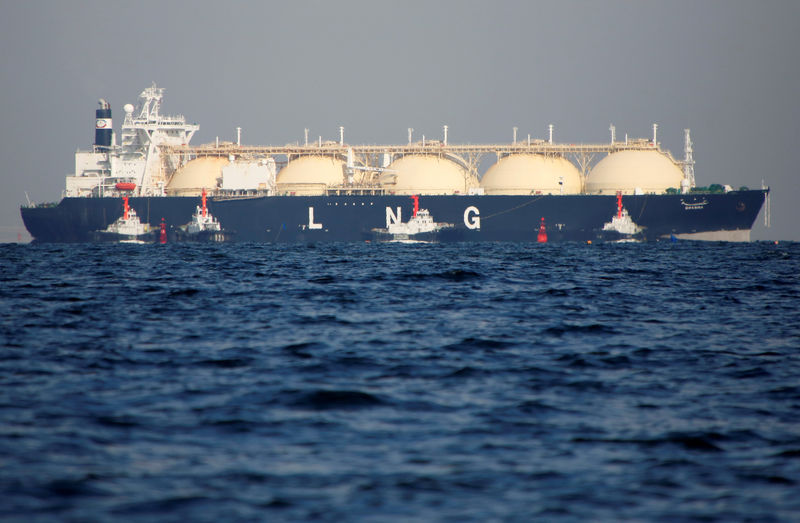
European natural gas prices fell to over one-month lows, with Dutch front-month futures at 41.4 per megawatt hour and UK gas below 100 pence per therm at 98.69. The move reflects easing Middle East supply fears after fresh details on a U.S.-Iran peace deal and Washington's planned sanctions waiver on Iranian crude, which is removing the conflict premium from energy markets. The sell-off is deflationary for Europe and could ease pressure on industries and central banks.
This is less about a one-day gas move and more about a regime shift in Europe’s input-cost structure. The market is rapidly stripping out geopolitical scarcity premium, which matters because European gas has been the marginal price setter for a wide swath of industrial power, fertilizer, and chemical economics. If this repricing holds for even a few weeks, the second-order effect is a meaningful easing in forward inflation expectations and a relative uplift to European cyclicals versus U.S. peers with less energy sensitivity.
The most important implication is for positioning, not just fundamentals: systematic and discretionary traders who were long energy hedges will be forced to unwind, creating air pockets lower than the spot news flow alone would justify. That can amplify downside over the next 1-3 weeks, especially in front-month contracts and European utilities with less flexible procurement. However, the move is vulnerable to a fast reversal if the deal implementation stalls, sanctions relief proves partial, or any shipping disruption reintroduces tail-risk pricing.
Consensus may be underestimating how quickly lower gas can feed through to equity dispersion. European industrial margins should improve before analysts move estimates, while domestic gas producers and LNG-linked names could de-rate if the market starts pricing a lower terminal gas curve rather than a temporary relief rally. For U.S. equities, the article’s AI-stock tease is noise, but the broader takeaway is that lower Europe energy costs remove one macro headwind for global risk assets, potentially supporting multiple expansion in high-duration names if rates remain stable.
The contrarian risk is that the market is assuming too much normalization too soon. If this is only a headline-driven de-escalation and not a durable supply re-routing, the current low-vol basis could prove too shallow; in that case, short-vol positioning in energy becomes dangerous and the best trade is fade-the-fade. The optimal horizon is measured in days-to-weeks for the gas leg, but months for the inflation and sector-rotation consequences.
AI-powered research, real-time alerts, and portfolio analytics for institutional investors.
Request DemoOverall Sentiment
neutral
Sentiment Score
0.05
Ticker Sentiment
