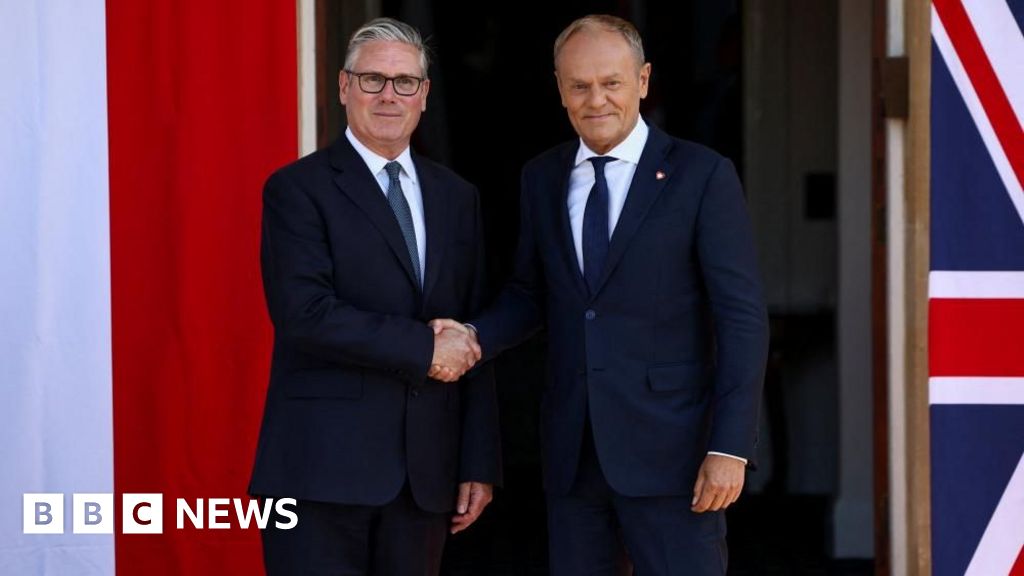
The UK and Poland signed a new defence and security treaty, with Sir Keir Starmer framing Russian aggression as the central threat and describing the pact as a "generational uplift." The agreement focuses on defence cooperation, cyberattack response, border security, organised crime, and a new joint action plan on irregular migration. The article is largely geopolitical and policy-focused, with limited immediate market impact.
The incremental economic value of this treaty is likely to show up less in headline defense procurement and more in the plumbing: cyber, border tech, logistics, and domestic security vendors with exposure to UK/EU public-sector spend. The second-order beneficiary is the ecosystem around secure communications, identity verification, drone detection, and managed cyber services; those budgets tend to be sticky and can re-rate faster than traditional platforms because they are justified as resilience spend rather than discretionary modernization. The bigger market implication is a broader European normalization of security-linked fiscal spending. If the UK frames migration, cyber, and defense as one integrated threat surface, it increases the odds that similar “whole-of-state” procurement models spread across NATO members, which is positive for contractors with multi-domain offerings and negative for pure-play legacy defense primes that are slower to attach software and border-security revenue. The risk is execution: if the treaty is seen as largely symbolic, budget release may lag rhetoric by 6-12 months, and the market will fade any short-term rally in defense proxies. A useful contrarian read is that this is not primarily a defense treaty; it is a political vehicle to expand security cooperation into areas where governments can actually spend quickly. That means the immediate upside may sit in cyber and security integrators, while the obvious defense names see little fundamental change. The main tail risk is policy fragmentation—if migration becomes contentious, it could stall follow-through on the broader package, making this a slower-burn thematic than the headline suggests.
AI-powered research, real-time alerts, and portfolio analytics for institutional investors.
Overall Sentiment
neutral
Sentiment Score
-0.10
