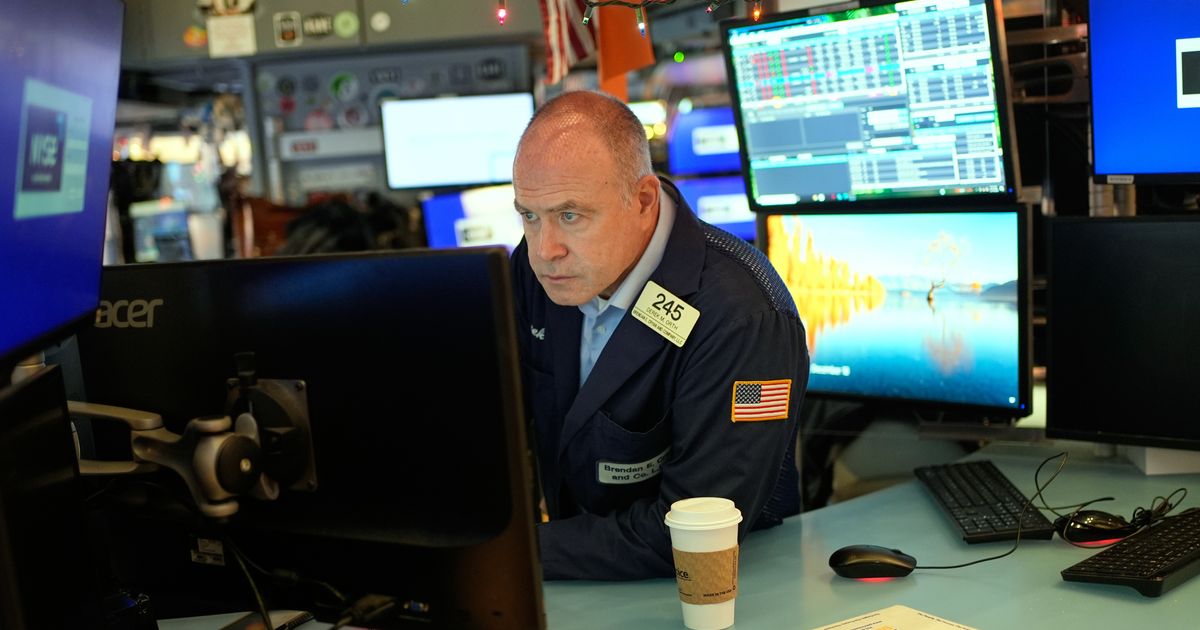
U.S. equity indexes were largely unchanged on a holiday-shortened session as markets hovered near record levels amid expectations the Federal Reserve will hold rates at its January meeting. Key economic signals were mixed: inflation remains elevated and consumer confidence is weak, but weekly jobless claims fell by 10,000 to 214,000 (below the 232,000 FactSet forecast). M&A drove idiosyncratic action as Dynavax Technologies jumped ~38% after Sanofi agreed to acquire the vaccine maker for $2.2 billion; commodities were quiet with silver up >1% and U.S. crude rising 0.4% to $58.61/bbl. Investors should expect light volumes through the holiday and continued sensitivity to Fed guidance and incoming economic data.
Market structure: The Sanofi–Dynavax deal explicitly benefits DVAX shareholders (38% pop) and strategic acquirers with deep pockets (SNY) by concentrating vaccine IP and accelerating portfolio revenue near-term; competing vaccine developers (small-cap rivals) face pricing pressure on future asset valuations. Low holiday volumes and Fed-hold expectations imply muted rate volatility near-term, supporting equities but keeping bond yields rangebound; rising gold/silver reflect real-rate anxiety if inflation remains >3.5%.
Risk assessment: Tail risks include deal collapse, regulatory rejection of Dynavax assets, or an unexpected Fed hawkish move in Jan that re-prices equities and compresses M&A activity; probability low but impact high (equity draw 8-20%). Immediate (days) effects are liquidity-driven spikes and mean-reversion; short-term (weeks) will center on integration guidance and pipeline readouts; long-term (quarters) depends on vaccine uptake and pricing power vs. incumbents.
Trade implications: Do not chase DVAX after a 38% gap — realize gains and redeploy into acquirers or defensive cash-flow names; consider opportunistic SNY exposure on any 3-6% post-announcement pullback with 6–12 month horizon. Use cost-limited hedges: small SPY put-spread protection and 0.5–1% GLD allocation as inflation/rate tail hedges while rotating 1–2% from small-cap biotech (XBI) into large-cap pharma (PFE/SNY).
Contrarian angles: Consensus treats M&A as uniformly bullish for biotech — it’s selective: acquirers overpay for late-stage vaccine optionality and may under-deliver, creating 10–30% downside on bets that extrapolate transaction multiples. Historical parallels (2015–2017 pharma deals) show acquirer share underperformance for 6–12 months post-deal; position sizing and stop-losses should anticipate integration dilution and regulatory drag.
AI-powered research, real-time alerts, and portfolio analytics for institutional investors.
Request DemoOverall Sentiment
neutral
Sentiment Score
0.05
Ticker Sentiment
