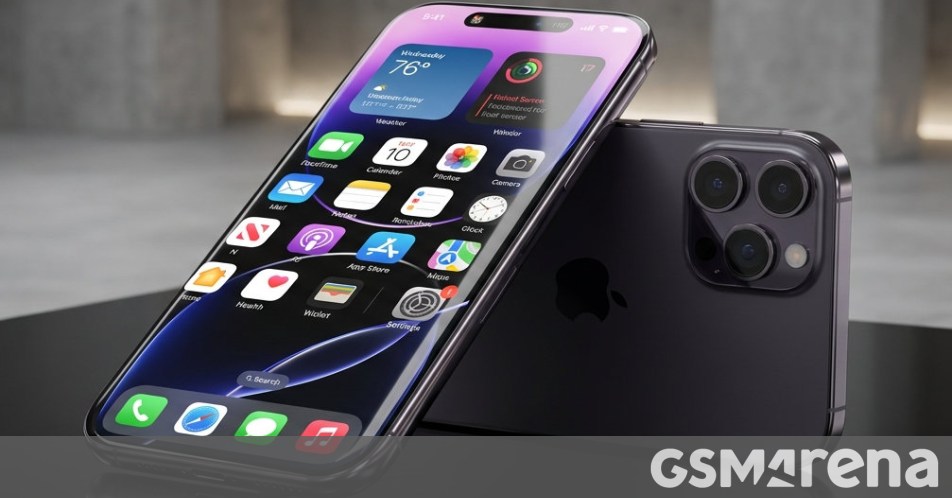
Apple is reportedly working with Samsung on a 20th-anniversary iPhone display featuring a polarizer-free, quad-curved design customized by Apple. The report is based on a leak and does not confirm a final product or launch timing beyond the 2027 anniversary context. The item is incremental product-speculation news with limited near-term market impact.
This is less about a near-term unit catalyst and more about Apple signaling another premium-cycle reset for FY27. A genuinely differentiated industrial design can expand the mix toward the highest ASP tiers, but the second-order effect is usually on carrier subsidies, trade-in economics, and accessory attach rather than headline iPhone units. If the form factor creates a new upgrade cohort, the real monetization is margin leverage: a few points of mix shift into Pro/Ultra tiers can matter more than mid-single-digit shipment growth.
The supply-chain implication is that Samsung Display gets a strategic validation win, but the bigger read-through is tighter lock-in across advanced OLED process capability. That should be incrementally positive for high-end display capex, materials, and test equipment, while pressuring rivals that rely on commodity OLED differentiation. On the handset side, Chinese OEMs may be forced into another round of aesthetic imitation, but Apple’s advantage is not the curve itself; it is ecosystem signaling that can force premium buyers to defer replacement until this redesign lands.
The contrarian risk is that “special anniversary iPhone” is already crowded into expectations 18-24 months ahead, so the market may have little incremental upside left if the leak merely confirms a visual refresh. More importantly, polarizer removal and aggressively curved glass raise yield, durability, and repair-cost risks; if early prototypes show fragility, Apple could pull back on the design or ship it only in limited SKUs. That creates a classic two-stage setup: hype can support sentiment into the launch window, but execution risk can cap multiple expansion until the supply chain proves manufacturability.
For competitors, the main loser is any Android OEM betting on design parity to close the premium gap; Apple moving first again can reset what “flagship” means and force higher bill-of-materials spend across the sector. For suppliers, the upside is concentrated in the few names with deep process ties to Apple-grade OLED and cover glass, while module assemblers could be squeezed if complexity reduces yields. The market should care less about the leak’s aesthetics and more about whether it implies a broader redesign cadence that keeps Apple in the highest gross-margin tier for another product cycle.
AI-powered research, real-time alerts, and portfolio analytics for institutional investors.
Request DemoOverall Sentiment
neutral
Sentiment Score
0.10
Ticker Sentiment
