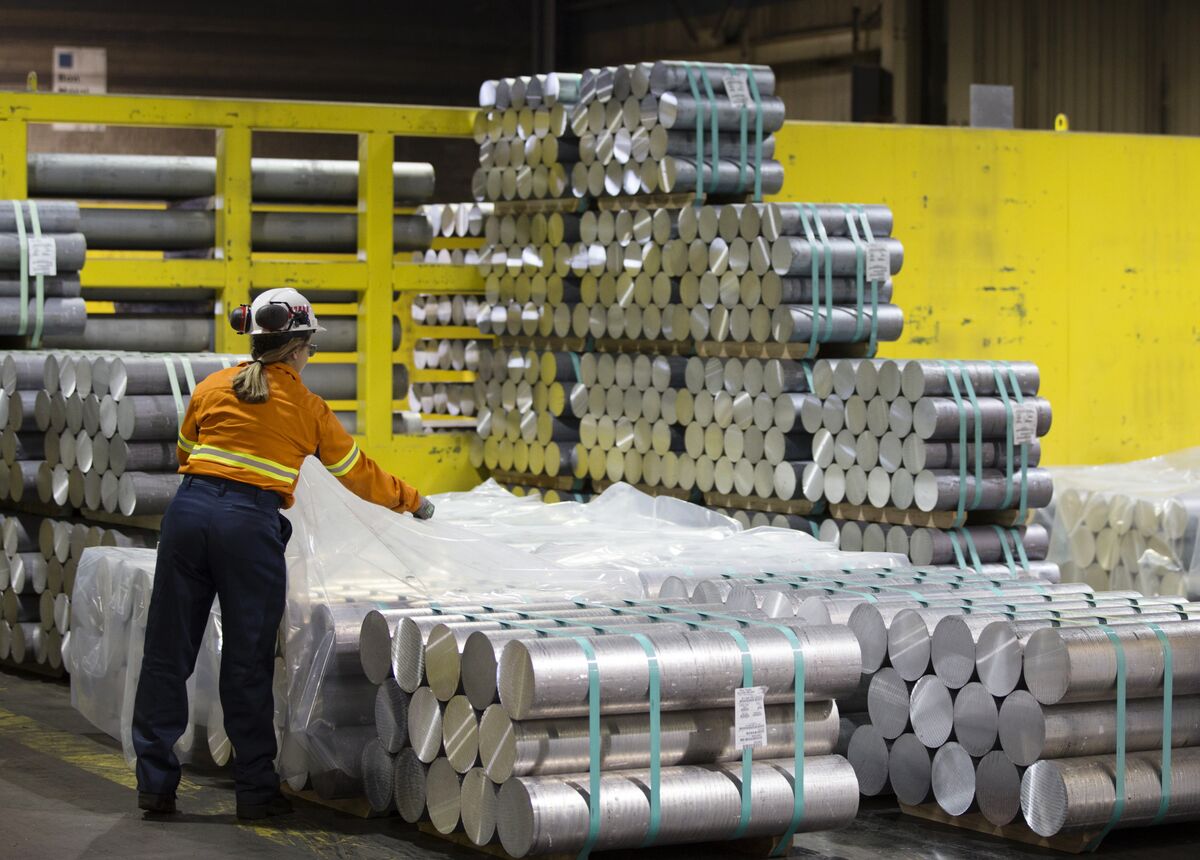
Aluminum producer Rio Tinto is now opting to purchase aluminum directly within the US market for resale to American customers, rather than importing its own Canadian-produced metal. This strategic shift is a direct consequence of President Trump's tariffs, which have made it economically more favorable for the global mining giant to buy domestically than to move its own cross-border supply.
U.S. tariffs have induced a significant operational pivot for Rio Tinto Group (RIO), one of the world's largest aluminum producers. The company, which traditionally supplied the U.S. market from its extensive Canadian operations including a refinery and five smelters, now finds it more economical to purchase aluminum within the U.S. for resale to its American customers. This counterintuitive strategy, where a major producer effectively becomes a buyer in its primary end-market, is a direct consequence of trade policy making its established cross-border supply chain financially disadvantageous. The negative sentiment score (-0.4 for RIO) indicates that investors perceive this as a disruptive event, likely leading to margin compression or increased logistical complexity. This development underscores the direct impact of trade policy on the operational models of global commodity producers and highlights their vulnerability to sudden geopolitical shifts.
AI-powered research, real-time alerts, and portfolio analytics for institutional investors.
Request DemoOverall Sentiment
mildly negative
Sentiment Score
-0.30
Ticker Sentiment
