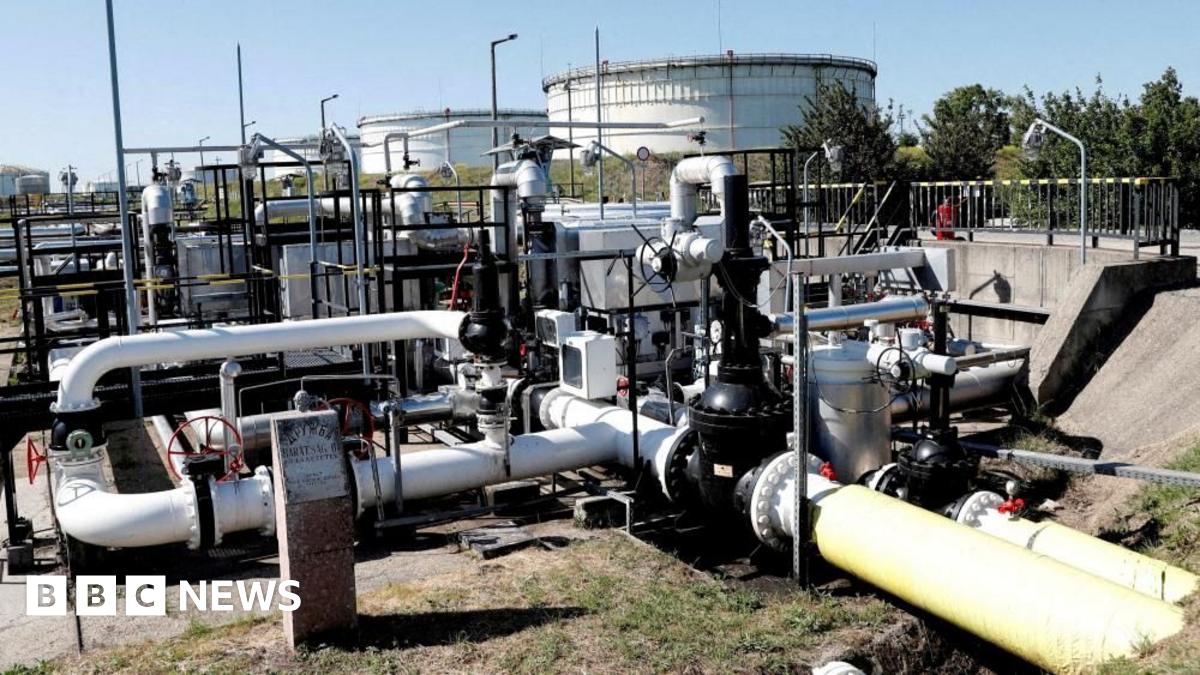
EU ambassadors gave preliminary approval to a €90bn loan package for Ukraine after oil flow through the Druzhba pipeline to Hungary and Slovakia resumed, ending the immediate deadlock. The package is tied to broader EU support and a 20th sanctions round on Russia, and is expected to be signed off Thursday, though disbursement could still take weeks. The article also flags Russia’s plan to halt Kazakh oil flows to Germany via Druzhba from 1 May, highlighting continued energy and geopolitical risk in Europe.
This is less about Ukraine funding and more about the market pricing of European governance risk. The removal of Hungary’s veto clears a path for a large, quasi-fiscal EU backstop, which should compress tail-risk premia in peripheral European assets and reduce the probability of a disorderly funding gap in Kyiv over the next 1-2 quarters. The second-order effect is that Brussels has demonstrated it can outwait bilateral extortion when leverage shifts, which weakens the value of future veto threats as a market-moving tactic.
The energy angle is more interesting than the headline suggests. The resumption of Druzhba flows removes an acute supply inconvenience for Hungary and Slovakia, but it also reduces near-term political pressure in a region where higher fuel costs would otherwise have fed into populist momentum. For refiners and downstream distributors in Central Europe, this is mildly negative for margin optionality; for pipeline and storage operators, it is a stabilizing event rather than a growth catalyst. The bigger risk is that Russia now has incentive to weaponize the Kazakhstan leg of Druzhba and other transit chokepoints, creating intermittent disruptions that are hard to hedge and can briefly reprice regional diesel cracks.
The contrarian point is that the market may be underestimating how much of this was a one-off political unwind rather than a durable normalization. If Hungary’s next government resets with Brussels, the probability of future EU-wide fiscal friction falls materially; if not, the old veto-playbook could re-emerge in a different form. Meanwhile, any renewed damage to Ukrainian energy infrastructure would quickly revive the same bargaining leverage, so the path from here is not linear even if the next funding vote is clean.
AI-powered research, real-time alerts, and portfolio analytics for institutional investors.
Request TrialOverall Sentiment
mixed
Sentiment Score
0.15
