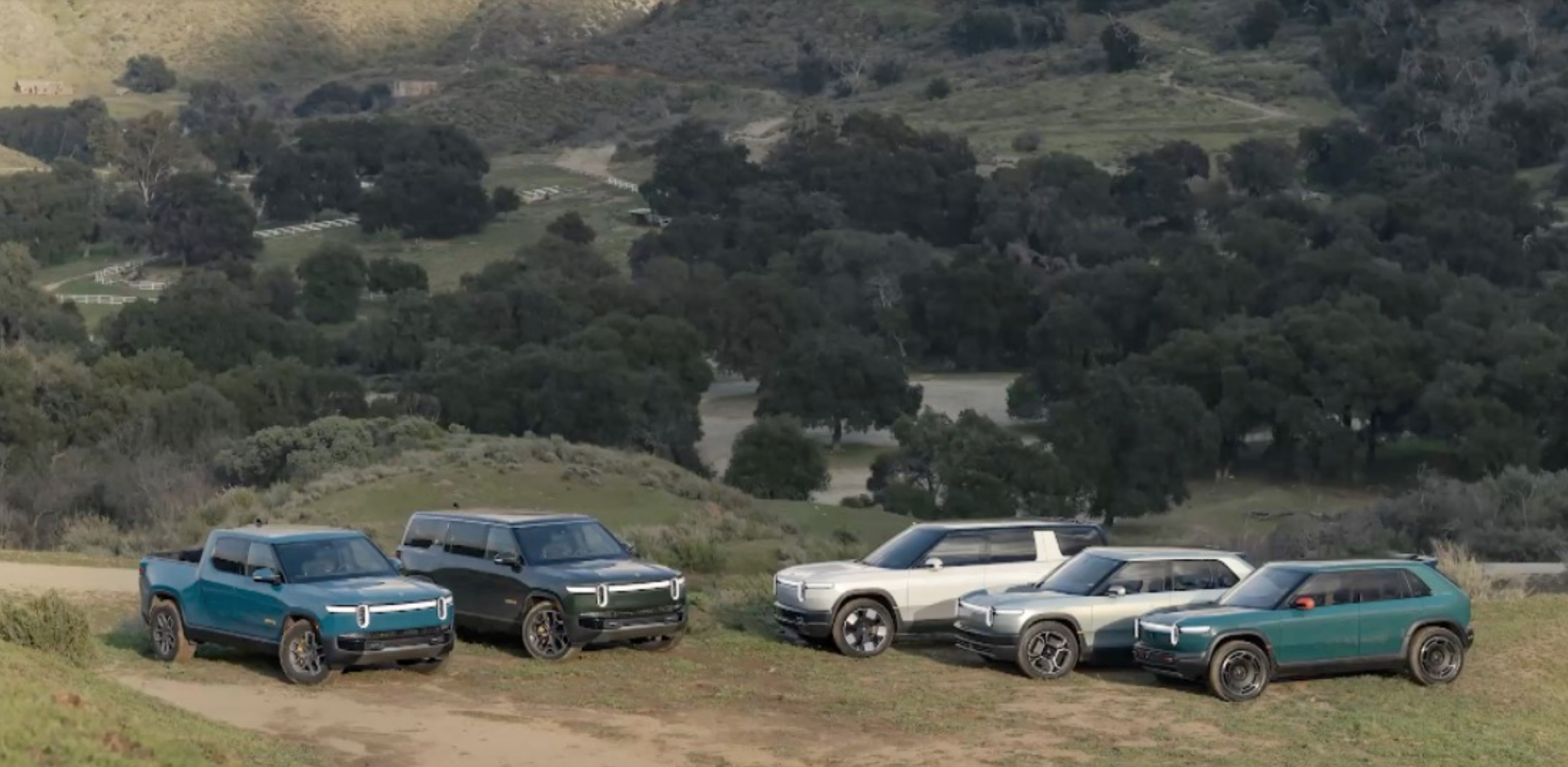
Electric vehicle startups Rivian (RIVN) and Lucid (LCID) are on divergent paths, with Rivian demonstrating a clearer route to profitability. Lucid, maintaining a high-end luxury focus with a slow production ramp (18,000-20,000 vehicles in 2025), reported a $1.5 billion operational loss in H1 2025, though it is supported by Saudi Arabia's sovereign wealth fund and a recent $300 million Uber investment for a robotaxi partnership. Conversely, Rivian, which targeted underserved market segments, is preparing to launch its more affordable R2 SUV ($45,000) next year, backed by a $1 billion equity investment from Volkswagen Group and $7.5 billion in cash after achieving positive gross profit for two consecutive quarters, positioning it for potential sustainable success.
Rivian Automotive (RIVN 0.85%) and Lucid Group (LCID 2.68%) were two start-up electric vehicle (EV) companies with plenty of potential several years ago. The world was in the midst of an EV cycle as many early adopters scooped up Tesla's leading EV offerings and others looked for alternatives. Rivian and Lucid focused on different consumer markets. Lucid's luxury Air sedan boasted leading battery range and performance technology. That came with a high price tag, though, leaving only wealthy consumers as the target. Rivian began to offer what Tesla didn't -- electric pickup trucks and a large SUV. Tesla is no longer the only game in town for EV buyers. Yet neither Rivian nor Lucid are sure to have sustainable success. One EV maker looks to have a much clearer path to profitability, though. Lucid still just caters to high-end buyers With a 2026 model year Lucid Air sedan starting at a price north of $70,000, it's clear that it won't be a mass-market EV. Lucid even offers a fully equipped Sapphire model for $249,000. On the surface, that might seem like a losing proposition for investors, but it's a business model that worked for Tesla. Tesla's idea was to begin to sell a relatively low volume of the Model S luxury sedan and its luxury Model X SUV to show off its EV technology and grow a core following. Tesla pivoted to the more affordable Models Y and 3, for which it ramped up production quickly. That led to soaring global sales. Consider that Tesla produced over 500,000 EVs in 2020, the year it began selling the popular Model Y. Lucid began selling its Gravity SUV this year and still only expects production of between 18,000 and 20,000 vehicles in 2025. A lower-priced model is scheduled for release late this year, but even that Touring model will be priced at close to $80,000. The slow ramp of selling volume helps explain why Lucid stock has struggled. The company has talked about future plans for more affordable models, but it may be taking too long to get there. Lucid continues to bleed cash with a loss from operations of about $1.5 billion in the first half of 2025. NASDAQ: LCID Key Data Points Lucid can manage those losses for now. It has financial backing from its largest shareholder, the sovereign wealth fund of Saudi Arabia. It also recently announced the closing of a $300 million investment from Uber Technologies. The two companies will partner for a premium global robotaxi program that will also help boost Lucid sales beyond its direct consumers. Rivian looks to boost sales quickly Rivian is doing things differently. First, it targeted a market in which Tesla doesn't participate. Its R1T electric pickup truck was unique when it launched. The R1S SUV was larger than Tesla's Model Y, and engineered more for off-road adventure. Most importantly, Rivian will begin selling a next-generation R2 SUV next year. The R2 is modestly priced, starting at $45,000. Rivian also has strong financial backing. Volkswagen Group made a $1 billion equity investment in June. That was part of a prior agreement and was triggered by Rivian posting its second quarterly period of positive gross profit in Q1. As of the end of June, Rivian had about $7.5 billion in cash and equivalents on its balance sheet. Rivian expects to start deliveries of the R2 in the first half of 2026. While production levels will be relatively flat year over year in 2025, next year could be pivotal for Rivian. Manufacturing is being impacted this fall as the company increases annual production capacity of its Illinois factory to approximately 215,000 units. NASDAQ: RIVN Key Data Points There's no guarantee that the R2 and subsequent smaller R3 will be commercial successes. If those vehicles do sell well, though, Rivian will be on a path to profitability. That makes it a better stock than Lucid to own in 2025. Rivian and Lucid are pursuing divergent strategies within the competitive EV market, with Rivian demonstrating a more tangible path toward profitability. Lucid remains focused on the high-end luxury segment, with its Air sedan priced above $70,000, and is projected to produce only 18,000 to 20,000 vehicles in 2025. This slow production ramp contributes to significant financial strain, evidenced by a $1.5 billion operational loss in the first half of 2025. While the company is well-capitalized through backing from Saudi Arabia's sovereign wealth fund and a recent $300 million investment from Uber for a robotaxi venture, its path to mass-market scale and profitability appears protracted. In contrast, Rivian is strategically transitioning from its niche in electric trucks and large SUVs to the mass market with its upcoming R2 SUV, priced at a more accessible $45,000 and slated for a 2026 launch. The company's recent performance includes achieving its second consecutive quarter of positive gross profit, which triggered a $1 billion investment from Volkswagen Group. With a robust cash position of $7.5 billion and an ongoing factory upgrade to increase annual capacity to 215,000 units, Rivian is positioning itself for a pivotal expansion, contingent on the R2's market success.
AI-powered research, real-time alerts, and portfolio analytics for institutional investors.
Request DemoOverall Sentiment
mixed
Sentiment Score
0.15
Ticker Sentiment
