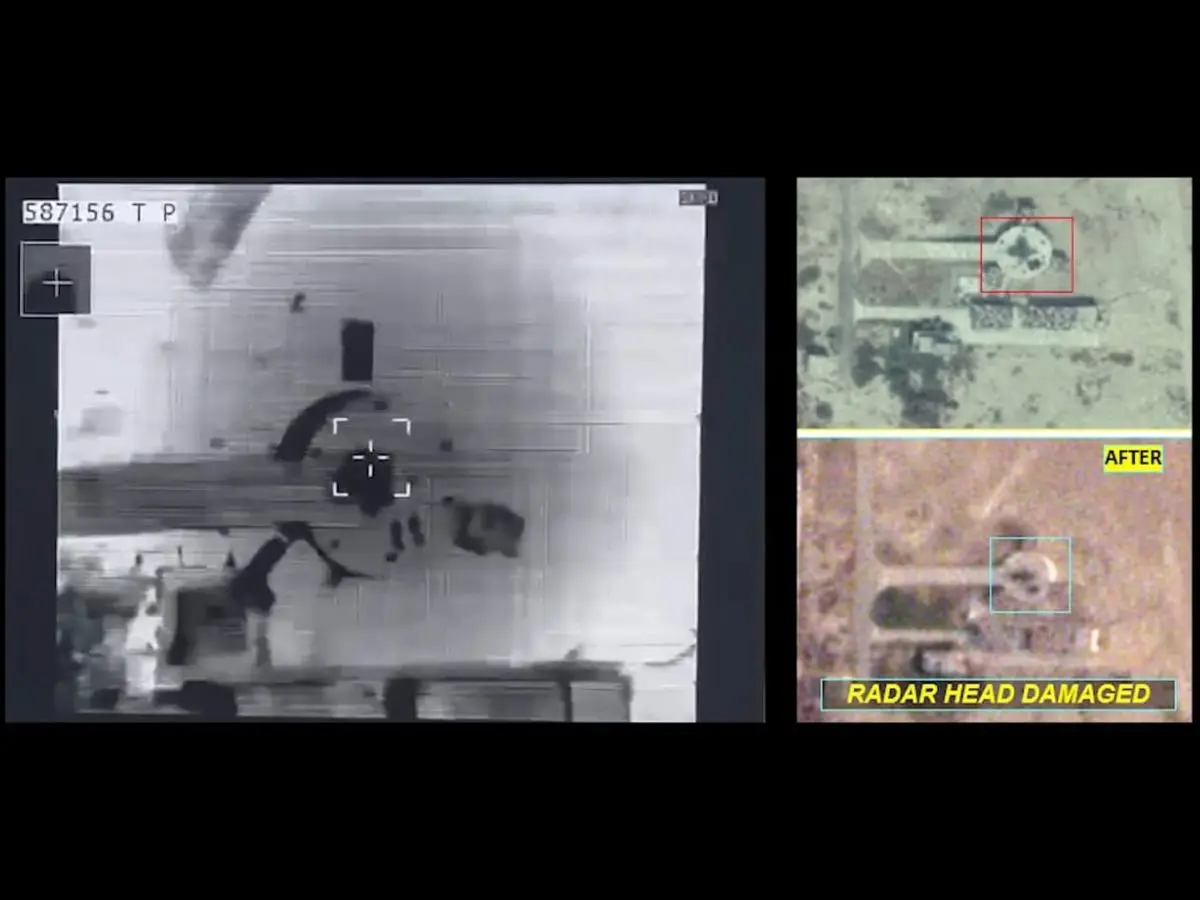
India released first-ever footage of a damaged Pakistani radar in its Operation Sindoor documentary, marking the mission’s first anniversary. Former DGMO Rajiv Ghai said the operation killed more than 100 Pakistani soldiers and over 100 terrorists, and destroyed 13 Pakistani fighter jets and 11 military bases. The strikes were launched on May 7, 2025 in retaliation for the Pahalgam attack that killed 26 people, keeping India-Pakistan geopolitical risk elevated.
The immediate market read is not about battlefield damage so much as signaling: by formally publicizing target-level success, India is trying to harden deterrence while preserving escalation optionality. That matters for regional risk premia because it raises the odds that any future cross-border incident is met with a quicker, more overt response, which typically widens implied volatility in Indian assets for days, not months. The first-order beneficiaries are domestic defense electronics, UAV, and counter-drone suppliers, while the second-order losers are Pakistan-linked sovereign risk, regional carriers, and any business line exposed to border friction or insurance repricing.
The more interesting second-order effect is capex reallocation. If the lesson internalized by South Asian militaries is that radar, air-defense, and electronic-warfare layers are the weak links, procurement budgets should tilt away from legacy platforms and toward sensors, decoys, C4ISR, and loitering munitions over the next 2-4 quarters. That is structurally bullish for Indian defense integrators with indigenization exposure and for global primes with subcomponent content, even if headline conflict intensity fades.
The contrarian view is that this can be a fade if the documentary is a signaling peak rather than a prelude to renewed action. Markets often overprice kinetic escalation and underprice the return to managed deterrence; if both sides want to avoid economic spillover, volatility can mean-revert quickly after the messaging cycle. The tail risk is a misread by the other side that forces a reciprocal response, in which case the downside is concentrated in Indian equities’ risk premium compression rather than direct earnings damage.
AI-powered research, real-time alerts, and portfolio analytics for institutional investors.
Request DemoOverall Sentiment
neutral
Sentiment Score
-0.10
