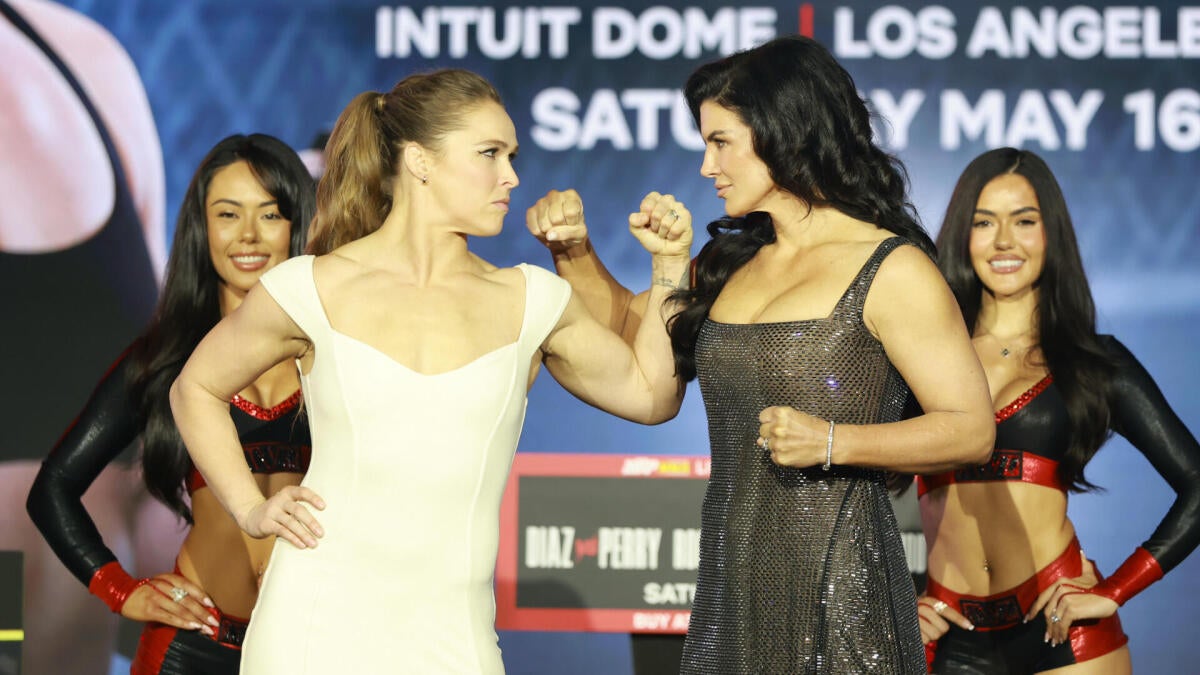
MVP’s MMA debut on May 16 features Ronda Rousey vs. Gina Carano, with Nate Diaz vs. Mike Perry and Francis Ngannou vs. Philipe Lins among the main attractions. The event will be streamed on Netflix for the main card and YouTube for prelims at Intuit Dome in Inglewood, California. The article is primarily a fight-card preview with odds and event details, with limited direct market relevance beyond entertainment/media promotion.
NFLX is leveraging a one-off combat-sports event as a low-cost customer acquisition spike, but the bigger read-through is not the live event itself; it is the test of whether spectacle can improve retention and ad-tier engagement enough to justify a recurring sports-like programming lane. If the stream is clean and social buzz is high, the company gets an option value boost because future event economics can be amortized across a larger ad-supported base. If execution fails, the market will likely treat this as marketing spend with limited durable lift, which caps any near-term multiple expansion.
The competitive dynamic is asymmetric: traditional media rights holders are forced to watch a platform with superior distribution, global scale, and weaker dependence on event exclusivity experiment with a format that is easier to monetize through subscriptions and ads than premium season-long sports. That creates pressure on niche combat-sports and sports-adjacent promoters to sell scarcity harder, while also raising the bar for UFC-style premium pricing. The second-order effect is that successful non-UFC combat events could fragment fighter bargaining power and increase the number of credible venues for marquee talent, but only if viewership converts into sustained audience behavior rather than a single-night curiosity spike.
Catalyst risk is concentrated in the next 24-72 hours: stream quality, social virality, and whether the event creates incremental sign-ups versus cannibalizing existing subscribers’ time. Over 1-3 months, the real question is whether management frames this as a template for more live events; that would matter much more than initial ratings. The contrarian view is that expectations may be too low on monetization and too high on permanence: even a modestly successful debut could matter if it proves NFLX can own low-frequency, high-engagement live events without inheriting the full cost structure of sports rights.
The main tail risk is that a poor live experience reinforces the market’s skepticism about NFLX in live programming, which would keep any positive sentiment short-lived. Conversely, a strong outcome could force shorts to re-rate the platform’s ad-tier and engagement optionality faster than consensus expects.
AI-powered research, real-time alerts, and portfolio analytics for institutional investors.
Request DemoOverall Sentiment
neutral
Sentiment Score
0.10
Ticker Sentiment
