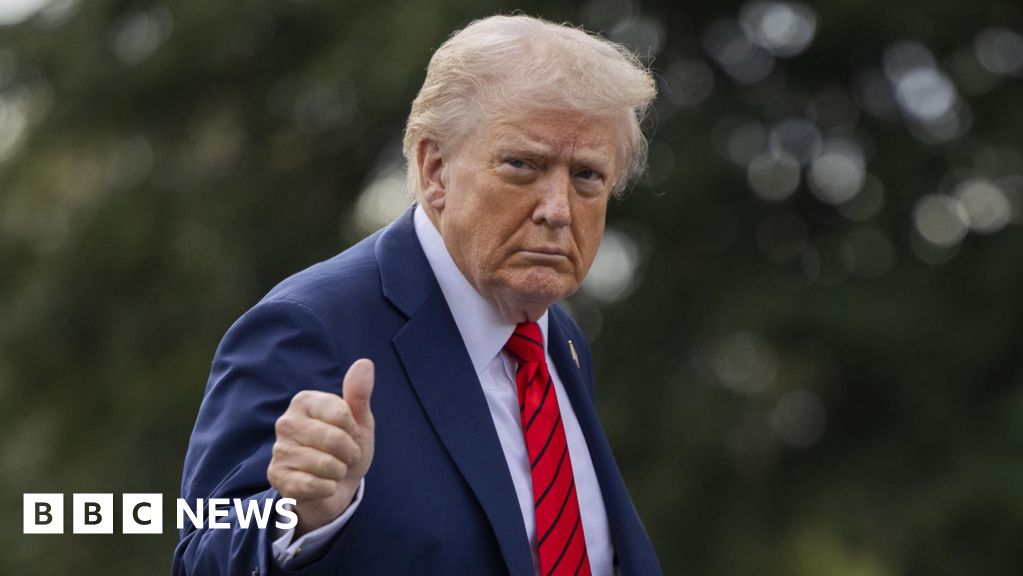
The article focuses on the political and public-relations significance of U.S. presidents' annual medical exams rather than a new medical event. It highlights renewed scrutiny of Donald Trump and Joe Biden's health, including polling that 59% do not believe Trump has the mental acuity to serve and 55% say his physical health is insufficient. Trump's latest check-up said he was in "excellent health" but advised more exercise and weight loss.
The investable signal is not the health report itself; it is the regime change in how presidential fitness is priced by voters, media, and markets. When age becomes a dominant filter, the market starts discounting policy continuity risk, succession risk, and decision latency risk around the White House, which can widen volatility premia in sectors sensitive to fiscal, regulatory, and geopolitical discretion. That effect is asymmetric: it hurts ambiguity and favors companies with low political beta, while boosting headline-driven defensives and volatility expressions.
The bigger second-order winner is the healthcare information ecosystem, not because any one provider benefits directly, but because public demand for “proof” of fitness raises the value of diagnostics, executive health services, and surveillance technologies that can package ambiguity into apparently objective signals. Expect more attention on imaging, biomarkers, and cognitive testing vendors over the next 12-24 months as the market rewards anything that can be marketed as a cleaner read on function. The loser is any incumbent political actor whose strategy relies on controlled information release; once credibility is lost, even clean disclosures stop working as a narrative defense.
From a trade perspective, the actionable angle is volatility around election/transition risk rather than a directional macro call. The market is likely underpricing how quickly a health narrative can become a governance narrative, especially if there is another visible incident, pause, or inconsistent public appearance over the next 1-3 months. The contrarian view is that the issue may already be over-discounted in polling-driven names, but under-discounted in duration-sensitive sectors where policy continuity matters more than headline noise—think defense, healthcare, and regulated utilities versus rate-sensitive consumer discretionaries.
The cleanest setup is to own ambiguity hedges and sell political certainty. If scrutiny intensifies, the premium should accrue to assets that benefit from delayed decision-making and higher cross-asset vol, while crowded “everything is fine” complacency becomes vulnerable to a single adverse data point. If the administration successfully normalizes the narrative for several weeks, that vol premium should bleed out quickly, so timing matters more than thesis here.
AI-powered research, real-time alerts, and portfolio analytics for institutional investors.
Request TrialOverall Sentiment
neutral
Sentiment Score
-0.05
