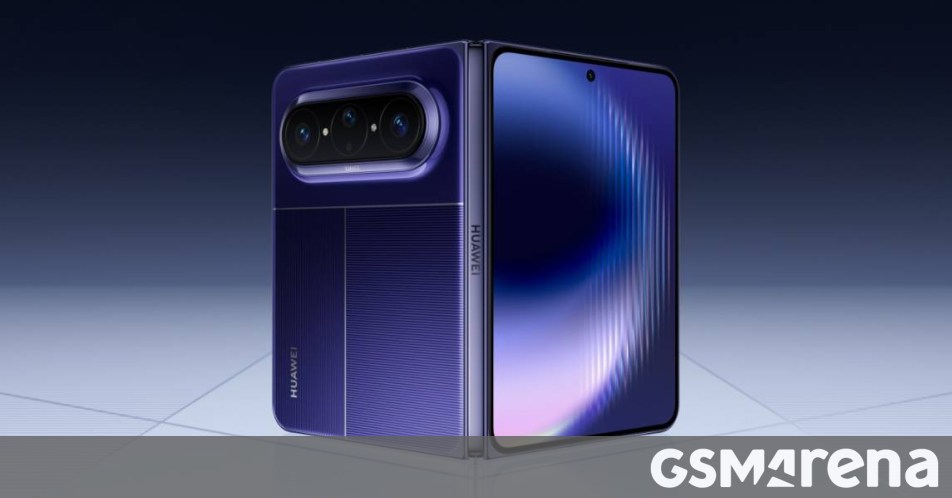
Huawei launched the Pura X Max, a larger foldable phone with a 5.4-inch cover display, 7.7-inch inner display, 5,300mAh battery, Kirin 9030 Pro chipset, and support for 66W wired and 50W wireless charging. The model also adds stylus support, improved IP58/IP59 dust and water resistance, and upgraded cameras versus the original Pura X, with China pricing starting at CNY 11,000 ($1,615). The article is mainly a product update with limited near-term market impact, especially since global availability is uncertain.
Huawei’s move is less about one handset and more about validating a new premium foldable format that sits between clamshell and tablet. The second-order implication is that the category is moving upmarket: a larger inner canvas plus stylus support pushes the device from “novel phone” into a lightweight productivity endpoint, which expands the TAM beyond early adopters into white-collar users and creators. That is structurally favorable for component suppliers with foldable expertise—hinges, UTG, advanced OLED, vapor chambers, and high-density batteries—while pressuring conventional premium slab vendors to defend share with software and ecosystem advantages rather than hardware alone.
The near-term winner is likely the China-centric foldable supply chain, not necessarily Huawei itself. A thinner, more durable design with better ingress protection lowers one of the biggest adoption blockers: repair risk and perceived fragility. If this form factor gains traction, it can pull forward replacement cycles and lift mix toward higher ASP configurations, but it also raises bill-of-material complexity, which should support upstream content per device even if unit growth stays modest.
The key risk is that Huawei’s innovation lead does not automatically translate into durable monetization outside China. Export constraints, app ecosystem limits, and lack of global carrier distribution keep this a regional share gain story for now, not a global platform shift. The contrarian view is that the market may be overestimating the speed of foldable mass adoption; even with better ergonomics, consumers still face a functionality premium of several hundred dollars versus flagship slabs, so penetration likely remains niche over the next 12-18 months unless competitors compress prices aggressively.
Catalyst-wise, watch for follow-on launches from Samsung, Honor, and Xiaomi over the next 2-3 quarters: if they converge on the larger-square format, that confirms the design is becoming industry standard rather than a Huawei one-off. In that scenario, the real trade is not the handset OEMs but the enabling layer—foldable display and hinge suppliers—because pricing power should improve before end-demand fully inflects.
AI-powered research, real-time alerts, and portfolio analytics for institutional investors.
Request DemoOverall Sentiment
mildly positive
Sentiment Score
0.35
