
Musk vs. Altman is about what we don't already know
Source: Axios
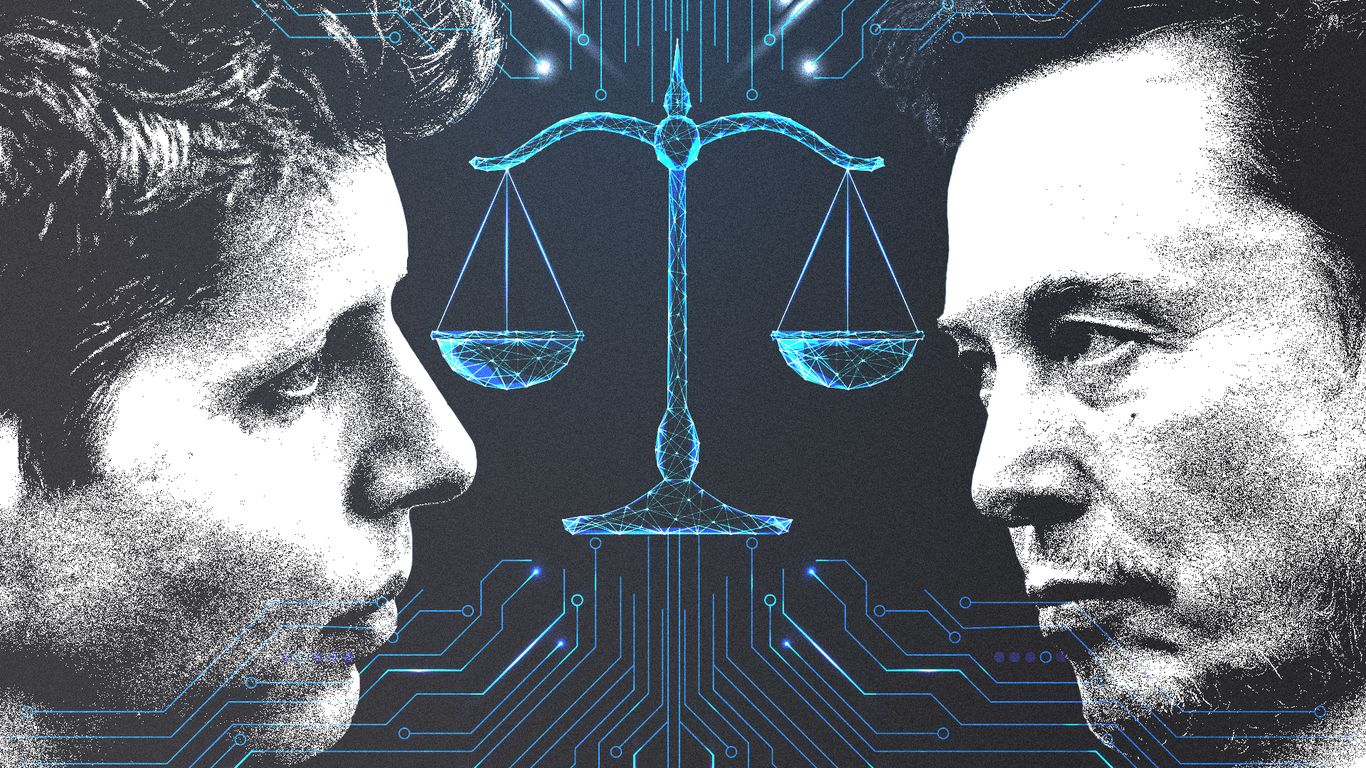
OpenAI reportedly missed its own targets for new users and revenue, while investors are questioning whether Sam Altman should lead the company through a potential IPO. Elon Musk's lawsuit against Altman centers on OpenAI's for-profit pivot, but the broader issue is the risk of damaging testimony and discovery. The case could affect sentiment around OpenAI, Altman, Musk, and related private-market AI valuations over the next few weeks.
Analysis
The market impact is less about the legal merits and more about forced information release. A prolonged discovery process can create a volatility regime shift across the private AI complex because it turns opaque governance into something closer to public-market scrutiny, raising the discount rate on future rounds and IPO pricing. That is most dangerous for the capital-light, narrative-dependent names where valuation rests on trust in management and the next financing window.
The asymmetry is important: Musk’s ecosystem already trades with a higher “known-knowns” discount, so incremental reputational damage is less likely to change financing access than it is for Altman and OpenAI-adjacent assets. By contrast, any evidence that management has overstated traction, monetization, or internal controls would likely hit the next leg of private-markets pricing, secondary transactions, and employee retention. The second-order effect is tighter terms across the AI stack, especially for companies reliant on partner confidence rather than hard revenue.
Catalyst timing matters. The next 2–3 weeks are the highest-risk window for headline-driven repricing as witness testimony can leak into the press before any formal ruling. Over a 3–12 month horizon, the real risk is not the verdict but whether this accelerates investor preference away from “founder premium” toward more capital-efficient AI infrastructure and picks-and-shovels businesses with measurable demand.
The contrarian take is that the market may be underpricing how little a legal win changes the strategic outcome. If neither side reveals meaningful new information, the event could fade quickly and actually reinforce the scarcity premium for the strongest franchises. In that case, the winners are not the litigants but the private AI suppliers, infrastructure providers, and secondary buyers willing to buy quality at a governance discount before the next funding reset.
AllMind Terminal
AI-powered research, real-time alerts, and portfolio analytics for institutional investors.
Request TrialMarket Sentiment
Overall Sentiment
mildly negative
Sentiment Score
-0.12
Key Decisions for Investors
- Reduce exposure to late-stage private AI names with governance-heavy valuation narratives for the next 2-4 weeks; use any leak-driven pop to trim, since downside from adverse testimony is likely larger than upside from a clean hearing.
- Initiate a pair trade: long AI infrastructure beneficiaries with cash-flow visibility, short speculative AI application names that depend on founder credibility and perpetual private funding; hold 1-3 months into the testimony window.
- For public-market expression, buy downside protection on any listed AI proxy with elevated multiple and weak disclosure quality via 1-2 month put spreads; the event risk is compressed but asymmetric.
- Add selectively to high-quality private-market secondary exposure only if pricing resets 10-20% lower on gossip headlines; that would offer a better entry for durable franchises once the discovery overhang clears.
- Keep a close watch on new financings and secondary prints in the AI ecosystem over the next 90 days; a widening spread between primary and secondary pricing would confirm the thesis that governance risk is becoming a real cost of capital issue.
More News
- Why did CoreWeave stock get crushed this week? Look to this corner of the debt market for clues
- AI stock sell-off ramps up over debt-fueled data center spending fears: ‘Full-blown crisis of confidence'
- Stock fixing scandal could see Turkish companies frozen out of global indexes
- Dow falls 189 points as AI stocks slide and oil prices surge
- Wall Street Anxiety Spreads as AI Rout Meets $110 Oil Shock
- Wall Street's fear gauge is ripping. Traders see it going even higher
From AllMind Research
- Anthropic IPO Preview: Valuation, Timing, and What to Watch
- Shein After the IPO: Venue, Valuation, and What Must Be Proved
- What AI Research Tools Should a Small Hedge Fund Buy First?
- Augmented Intelligence: AllMind, Elevate Human Judgement With an Accessible, Powerful, Data-Driven Financial AI Toolkit
- AI Research Systems for Hedge Funds: A Pilot Design