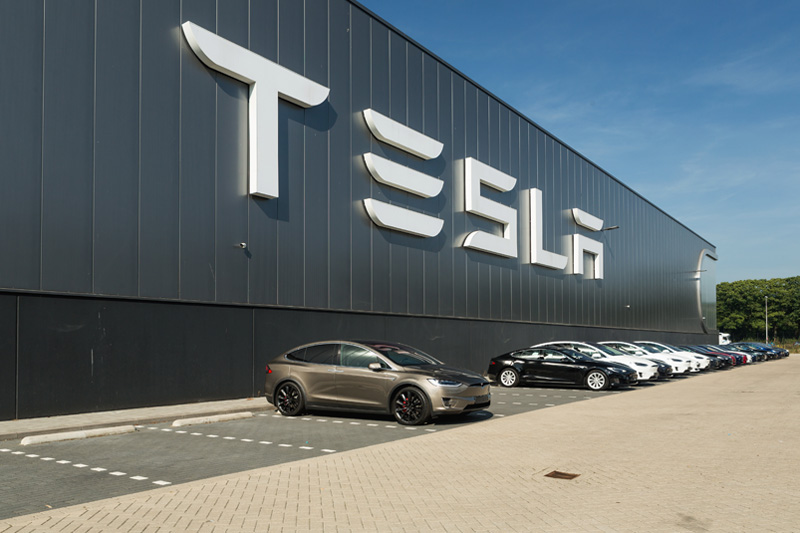
NHTSA rejected a petition seeking a recall of ~2.26 million Tesla vehicles, finding no evidence of a safety-related defect and removing the immediate risk of a large-scale recall. However, the agency escalated its probe into 3.2 million Tesla vehicles with Full Self-Driving to an engineering analysis (a required step before it can seek a recall), maintaining regulatory overhang. Tesla stated the Dutch regulator RDW is reviewing its FSD submission with approval expected around April 10, which could enable EU-wide clearance this summer. The mix of a favorable petition decision but expanded FSD scrutiny is likely to leave TSLA volatility elevated and could move the stock by roughly 1–3% on further developments.
Regulatory outcomes are creating a regional and modal bifurcation in Tesla’s risk profile: mechanical/hardware recall risk has materially compressed near-term, while software/regulatory risk tied to FSD has arguably increased and will be resolved on a much slower cadence. Expect the NHTSA engineering analysis to play out over 3–9 months and to act as a binary volatility driver — a restrictive consent order or mandated software limitations would compress revenue per vehicle and spike capex/legal uncertainty, while a quiet outcome removes a key overhang.
There is real optionality in the EU timeline that the market is underweight. If European approvals proceed on the stated schedule this spring/summer, it not only unlocks incremental deliveries but also lowers perceived regulatory correlation for global investors; that can re-rate TSLA’s regional multiple differentially versus US peers. Conversely, any interim US-imposed restrictions (warnings, required firmware changes, or data collection mandates) will have second-order effects on insurance costs, fleet utilization economics, and supplier order cadence for compute/sensors.
From a competitive angle, a protracted US probe benefits OEMs that avoid autonomy-first risk, shifting some consumer and fleet demand toward validated driver-assist offerings. Independently, AI/datatacenter hardware vendors (SMCI-style exposures) remain beneficiaries of secular compute demand regardless of Tesla’s FSD outcome; that decoupling creates actionable pair and volatility trades across the 3–12 month horizon.
AI-powered research, real-time alerts, and portfolio analytics for institutional investors.
Request DemoOverall Sentiment
mixed
Sentiment Score
-0.05
Ticker Sentiment
