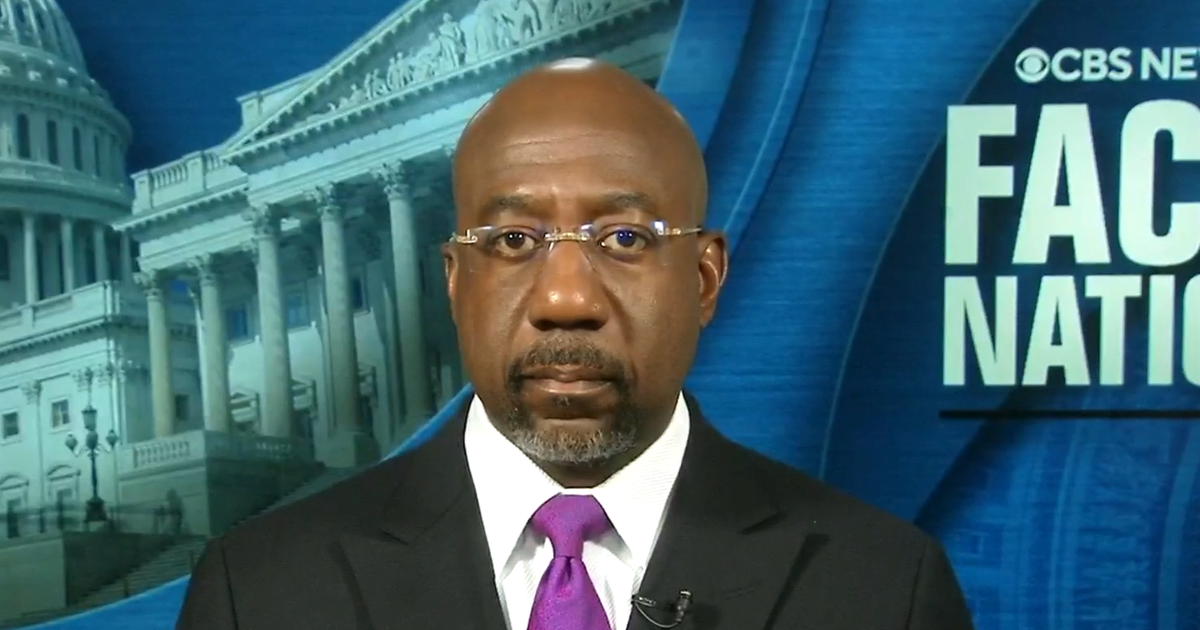
The Supreme Court's ruling narrowed Section 2 of the Voting Rights Act and is expected to make it harder for minority voters and voting-rights groups to challenge redistricting maps, with implications beyond Louisiana. Sen. Raphael Warnock called the decision a "massive and devastating blow" and warned it could intensify a partisan redistricting arms race as several states consider special sessions or new maps. The decision raises legal and political risk around congressional map drawing and voting access, especially in the South.
This is less a one-off legal headline than a structural increase in election volatility premium. The immediate market read is that state-level map redraws become a recurring catalyst into 2026, creating a rolling source of uncertainty for House composition, committee control, and policy probability distributions. The second-order effect is that companies exposed to federal appropriation paths, healthcare reimbursement, telecom regulation, and defense procurement may see wider event-driven multiples because narrow-seat scenarios become more likely in a handful of states.
The more important takeaway is that the Supreme Court’s narrowing of minority vote-dilution claims lowers the legal cost of aggressive mapmaking, which likely shifts the battlefield from courts to state legislatures. That increases the relevance of local political risk, ballot access, and turnout operations in specific metro areas, and it raises the odds of asymmetric outcomes where a small number of districts decide the national balance of power. For investors, that means policy-sensitive sectors can face regime-like re-rating around every special session, filing deadline, and judicial challenge over the next 6-18 months.
Contrarian view: the market may overestimate how much district lines alone can change ultimate control versus turnout, candidate quality, and national vote environment. If legal fights drag out or produce maps that are later partially blocked, the headline risk may be front-loaded while actual seat changes arrive too late to matter for 2026 pricing. That creates an opportunity to fade spikes in implied volatility on political event names after each map announcement, especially when the move is driven by narrative rather than finalized maps.
AI-powered research, real-time alerts, and portfolio analytics for institutional investors.
Request DemoOverall Sentiment
moderately negative
Sentiment Score
-0.45
