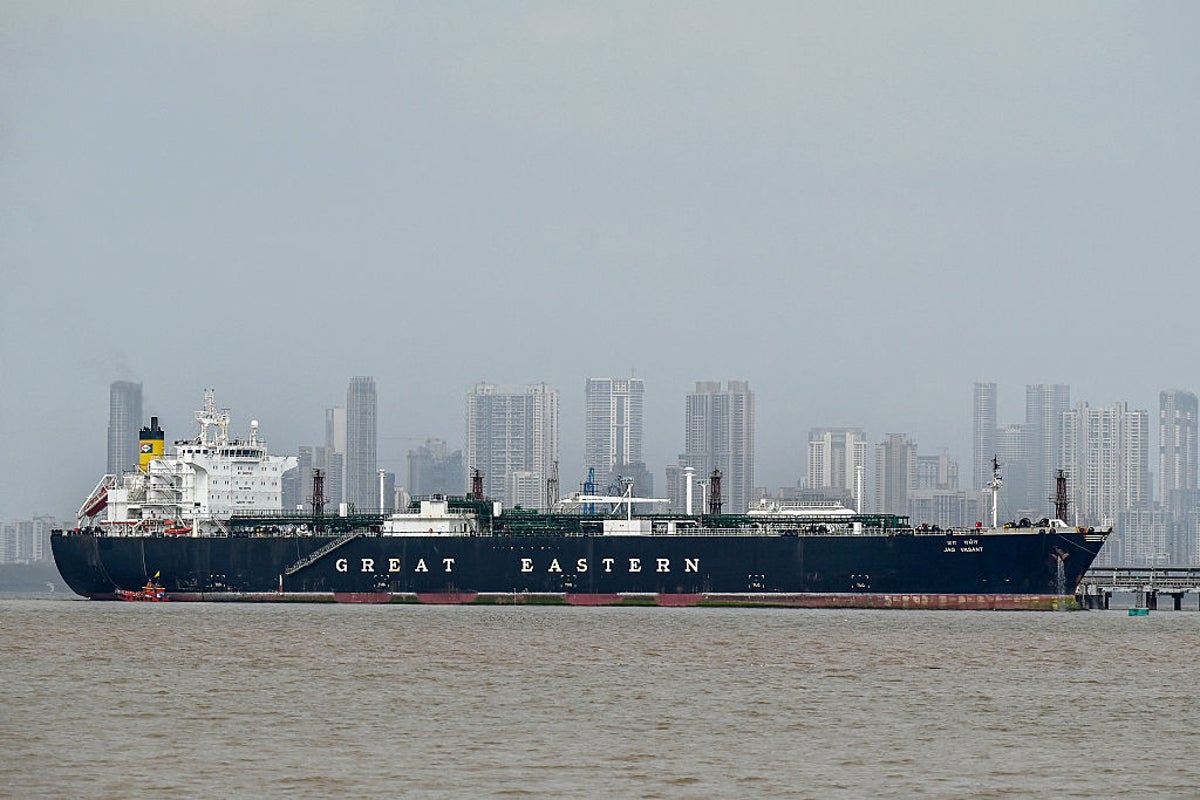
Oil prices jumped back above $100 a barrel, with Brent crude rising about 7% to roughly $102 after Trump ordered a blockade of the Strait of Hormuz, a route carrying about one-fifth of global oil supply. The move revived inflation concerns and lifted supply-sensitive commodities, while equities fell only modestly: the FTSE 100 was down 0.4% and major European indices were off about 1% to 1.2%. Market reaction was notable but still muted versus earlier in the conflict, reflecting expectations that US-Iran talks could resume and that the blockade threat may be a negotiation tactic.
The market is treating this as a supply shock with a credibility discount, which is exactly the regime that tends to punish outright directional energy shorts but also caps sustained upside. The key second-order effect is not just higher crude, but a lagged squeeze through freight, petrochemicals, fertilizers, and refined product inventories; those sectors can move harder than Brent itself because they are already operating with thinner buffers and more localized pricing. That creates a widening wedge between headline oil and the assets actually exposed to delivered energy costs. The muted equity reaction suggests positioning was already leaning risk-off, so the first move is likely less about a panic crash and more about a slow repricing of inflation expectations and rate-path assumptions. That matters because a persistent $100+ oil print keeps real yields under pressure and can compress duration-sensitive growth multiples even if equities avoid an immediate drawdown. The bigger vulnerability is to corporate margins in transport, chemicals, airlines, and Europe-heavy industrials, where energy pass-through is slower than the commodity shock. The contrarian angle is that the market may be underestimating how asymmetric the tail risk is around any genuine closure or retaliatory escalation: once shipping insurance, spot freight, and inventory hoarding start feeding each other, you can get a nonlinear jump in delivered prices without a proportional move in the spot benchmark. But if the blockade is viewed as bargaining leverage rather than operationally enforced, the move can unwind fast, making chase entries in outright oil risky. The better setup is to express the shock through spread trades that benefit from higher volatility and weaker consumers rather than a naked directional bet on crude itself.
AI-powered research, real-time alerts, and portfolio analytics for institutional investors.
Request DemoOverall Sentiment
moderately negative
Sentiment Score
-0.45
