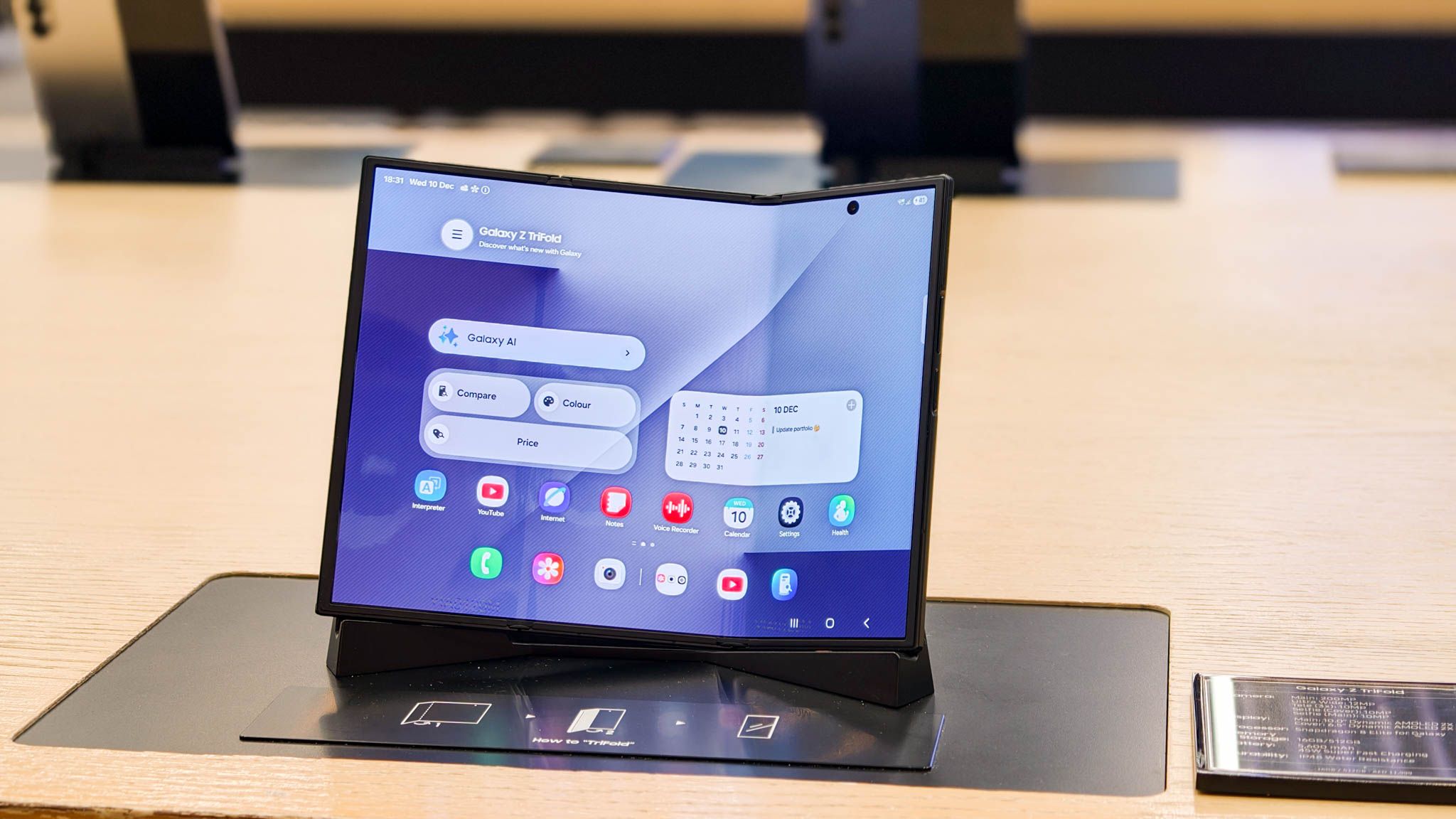
Samsung may stop selling the Galaxy Z TriFold after a reported final restock in Korea as the company halts production due to high manufacturing and rising component costs. The TriFold was always a limited-run device produced in smaller quantities than flagship lines, and Samsung may not restock it globally, pressuring profitability in its Mobile eXperience division. The company nonetheless remains committed to foldables, with Z Fold 7 and Z Flip 7 selling and a rumored wide foldable expected.
This appears less like product failure and more like rationalized capital allocation: Samsung intentionally treated the TriFold as a showcase skunkworks with negative or neutral immediate ROI to test hardware/UX, then pulled supply once marginal cost exceeded acceptable learning-value. Expect the direct P&L impact on Samsung MX to be low-single-digit EBIT points in the next 1–2 quarters, but the more important effect is reallocation of scarce flexible-display capacity away from low-volume experiments toward higher-volume Z Fold/Flip and S-series lines.
Supply-chain implications are asymmetric. Producers of bespoke hinge assemblies and multi-fold UTG panels face a sharp demand cliff (volume falls likely >50% vs internal build plans), while commodity suppliers (memory, base SoC, radios) see unchanged demand but may benefit from higher average selling prices if Samsung concentrates on premium SKUs. Component cost inflation of roughly +10–20% YoY for specialized foldable parts will force OEMs either to compress margins or reduce SKUs — a structural tailwind for incumbents who can extract scale benefits (Apple) and a headwind for niche panel specialists.
Catalysts to watch: (1) Samsung inventory/data releases over the next 30–90 days confirming cessation or limited restock; (2) price moves or earnings commentary from key suppliers (hinge, UTG) within 2 quarters; (3) Apple’s foldable timing — any acceleration of an Apple foldable launch within 6–12 months flips competitive dynamics materially. Reversal risk is real: a cheaper manufacturing process or component price relief could revive low-volume runs, restoring value to niche suppliers and narrowing spreads between OEMs.
AI-powered research, real-time alerts, and portfolio analytics for institutional investors.
Overall Sentiment
mildly negative
Sentiment Score
-0.20
Ticker Sentiment
