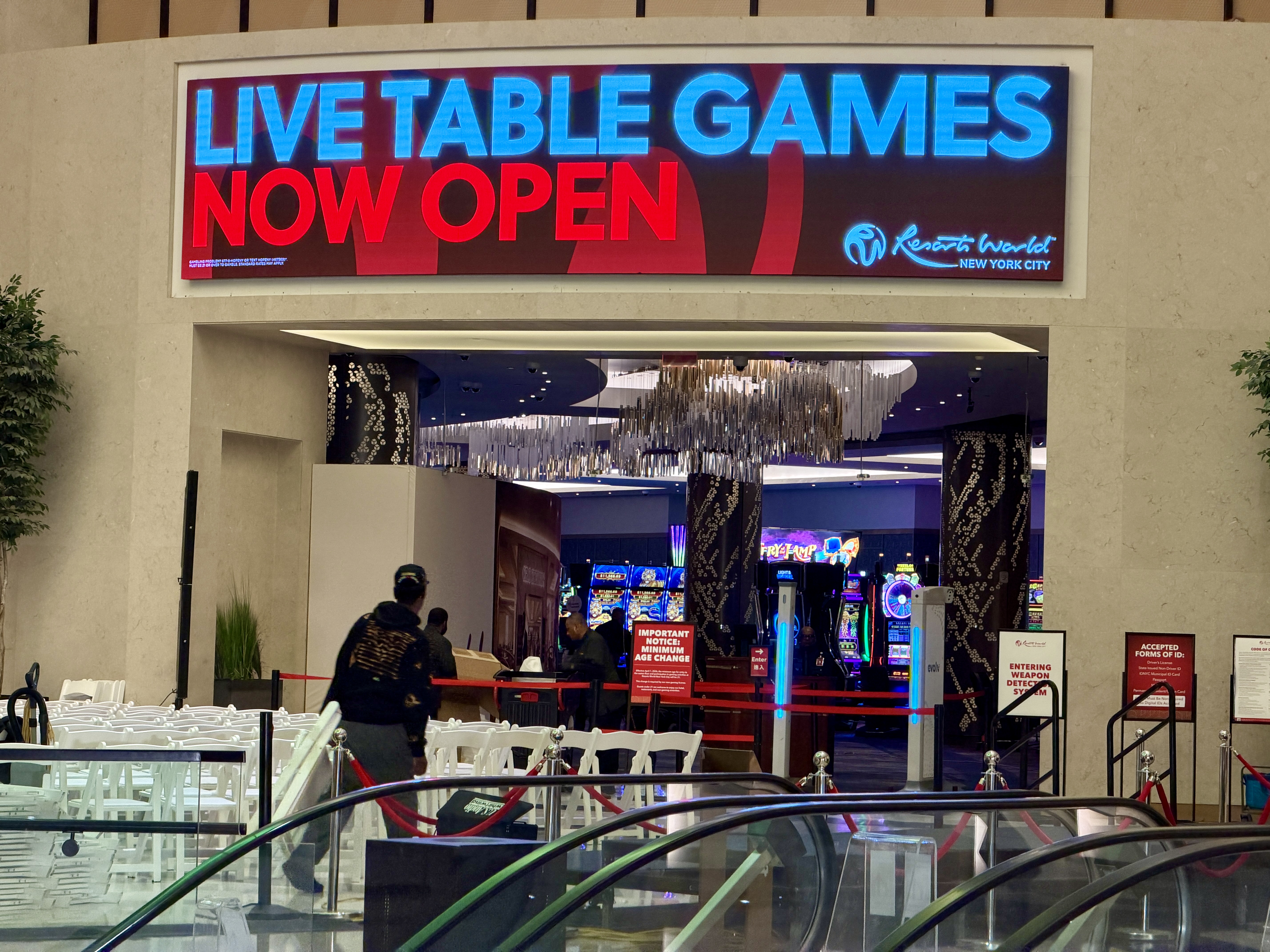
Resorts World New York City paid Nassau County $31.4 million last year, and the county is now negotiating a new agreement that could increase payouts further as the casino expands to live table games. The expansion brings more than 240 table games alongside over 2,500 slot machines, which should support higher visitor traffic and revenue. The deal review is favorable for Nassau taxpayers, though the financial terms are still unresolved.
The immediate market read-through is not the casino itself but the county balance sheet: a higher recurring payment stream improves local fiscal flexibility and lowers the probability of politically motivated tax or fee pressure elsewhere. That matters because gaming cash flows in New York are increasingly being treated like quasi-infrastructure rents, so any uplift here can spill into broader municipal spending and bond sentiment over the next 6-18 months.
The bigger second-order effect is competitive positioning. Table games materially expand the addressable spend per visit and should improve retention versus slot-only venues, but the real pressure is on the neighboring downstate pipeline: once one property demonstrates meaningful traffic lift from live tables, the remaining licensees will likely be forced into more aggressive promotional spend and capex to defend share. That creates a margin wedge—early license winners can scale revenue before peers open, while late entrants risk arriving into a more crowded, more expensive customer-acquisition environment.
The underappreciated risk is that the upside from live tables may be partially offset by cannibalization rather than pure market expansion, especially if regional demand remains more elastic than management guides. In that case, the main beneficiary becomes the licensor and local government, not necessarily the operator’s equity holders; the first-order earnings pop can be real, but the long-duration value creation depends on whether incremental table-game handle is additive or simply re-shuffled from existing gaming wallets.
Contrarian takeaway: the market may be too focused on the headline license victory and underpricing the duration of the renegotiation over economic rent. If Nassau successfully resets terms upward, it could become a template for other off-track betting and local-government arrangements, pressuring operator economics across similar structures. The catalyst window is months, not days: expect the strongest stock-level reaction only if management quantifies the net uplift to EBITDA after higher payout rates and marketing intensity are absorbed.
AI-powered research, real-time alerts, and portfolio analytics for institutional investors.
Request DemoOverall Sentiment
mildly positive
Sentiment Score
0.20
