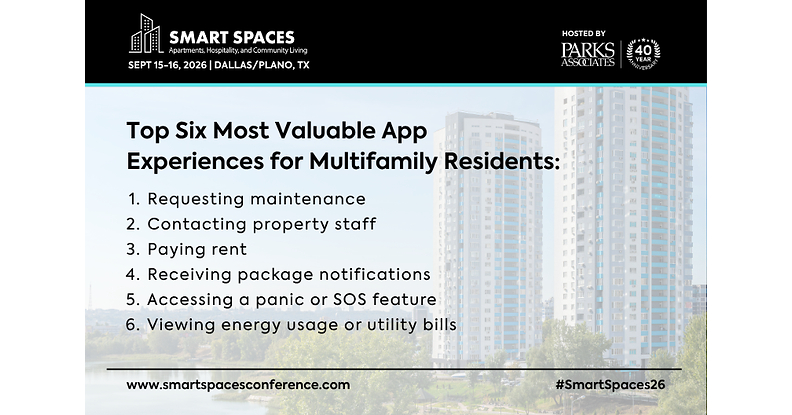
Parks Associates research for Smart Spaces found 62% of multifamily residents value receiving package notifications, highlighting demand for integrated digital platforms for access control and delivery experiences. The study also ranks top app features as requesting maintenance, contacting staff, paying rent, and viewing energy/utility usage, while community engagement is most valued in retirement (55+) and gated communities. Overall, the article is promotional/research-driven with limited immediate financial impact, but it supports a broadly positive outlook for connected-multifamily technology adoption.
This reads more like a validation of budget priorities than a demand shock. The monetizable layer is not “smart building” broadly; it is the workflow software and access stack that reduces staff touches, package friction, and service calls. That structurally favors incumbents with installed bases and channel relationships — ALLE and JCI first — because owners will pay for systems that lower operating expense and improve retention, while point-network vendors face longer sales cycles and harder ROI proof.
CALX is a second-order beneficiary only if operators decide connectivity is the bottleneck and fund network upgrades; that is a capex decision, not a sentiment decision, so revenue timing is lumpy and easier to defer if apartment transaction volumes weaken. CMBM looks like the least clean exposure: when the buyer cares about integrated resident experience, hardware commoditization and price competition tend to compress margins, especially if multiple vendors can satisfy the same RF/network spec.
Near term, the market reaction should be muted unless Smart Spaces produces named deployments or backlog commentary that converts “interest” into contracts. The key catalyst window is 1-3 months: channel checks, 3Q guidance, and any evidence that software attach rates or recurring service revenue are improving. Over 6-18 months, the more important effect is standardization — a few platforms become default, which should widen moat and raise switching costs for the winners.
The contrarian take is that resident enthusiasm does not equal willingness to fund retrofit spend. If rates stay high and multifamily owners keep stretching replacement cycles, this can remain a feature wishlist rather than a revenue inflection. That would cap multiple expansion and keep this as a selective stock-picker theme, not a broad beta trade.
AI-powered research, real-time alerts, and portfolio analytics for institutional investors.
Request DemoOverall Sentiment
mildly positive
Sentiment Score
0.12
Ticker Sentiment
