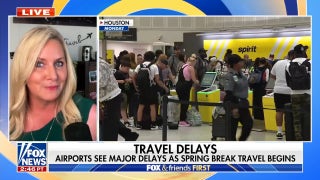
3.5-hour TSA wait times reported at major hubs as a DHS funding lapse causes partial pay for agents and furloughs for staff managing the TSA website and app, which are paused. Airports and carriers are advising passengers to arrive 3–4 hours early and JetBlue warned of longer security lines and missed flights, creating near-term operational and revenue risk for airlines and travel operators if the shutdown continues.
This is a near-term operational shock to a large, concentrated choke-point in the travel value chain that will transmit to airlines, airports and ground-service vendors through four distinct mechanisms: (1) elevated missed-connection rates that raise involuntary rebooking and compensation costs per pax, (2) uneven demand elasticity where business travelers (higher yield) will re-time rather than cancel, and (3) temporarily lower footfall for airport concession and parking revenues skewed toward discretionary spend, and (4) a surge in short-term staffing and contract spend (call centers, baggage handlers, temp security) that is often outsourced. Quantify: a 2–3 week prolonged disruption concentrated on peak travel days can shave mid-single-digit points off a major US carrier’s monthly unit revenue while increasing short-term opex items (reaccommodation, agency staffing) by high-teens percentage relative to a baseline week.
Second-order winners are government IT and defense services firms that administer recovery, back-office processing and replatforming of traveler credentialing because appropriations often include catch-up contracting; these names typically gap higher when funding is restored. Secondary losers are airport concessionaires, short-term parking operators and regional airports with high leisure mix—their monthly cash flow is most exposed to missed flights and last-minute cancellations. Time horizon matters: market pressure and volatility will concentrate in the next 2–8 weeks while appropriations remain uncertain; if the shutdown extends into multiple months, structural shifts (faster adoption of automated/biometric screening, tougher SLAs with airlines) accelerate capex reallocation across airports and vendors.
Catalysts to watch that will flip sentiment quickly are (A) formal stopgap funding language (likely within days to weeks), (B) an operational notice from major carriers pre-emptively cutting schedules (within 48–72 hours increases downside), and (C) public statements by large contractors winning emergency task orders (1–3 weeks). Tail risks: a multi-week staffing exodus or coordinated union action by screeners would push impacts from transitory revenue misses into multi-quarter earnings revisions for the most exposed airlines and small airport operators. The consensus underestimates how asymmetric the recovery bounce will be for government contractors (fast 15–30% rallies on re-funding) versus travel-equity recoveries (slow, demand-led).
AI-powered research, real-time alerts, and portfolio analytics for institutional investors.
Request DemoOverall Sentiment
mildly negative
Sentiment Score
-0.40
