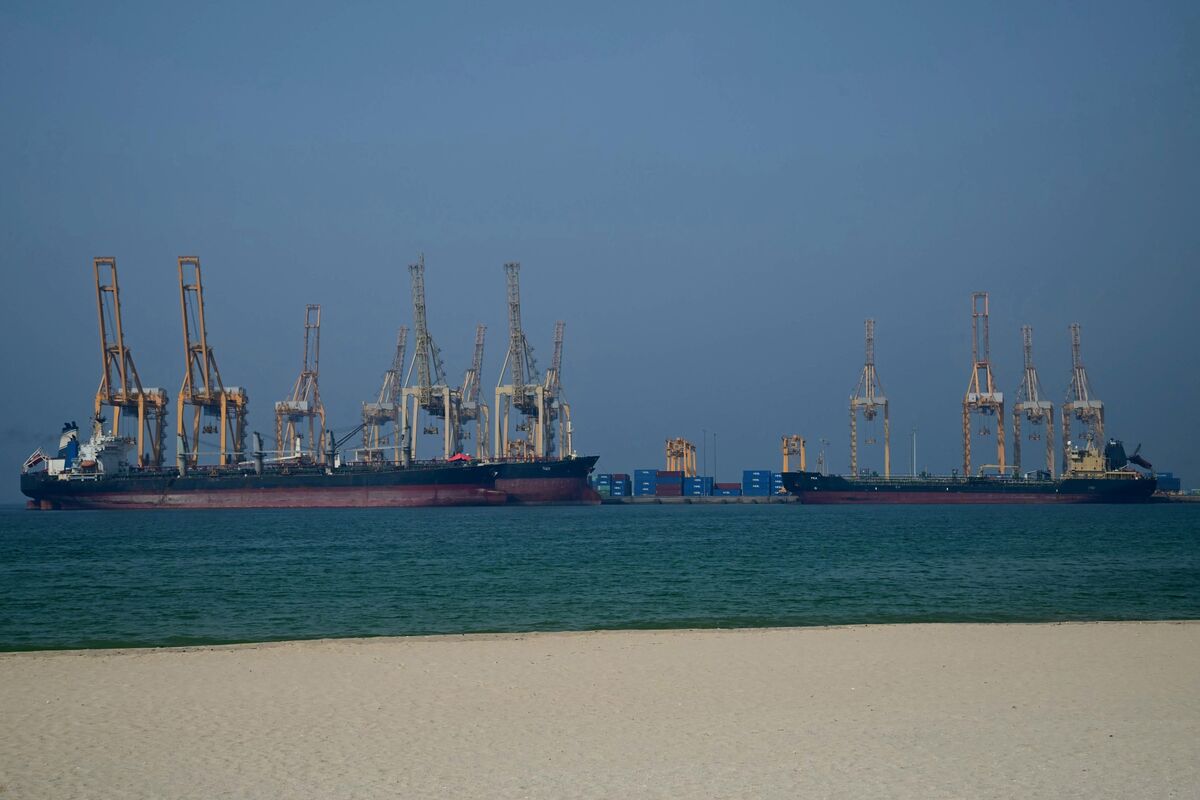
UK Prime Minister Keir Starmer joined leaders of Japan, Germany, France, Italy and the Netherlands in a joint statement urging Iran to stop mine-laying, drone/missile attacks and other actions blocking the Strait of Hormuz. The statement heightens downside risk to Middle East oil flows and global shipping — monitor Brent/WTI, tanker freight rates and energy/transportation exposure for short-term price and supply-chain disruption.
Winners will be owners of long-haul tankers and war-risk insurance underwriters because a persistent elevation in route risk compounds voyage economics: a 10–20% rise in voyage distance or a 2–3x war-risk surcharge translates to a 20–50% lift in time-charter equivalent (TCE) for spot tanker tonnage, while container lines face margin compression as re-routing raises unit voyage cost and turns the schedule into a competitive lever. Bunker fuel suppliers and select Gulf/Red Sea transshipment hubs capture most of the incremental cash flow initially, creating a temporary geographic shift in freight flows and storage demand that benefits regional terminals with spare pier capacity.
Near-term (days–weeks) tail risks are binary and headline-driven: fresh disruptive incidents can spike insurance premia and TC rates within 48–72 hours; medium-term (3–9 months) the market prices in structural responses — sustained higher freight, renegotiated long-term charters, and accelerated investment in pipelines or new transshipment capacity. Reversal catalysts include credible naval escort programs, negotiated maritime de-escalation or rapid expansion of alternative pipeline throughput, each of which historically normalizes war-risk surcharges within 60–120 days.
Consensus overweights pure oil-price reflex trades and underweights the logistics-cost channel. If elevated route risk is transitory, tanker and insurance names will mean-revert faster than oil; conversely, if persistent, industrials and consumer goods with tight inventory turns will suffer margin shocks. Position sizing should therefore favor optionality (call spreads, short-dated protection) and pair trades that isolate freight/insurance exposures from commodity price moves.
AI-powered research, real-time alerts, and portfolio analytics for institutional investors.
Overall Sentiment
mildly negative
Sentiment Score
-0.35
