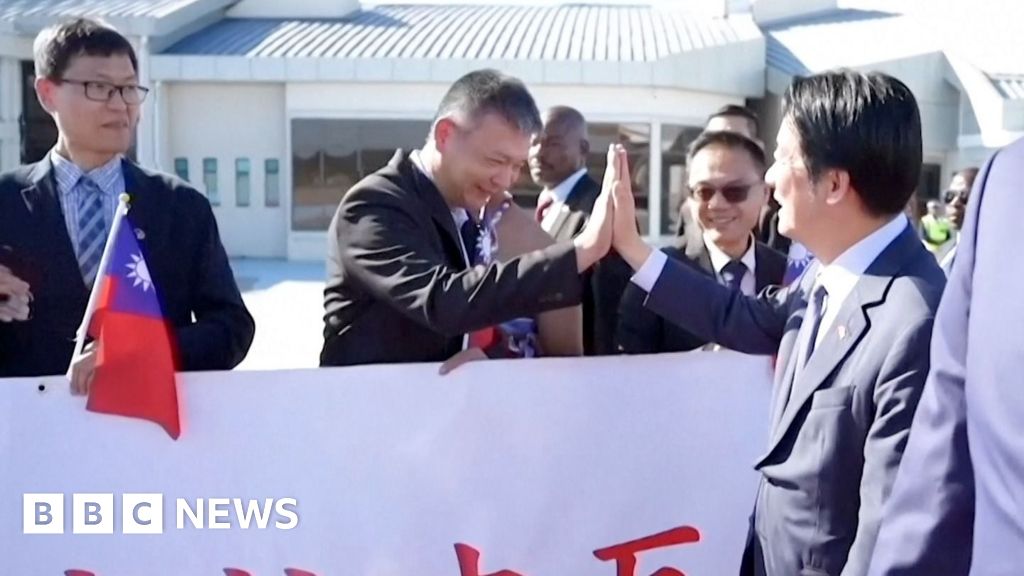
Taiwan President Lai Ching-te arrived in Eswatini after a cancelled April trip that Taiwan says was disrupted by Chinese pressure on African airspace permissions. The visit underscores escalating Taiwan-China diplomatic tensions, with Beijing calling the trip a "stowaway-style escape farce" and later scrapping tariffs for all African countries except Eswatini. Market impact is limited, but the episode reinforces geopolitical friction and Taiwan's shrinking pool of diplomatic allies.
This is less about Eswatini and more about Beijing testing the elasticity of Taiwan’s remaining diplomatic network. The important second-order effect is that China is now willing to impose visible friction even on routing and overflight logistics, which raises the operational cost of Taiwan’s foreign policy and creates a deterrent template for other small states that depend on access to Chinese trade or aid. That pressure is likely to work best not by forcing immediate recognition switches, but by increasing the probability of quiet downgrades in protocol, frequency of visits, and commercial engagement over the next 6-18 months.
The tariff carve-out for African countries, excluding Eswatini, is a signal that trade policy is being weaponized selectively rather than uniformly. That should be read as a warning to other frontier and low-income sovereigns: if they materially support Taiwan, they risk being singled out in customs, financing, or tourism flows, even if broader China-Africa relations remain intact. The direct market impact is limited, but the policy pattern is relevant for EM sovereign spreads and for multinationals with exposure to politically contingent trade corridors across Africa and the Indian Ocean.
The contrarian point is that Beijing may be overplaying the coercion hand. Public embarrassment of a small ally can harden Taiwan’s external messaging and reinforce the perception that Chinese pressure is erratic rather than reliable, which can actually raise the political value of Taiwan alignment for a few states that prize autonomy. Over a 3-12 month horizon, the more investable implication is not headline risk on Taiwan itself, but incremental support for defense, cyber, and logistics resilience budgets in Taiwan and its partners, plus mild downside to China-sensitive EM assets if the coercive signaling escalates into broader trade retaliation.
AI-powered research, real-time alerts, and portfolio analytics for institutional investors.
Request DemoOverall Sentiment
mildly negative
Sentiment Score
-0.15
