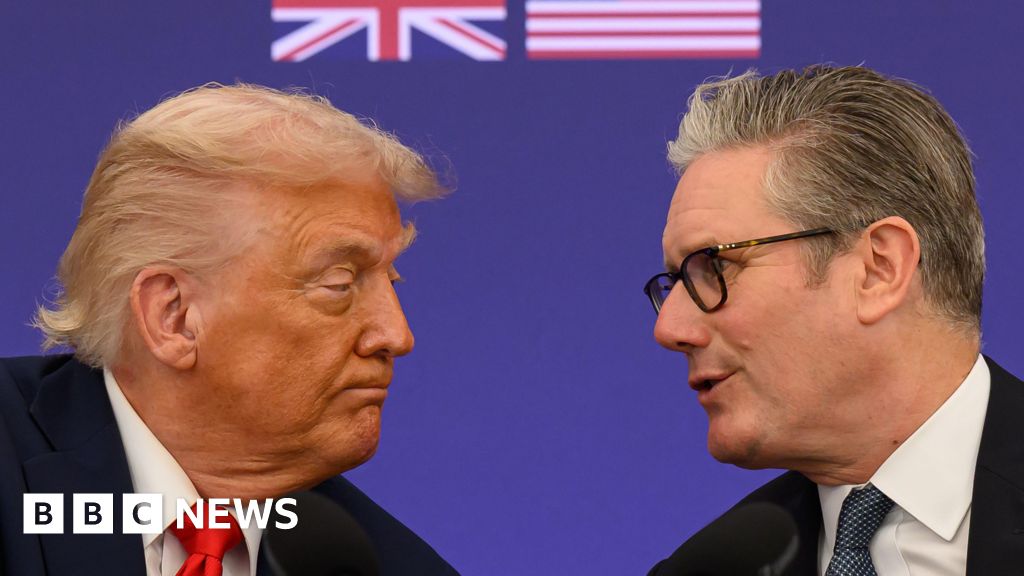
A brief White House-instigated call between President Trump and UK Prime Minister Sir Keir Starmer underscores a transatlantic divergence over recent US/Israeli actions and Iran's retaliatory strikes; the UK has not endorsed those strikes and stresses its forces are operating defensively. Domestic politics in the UK are polarized over the government's stance, and officials are focused on the safety of British nationals in the region. Markets should monitor the risk of disruptions to the Strait of Hormuz — a key artery for oil shipments — which could lift fuel prices and feed through into inflation and interest-rate considerations, creating volatile near-term outcomes for energy and transport-sensitive assets.
Market structure: A short Gulf disruption primarily benefits integrated energy producers (XOM, CVX, XLE), defense primes (RTX, LMT, GD) and commodity hedges (GLD, TIP) while hitting airlines/travel (AAL, UAL, MAR) and logistics-dependent retail. A blocked or threatened Strait of Hormuz (handles ~20% of seaborne oil) would tighten physical crude supply and push front-month Brent/WTI +10–30% within days absent immediate releases, increasing fuel cost pass-through to CPI by ~0.1–0.4ppt over 3–6 months.
Risk assessment: Tail scenarios include a protracted Gulf closure (WTI +$30–50, stagflation) or escalation drawing in regional airbases — low probability but >10% P(flash spike) in next 30 days. Immediate (days) = volatility spike and safe-haven flows to USD/Treasuries/gold; short-term (weeks–months) = inflation and swap rates repricing; long-term (quarters) = fiscal/defense reallocation and higher structural energy prices. Hidden dependencies: insurance and rerouting raise shipping/container costs and input inflation nonlinearly; catalysts = hostage events, coalition strikes, or diplomatic de-escalation talks.
trade implications: Tactical: 1–3% NAV long XOM/CVX and 0.5–1% NAV long GLD for 1–3 month horizon; 1% NAV long RTX vs 1% NAV short AAL as a pair to express defense vs travel divergence. Options: buy 3‑month WTI $10-wide call spreads sized 0.5% NAV if Brent/WTI > +10% from spot; buy GLD 3‑month 1.5–2% OTM calls sized 0.5–1% NAV. Fixed income/FX: rotate 2–4% NAV into TIP (TIP) and 1–2% into UUP for tactical USD hedge over 1–8 weeks.
contrarian angles: Consensus may overpay short-dated volatility — historical parallels (2019 tanker strikes) show oil mean-reverts within 6–8 weeks absent supply shocks; thus selling premium in high-quality integrateds (covered calls on XOM) can harvest overstated fear while retaining oil upside exposure. Beware a two-way risk: central banks could tighten if inflation persists, turning short-duration Treasury hedges into losers; set explicit triggers (Brent > +25% or US 5yr real yields +30bp) to re-run allocations.
AI-powered research, real-time alerts, and portfolio analytics for institutional investors.
Request TrialOverall Sentiment
moderately negative
Sentiment Score
-0.35
