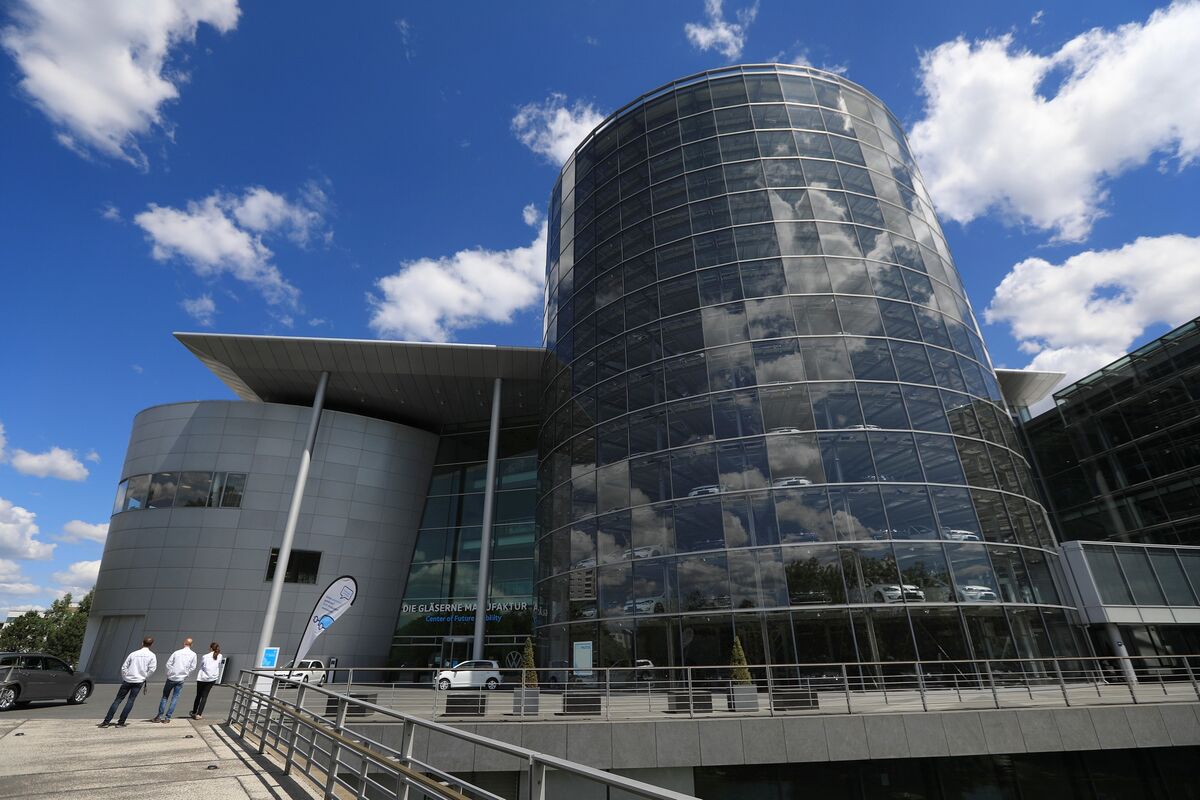
Volkswagen will halt car assembly at its small Dresden plant and repurpose the site into an innovation hub focused on artificial intelligence, robotics and chip design under an initial agreement with the state of Saxony and TU Dresden. VW and the university plan to invest more than €50 million ($58.3 million) over the next seven years to build a startup and research center, a move that preserves the facility and advances VW’s strategic shift toward software and semiconductor-related capabilities while having limited near-term financial impact on the company’s overall earnings.
Market structure: Volkswagen's Dresden pivot chiefly benefits local AI/semiconductor design startups, TU Dresden, and tool/IP vendors (EDA/cloud IP) rather than heavy fabs — expect modest revenue/talent spill to Infineon (IFNNY) and design partners over 12–36 months. Losers are marginal: small-scale assembly suppliers and low-margin local contractors who lose volume; overall pricing power in autos unchanged, but software/AI suppliers gain bargaining leverage. Supply/demand: the €50m+ investment is signal not volume — it tightens demand for design/hiring (engineers) regionally but has negligible impact on silicon wafer/material commodity markets. Cross-asset: credit spreads for VW could compress 5–15bps on reduced political closure risk over 6–12 months; EUR may get a small positive sentiment lift; options/volatility likely muted except for targeted semiconductor equities. Risk assessment: tail risks include project failure to commercialize (low-probability, high-impact), political funding reversals, or EU state-aid scrutiny that could rescind incentives; worst-case could inflict reputational and financial costs <€100m. Immediate (days) impact: PR only; short-term (weeks–months): hiring/partnership announcements and early-stage funding rounds; long-term (2–7 years): potential cluster formation and incremental design wins. Hidden dependencies: success depends on TU Dresden's commercialization pipeline, local talent retention, and global semiconductor cycle; if 2026–2027 chip downturn occurs, design activity may stall. Catalysts: announcements of anchor partners (EDA/IP vendors), follow-on capital >€100m, or first design wins with Infineon within 12 months. Trade implications: direct plays — establish small overweight positions in Infineon (IFNNY) and ASML (ASML) with 12–24 month horizons: IFNNY 1–2% AUM, target +20% upside, stop-loss 10%; ASML 0.5–1% for long-term structural demand. Pair trade — long VW ADR (VWAGY) 1% vs short Continental (CON.DE) 1% over 6–12 months to capture differentiated execution on software transition and political risk mitigation. Options — buy IFNNY 12–18 month call spreads (buy 12-mo 15–20% OTM, sell 24-mo 30–40% OTM) to leverage design-win optionality while limiting premium. Rotate +1.5% from legacy auto suppliers/materials into European semiconductor/software exposure over the next quarter. Contrarian angles: the market will likely underweight the strategic value of small innovation hubs — €50m is modest but can catalyze high-ROIC startups; consensus may therefore underprice upstream EDA/IP vendors and local design houses. Reaction might be underdone for VW equity credit and overdone for legacy supplier downside; historical parallels (OEM innovation hubs in UK/Germany) show cluster effects materialize after 2–4 years, not immediately. Unintended consequences include rapid talent competition inflating local wages and startup valuations; require active monitoring of hiring metrics and follow-on funding (trigger: >€100m new capital or 3+ startups with Series A within 24 months) as a validation signal.
AI-powered research, real-time alerts, and portfolio analytics for institutional investors.
Request DemoOverall Sentiment
mildly positive
Sentiment Score
0.25
