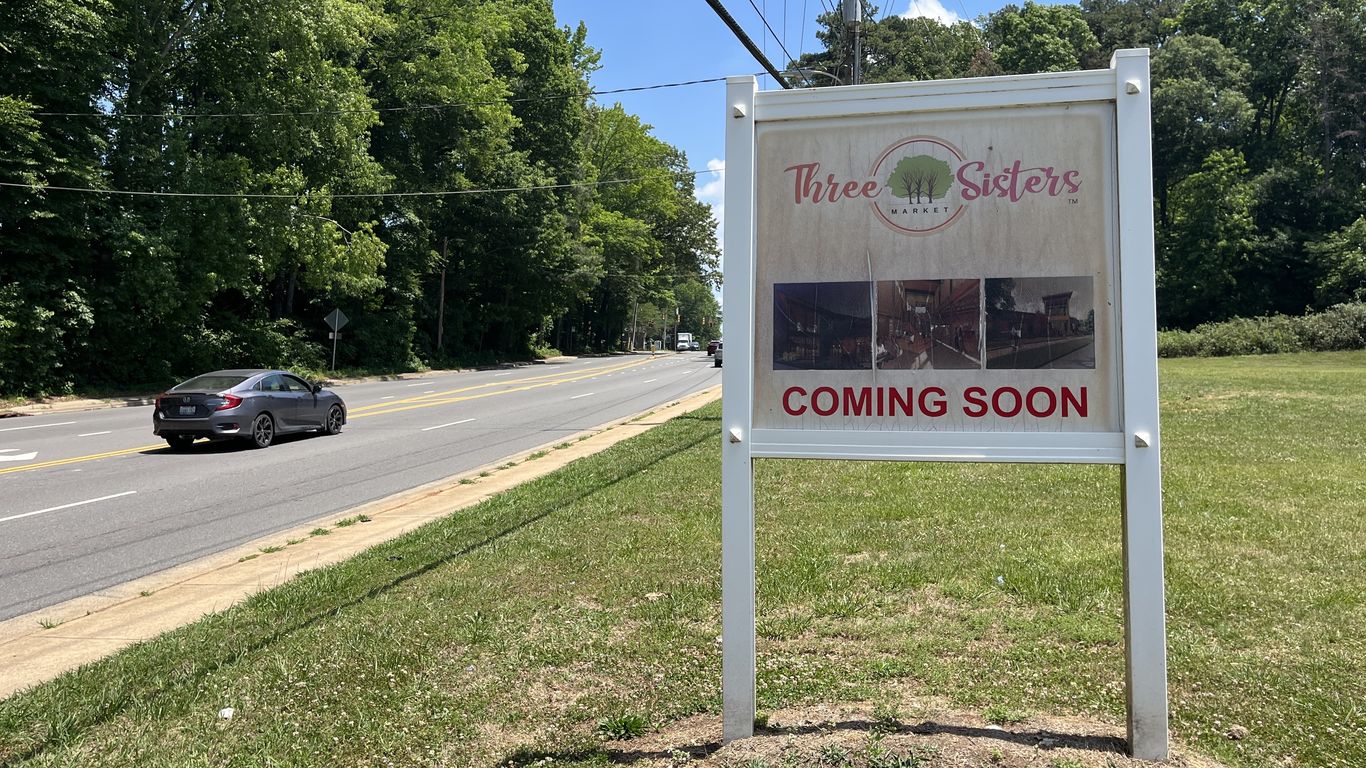
Wegmans is set to open in Ballantyne, a high-income Charlotte ZIP code with a median household income of $128,627, underscoring how grocers are targeting affluent neighborhoods while lower-income areas remain underserved. West Charlotte food-access efforts have secured $1.5 million from Wells Fargo for The Three Sisters Market and $4 million in city funding for a co-op project, but economics such as theft, labor costs, and low food-stamp-heavy demand continue to hinder store openings. The article is mainly a local retail and community-development snapshot with limited direct market impact.
The investable signal is less about one grocer and more about the bifurcation of neighborhood capex: affluent growth corridors keep attracting private retail, while lower-income districts increasingly require public subsidy or philanthropic capital to assemble a viable grocery model. That implies a structural widening in service quality, foot traffic, and adjacent property values between the two Charlotte submarkets over the next 2-5 years. In practice, the grocery anchor becomes a landlord selection tool: where a premium grocer lands, nearby leasing spreads and residential absorption should outperform.
The more important second-order effect is on the real estate capital stack. If a food co-op or specialty grocer only pencils when embedded in mixed-use housing/office, then the incremental return is being socialized across the entire project rather than borne by the retailer, which raises the hurdle for pure-play retail development in lower-income nodes. That favors developers and lenders with access to municipal incentives and patient capital, while punishing standalone retail pads and older neighborhood centers that rely on traditional supermarket traffic to stabilize occupancy.
For banks, the local read-through is modestly positive for WFC only insofar as it confirms continued public-private financing of mixed-use and community redevelopment projects in Charlotte. But the broader credit implication is a likely slow burn: food-desert districts without retail amenities tend to see weaker household formation, higher churn, and more stressed operating cash flows for nearby landlords, which can translate into higher small-balance CRE and consumer credit risk over time. The market is probably underpricing how much subsidy-dependent retail models can suppress margin durability even when they do get built.
The contrarian take is that the current framing may overstate the permanence of these patterns. A recession, higher grocery inflation, or a shift in retailer economics toward smaller-format and pickup models could make lower-income areas more attractive faster than consensus expects, especially if municipalities keep stacking incentives. The risk to the 'grocers only go where the money is' thesis is that digital ordering and smaller footprint economics reduce the need for affluent-destination volumes, shrinking the moat of premium ZIP codes over a multi-year horizon.
AI-powered research, real-time alerts, and portfolio analytics for institutional investors.
Request DemoOverall Sentiment
neutral
Sentiment Score
0.05
Ticker Sentiment
