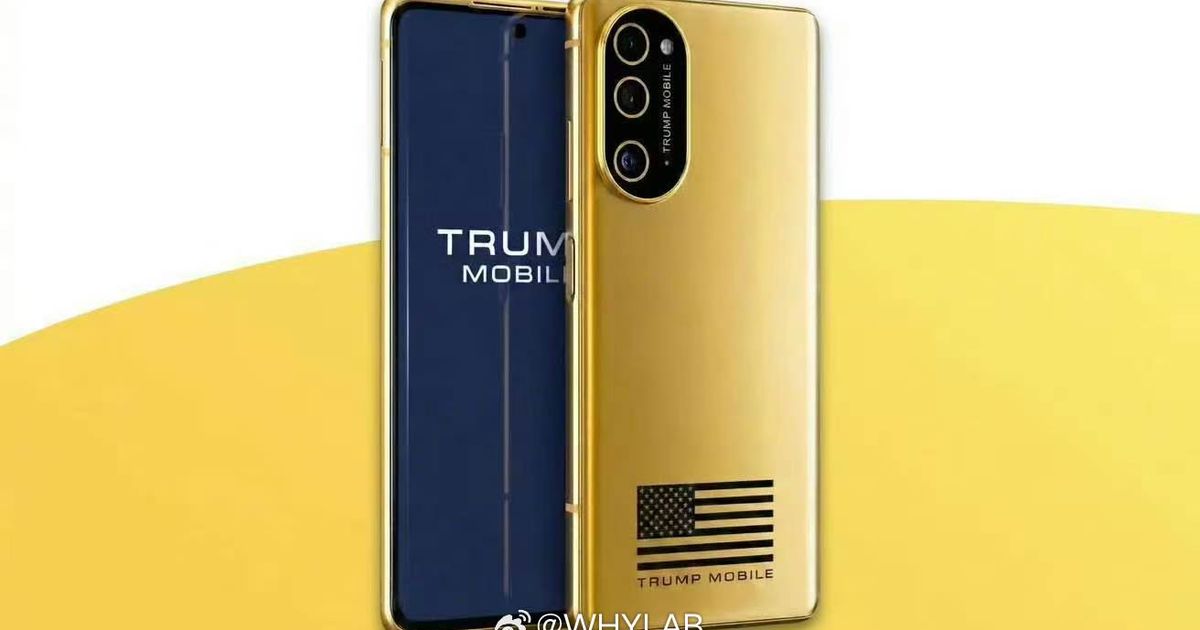
Trump Mobile T1 has surfaced on Geekbench with a Snapdragon 7 Gen 3, scoring 1,195 single-core and 3,443 multi-core on Geekbench 6, consistent with a mid-range Android device. The phone remains unshipped despite a June 16, 2025 announcement and a targeted Q1 2026 launch, with reports of spec changes and ODM switching issues delaying release. Pricing is around $499 with a bundled data plan, but the update is mainly a confirmation that test hardware exists rather than a material commercial milestone.
This is less a handset story than a signaling event for a politically branded consumer bundle. The hardware profile implies the product is not trying to win on specs; the real differentiator is acquisition and retention economics inside the subscription stack. That makes the first-order upside accrue to whichever downstream partners provide network access, financing, fulfillment, and customer support, while the biggest risk sits with any ODM or channel partner that has to absorb launch slippage and inventory commitments if demand is more novelty-driven than recurring.
The delayed shipment matters more than the benchmark. In consumer electronics, repeated spec changes and manufacturer switching usually indicate integration risk that bleeds gross margin through expedited tooling, higher QC fallout, and working-capital drag. If this launches at all, the more important question is churn: politically motivated buyers may convert once, but bundled-service economics depend on multi-month retention, so the value stack could deteriorate quickly after the initial cohort is exhausted.
Competitive effects are likely modest for flagship Android vendors, but more relevant for low- to mid-tier prepaid wireless and MVNO economics. A branded device with subsidized plan economics can briefly lift gross adds in the segment, but it also pressures competitors to discount devices or sweeten data plans to protect share. Over 3-6 months, the key catalyst is whether the company can move from publicity to fulfillment; if not, the market will likely re-rate this as a marketing asset rather than a scalable telecom franchise.
The contrarian view is that the consensus is underestimating the option value of attention. Even a mediocre device can be commercially meaningful if it lowers CAC and creates a political identity layer around wireless service. But that only works if the supply chain is stable enough to ship on time and at scale; absent that, the business is effectively short-dated hype with poor repeatability.
AI-powered research, real-time alerts, and portfolio analytics for institutional investors.
Request DemoOverall Sentiment
neutral
Sentiment Score
0.05
