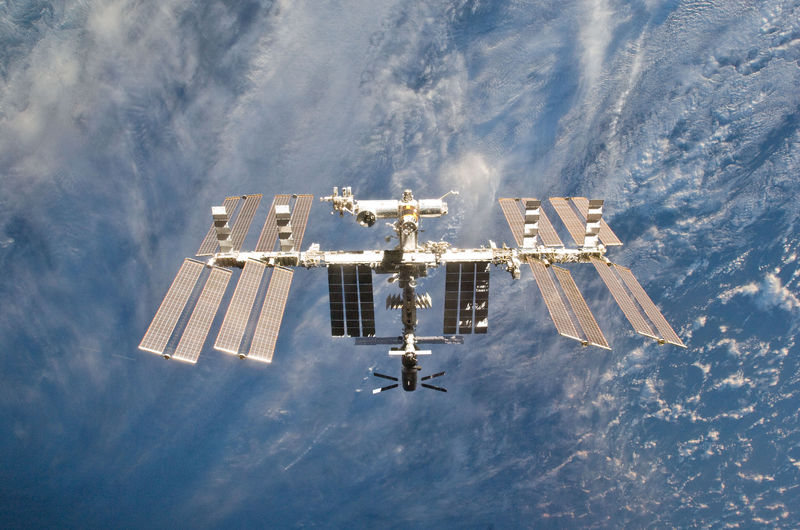
China is set to launch Shenzhou-23 on Sunday, sending three astronauts to Tiangong, with one potentially staying in orbit for up to one year versus the program’s standard six-month missions. The flight will test first autonomous rapid rendezvous and docking procedures and support China’s broader lunar ambitions, including a crewed moon landing targeted for 2030. The article is largely factual and does not present an immediate market-moving catalyst.
This is less a one-off prestige event than another data point that China is converting space into an industrial policy flywheel. The practical market implication is that Beijing is building a domestic launch, avionics, materials, and life-support ecosystem that compounds over years, which should keep procurement demand anchored even if headline mission cadence looks episodic. The first-order beneficiaries are not pure-play space names in the US, but the broader Chinese advanced-manufacturing stack tied to rockets, guidance, sensors, radiation shielding, and high-reliability components.
The second-order effect is competitive pressure on the US and allied supply chain for lunar-adjacent technology: if China sustains year-long human missions and autonomous docking, it de-risks the engineering path to lunar logistics and surface operations. That matters for defense because the same capabilities—precision rendezvous, autonomy, deep-space communications, resilient power—overlap with dual-use space control architectures. Expect incremental budget pull-through for US primes with Artemis exposure and for suppliers of space-grade electronics, thermal systems, and propulsion components.
The contrarian miss is that markets may overstate the near-term economic payoff from the lunar race while underpricing the strategic value of capability demonstration. This is not a revenue catalyst for the space sector immediately; it is a validation event that can sustain valuation premiums for contractors with credible government backlogs. The bigger tradable variable is sentiment: any Chinese mission slip, radiation/health issue, or launch anomaly would likely compress the multiple on space-adjacent Chinese names more than on Western defense primes, because the latter are cushioned by diversified budgets.
Time horizon matters: over days, this is mostly headline flow; over 6-24 months, it supports a steadier capex and procurement cycle in space infrastructure, autonomy, and defense electronics. The cleanest setup is to own the quality beneficiaries with visible backlog and short the parts of the market that are pricing in a near-term commercial space boom without government anchor demand. A year-long mission also increases the probability of a policy response from NASA and DoD, which could accelerate awards and testing contracts into the next budget cycle.
AI-powered research, real-time alerts, and portfolio analytics for institutional investors.
Request DemoOverall Sentiment
neutral
Sentiment Score
0.05
