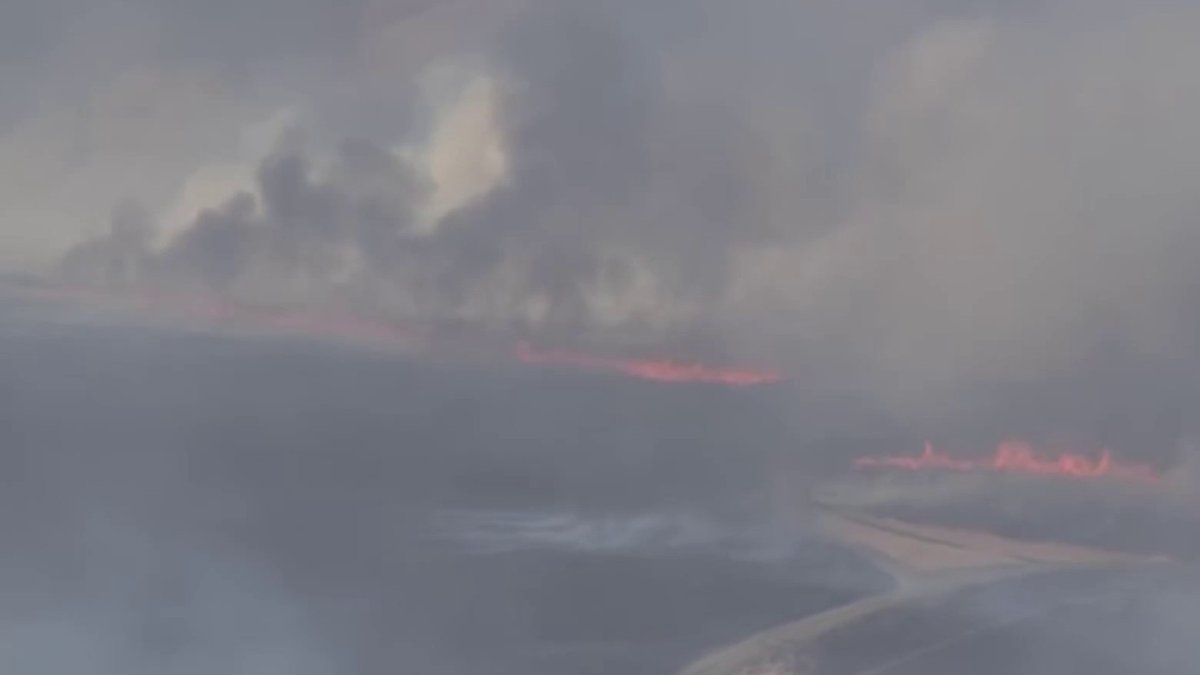
A Red Flag Warning begins at 5 a.m. Saturday and runs through Monday night across parts of the Bay Area, with high winds, dry conditions and warmer temperatures raising wildfire risk. Contra Costa County Fire said it is staffing wildland apparatus and water tenders, while PG&E is monitoring for possible public safety power shutoffs. The article is primarily a preparedness update following prior Bay Point brush fire scares near homes.
The immediate market impact is not the fire itself but the option value of operational disruption. Wind-driven red flag periods disproportionately benefit companies with localized, non-discretionary demand and penalize anything exposed to outage risk, emergency logistics, or elevated claims. In this setup, the first-order winner is the infrastructure/defense ecosystem: utilities, vegetation management contractors, backup power suppliers, and insurers all see a near-term pickup in activity, but the second-order winner is usually the aftermarket for resilience spending because homeowners and municipalities tend to convert one scare into multi-quarter capex decisions.
The more important catalyst is the probability of preemptive utility shutoffs. Even a limited PSPS event can create a short-duration but high-visibility stress test for grid operators, which matters because it can pull forward capex approvals and strengthen the case for hardening spend, undergrounding, and distributed generation. That dynamic is bearish for pure regulated-utility earnings quality in the near term, but positive for contractors, battery storage, and microgrid-adjacent names over 6-18 months if this becomes a recurring seasonal pattern rather than a one-off weather event.
For energy markets, the local effect is less about direct demand destruction and more about price-insensitive volatility in intraday power and retail fuel logistics. The bigger tail risk is reputational and regulatory: if winds coincide with an ignition event, utilities face a renewed liability overhang and possible acceleration of policy intervention. If the weekend passes without incidents, the trade fades quickly; if there is even a small fire, the response can extend well beyond weather duration because insurers and regulators reprice the probability of future losses, not just the current event.
AI-powered research, real-time alerts, and portfolio analytics for institutional investors.
Request DemoOverall Sentiment
mildly negative
Sentiment Score
-0.20
