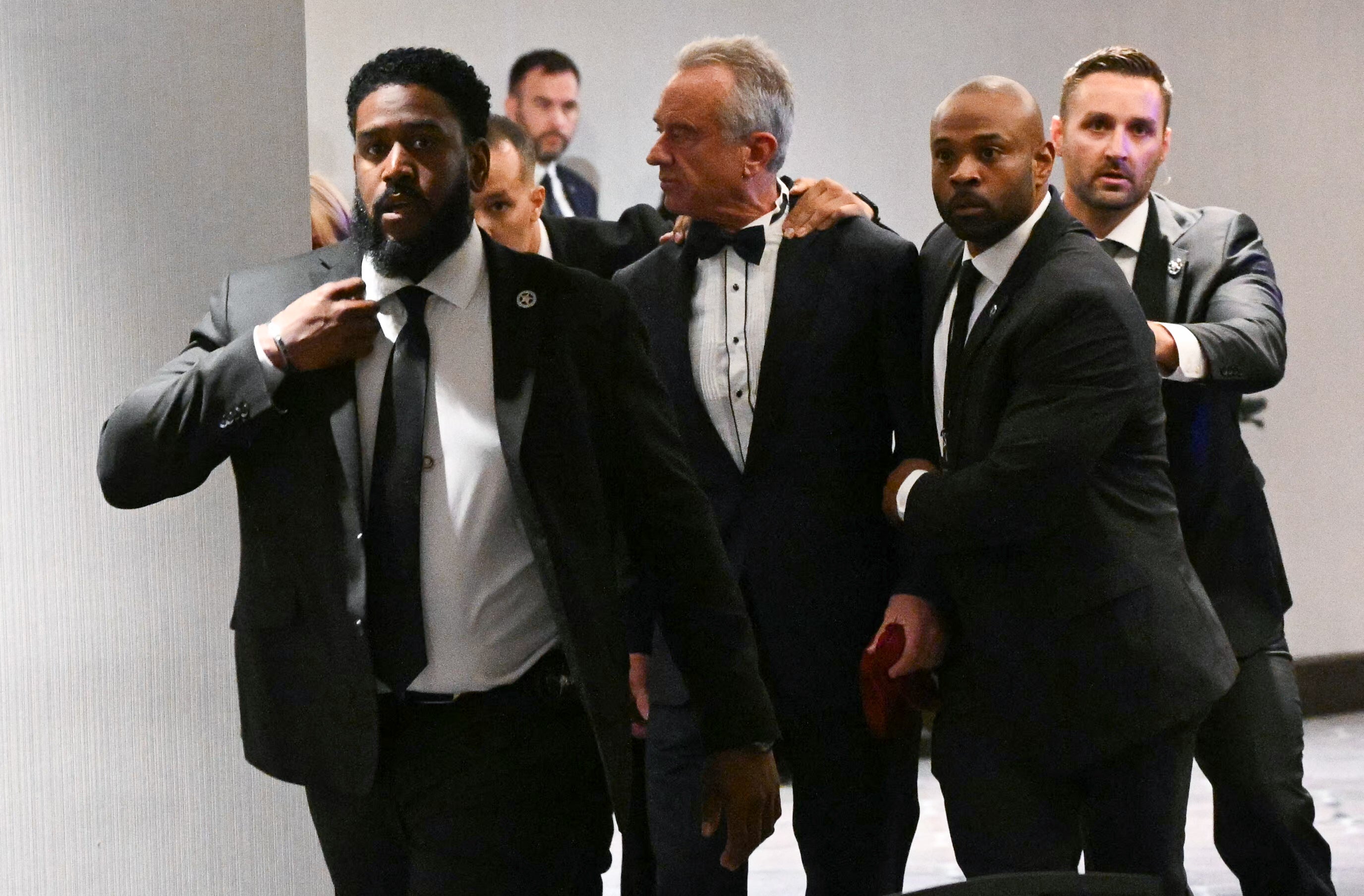
The article centers on President Trump’s proposed $400 million White House ballroom, which he says is needed for security after a shooting at the White House Correspondents’ Dinner. Trump says the project is privately funded and already fully funded, while a federal judge has temporarily halted the work and allowed a bunker project to continue. The story is primarily political and legal, with limited direct market impact.
The market implication is less about the ballroom itself and more about the precedent: a fast-moving security narrative can be used to reclassify a discretionary political capex project into a quasi-national-security asset. That matters because it expands the odds of administrative end-runs around normal procurement, litigation, and appropriations checks, which is bullish for contractors with federal security exposure and neutral-to-bearish for firms dependent on congressional earmarks or delayed public-work approvals. The key second-order effect is timing compression: once a project is framed as risk mitigation, objections shift from cost to urgency, and urgency tends to shorten legal review cycles.
The biggest near-term winners are not obvious architecture or construction names, but the ecosystem around secure facilities: perimeter security, surveillance, access control, hardened materials, and program-management consultants with federal relationships. Even if the project is partially stalled by the court, the political optics increase the probability that the administration allocates budget and attention elsewhere in the White House complex, creating a broader “security modernization” spend bucket that could bleed into other agencies. The loser set is broader than Democrats complaining about optics; donors and vendors tied to the ballroom narrative face headline risk if the project remains associated with grift rather than safety.
The contrarian view is that the event may actually hurt the project in the medium term by giving opponents a cleaner argument: if the stated security rationale is real, courts may scrutinize the record more aggressively, and any future incident will be seen as evidence of weak planning rather than proof the ballroom was necessary. That creates a binary catalyst path over the next 2-8 weeks: either the administration gets a sympathetic security exception and accelerates work, or the legal challenge hardens and the project becomes a liability. The more this becomes a culture-war proxy, the more funding and execution risk rise, even if the political message is temporarily favorable.
AI-powered research, real-time alerts, and portfolio analytics for institutional investors.
Request DemoOverall Sentiment
neutral
Sentiment Score
0.05
