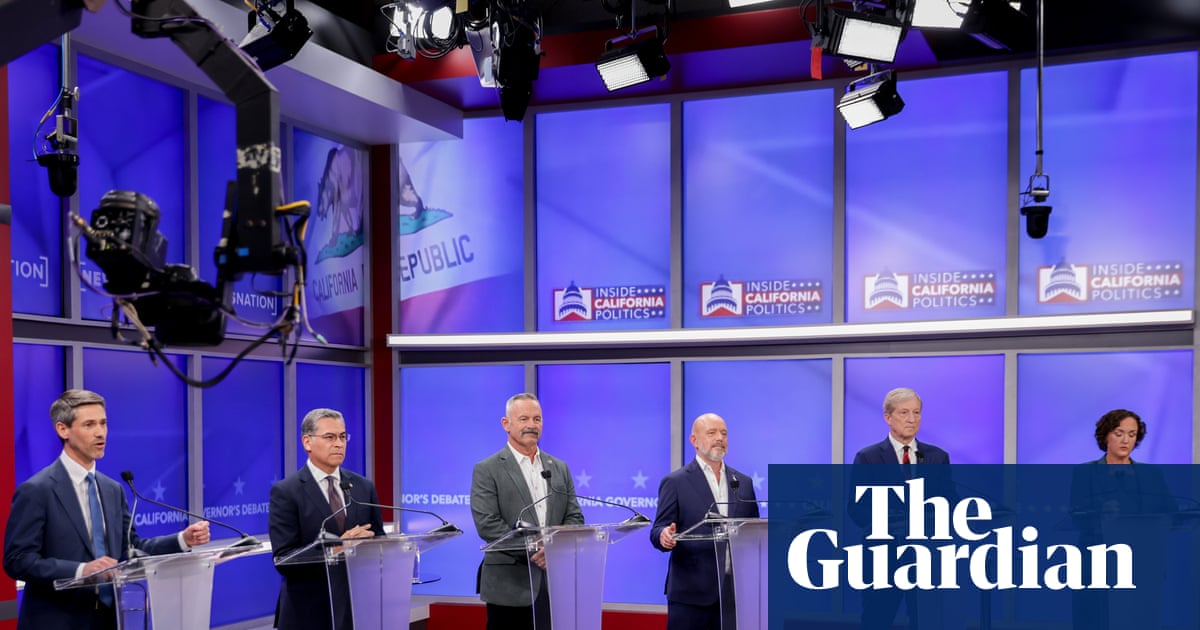
Six candidates for California governor sparred in the first debate of a volatile race, with nearly 25% of voters still undecided ahead of the 2 June primary. The discussion centered on affordability, housing, homelessness, AI regulation, and how to handle Donald Trump, but the debate did not produce a clear frontrunner or materially change the race. The article is politically significant but has minimal direct market impact.
The market-relevant takeaway is not the governor’s horse race itself, but the probability that California policy remains gridlocked in a way that preserves the status quo for housing supply, utility regulation, and AI oversight. A crowded field and weak consolidation increase the odds of a weak-mandate winner, which usually translates into slower legislative follow-through on permitting reform, homelessness enforcement, and pro-growth regulatory changes. That is incrementally negative for California-linked discretionary and residential housing supply chains over the next 6-18 months, because the state’s structural affordability problem is becoming more politically salient while the policy response remains fragmented.
For NXST, the direct impact is limited, but there is a subtle positive if local/affiliate news and political advertising stay elevated into the primary and potentially into a messy November runoff. A two-Republican general-election scenario would extend ad spending, debate programming, and earned-media demand across California stations and digital assets, supporting political revenue volatility in an otherwise soft core advertising environment. The bigger second-order effect is that election uncertainty raises tune-in, which can modestly improve near-term ratings leverage for local broadcasters even if the state-level outcome is unchanged.
The contrarian risk is that investors overestimate the likelihood of a Republican breakthrough in a two-to-one Democratic state and underprice the chance that Democrat consolidation happens quickly once ballots are mailed. If that occurs, the “shock” trade fades fast: political ad dollars peak early, debate-driven viewership normalizes, and any premium tied to headline volatility dissipates within days to weeks. The longer-dated risk for the broader California economy is that continued policymaking drift worsens affordability, keeping pressure on inland housing, rent-sensitive retailers, and consumer credit quality, but that is a months-to-years story rather than an immediate catalyst.
AI-powered research, real-time alerts, and portfolio analytics for institutional investors.
Request TrialOverall Sentiment
neutral
Sentiment Score
-0.05
Ticker Sentiment
