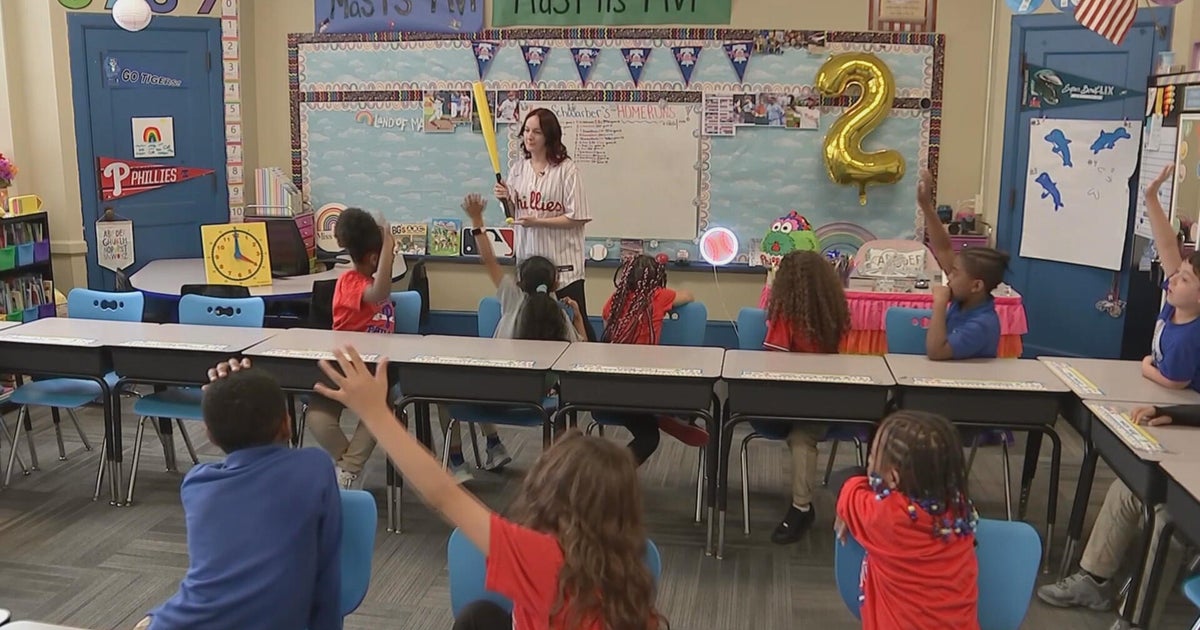
U.S. reading scores remain in a broad decline, with only five states and the District of Columbia showing meaningful reading growth from 2022 to 2025; nationally, students are still nearly half a grade level behind pre-pandemic reading levels. The article highlights a policy shift toward phonics-based "science of reading" reforms, screening for dyslexia, and teacher training, with Louisiana, Maryland, Tennessee, Kentucky and Indiana among the biggest improvers. Modesto and Detroit are cited as localized turnaround examples, but the piece is primarily an education policy and outcomes report rather than a market-moving event.
This is less a one-off education headline than a slow-moving labor-market and fiscal allocator story: districts that adopt disciplined literacy/math interventions are effectively buying future human capital at very high IRR, while laggards face compounding remediation costs. The second-order beneficiary is not just the obvious education-services ecosystem, but any employer or region exposed to long-run local workforce quality; the loser set is the broad swath of districts that delay adoption and then pay more later in special ed, absenteeism, and retention. The key nuance is that improvement is now bifurcating by governance quality, so “education” is no longer a monolith—capital should treat this as a state-level policy dispersion trade rather than a national macro trend.
The marketable catalyst is legislative diffusion: once a few states demonstrate measurable gains from phonics/attendance/accountability regimes, political pressure typically forces copycat laws within 12-24 months. That creates a potential second-order tailwind for teacher-training, assessment, and intervention vendors, but only if they can scale implementation rather than just sell curriculum. The risk is execution fatigue: if budget cycles tighten or superintendent turnover resets priorities, score gains can stall quickly because the benefits depend on consistent classroom practice and attendance enforcement, not just policy headlines.
Consensus is probably underestimating how much of the ‘recovery’ is already priced into public-school reform narratives while underappreciating the durability of the losers: districts with weak governance, chronic absenteeism, and low early-grade literacy may remain structurally impaired for years. The contrarian angle is that this is not a rebound story everywhere; it is a selection story where a small subset is generating measurable alpha and the median district is still drifting. That argues for investing only behind proven implementation capacity, not broad thematic exposure to K-12 improvement.
AI-powered research, real-time alerts, and portfolio analytics for institutional investors.
Request DemoOverall Sentiment
neutral
Sentiment Score
0.05
