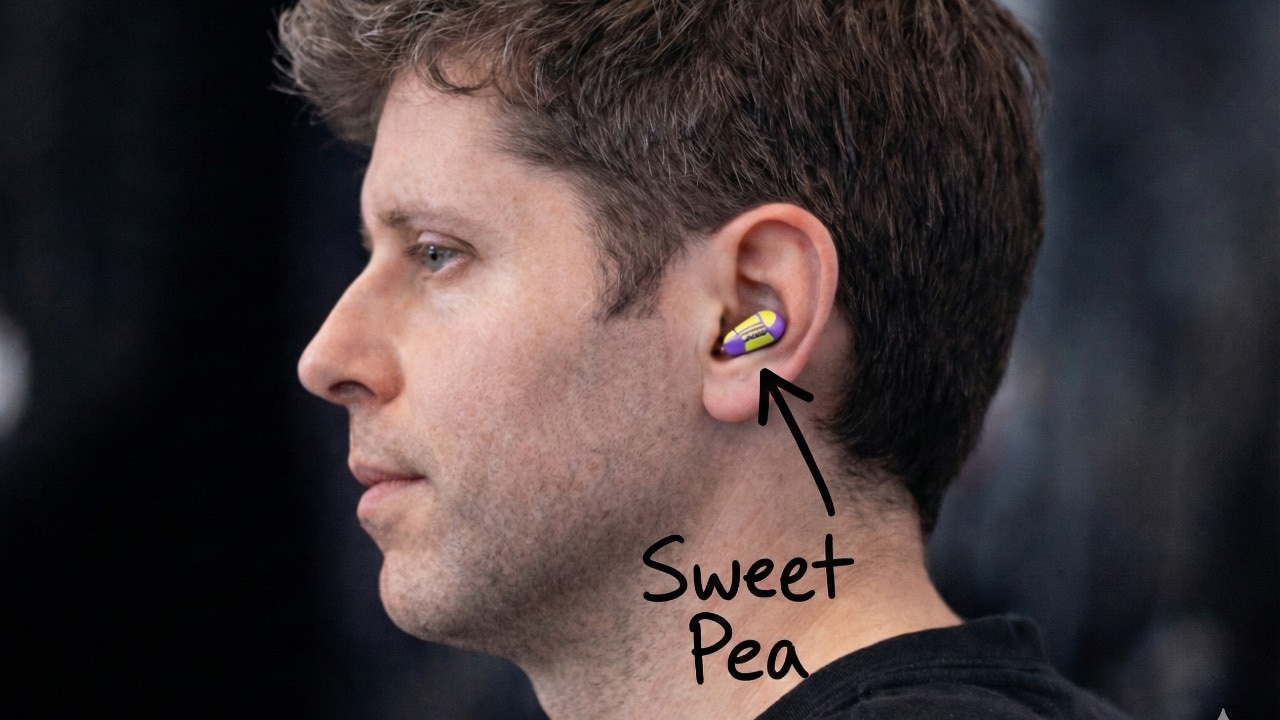
OpenAI is reportedly developing a voice-driven, earbud-shaped AI device codenamed "Sweetpea" slated for a 2026 (reported September) launch, positioning ChatGPT as a tiny always-on computer. Leaks indicate partnerships with Jony Ive’s design studio and Foxconn manufacturing, a smartphone-class 2nm processor (potentially Samsung Exynos) or a custom chip, a high bill-of-materials more akin to phones than earbuds, and an aggressive first-year sales target of 40–50 million units. If true, Sweetpea could expand the market for AI-first consumer hardware and directly challenge Apple AirPods by acting as an AI control layer across devices, but the story remains speculative and unconfirmed.
Market structure: Sweetpea would reallocate value from premium audio incumbents (AAPL AirPods) toward OEM manufacturers and AI infrastructure. Winners: Foxconn/Hon Hai (manufacturing scale), Samsung (Exynos 2nm; 005930.KS) and AI-inference suppliers (NVDA) who capture backend compute; losers: AAPL could face mid-single-digit wearables revenue share loss over 2–3 years and margin pressure if Apple defends price. Pricing power will bifurcate—Apple retains ecosystem premium; newcomers compete on AI services and subscription capture.
Risk assessment: Tail risks include regulatory/privacy backlash, Apple blocking deep OS integration, or Sweetpea failing to hit the leaked 40–50m unit target (probability >50% for <10m units in year one). Immediate (days) noise risk is headline-driven volatility in AAPL and supplier names; short-term (3–12 months) depends on Foxconn contract confirmation and component supply; long-term (2026–2028) hinges on recurring services/subscriptions and datacenter inference costs. Hidden dependency: success requires carrier/cloud partnerships and sub-200ms on-device+cloud latency to make voice-first UX stick.
Trade implications: Favor AI infrastructure exposure (NVDA) and Foxconn (2317.TW/HNHPF) sized 2–3% each; hedge AAPL (1–2%) with 9–12 month put spreads to limit cost. Pair trade: long NVDA, short AAPL (equal notional 1–2%) to express structural AI upside vs consumer audio threat. Use options where time/value of headlines matters: buy NVDA 9–12 month calls, buy AAPL 9–12 month put spreads; scale in on Foxconn contractual confirmations (3–9 months).
Contrarian angles: Consensus overestimates immediate Apple share loss and underestimates integration friction—Apple can retaliate via tighter iOS hooks or bundle AirPods with services. Historical parallel: Amazon/Google audio devices created new markets but didn’t kill smartphone incumbents; expect modest disruption rather than wholesale substitution. If Sweetpea’s BOM makes retail pricing >$400, addressable market likely <10–15m first-year units, offering a short-term reality check for exuberant supplier re-rates.
AI-powered research, real-time alerts, and portfolio analytics for institutional investors.
Request DemoOverall Sentiment
mildly positive
Sentiment Score
0.30
Ticker Sentiment
