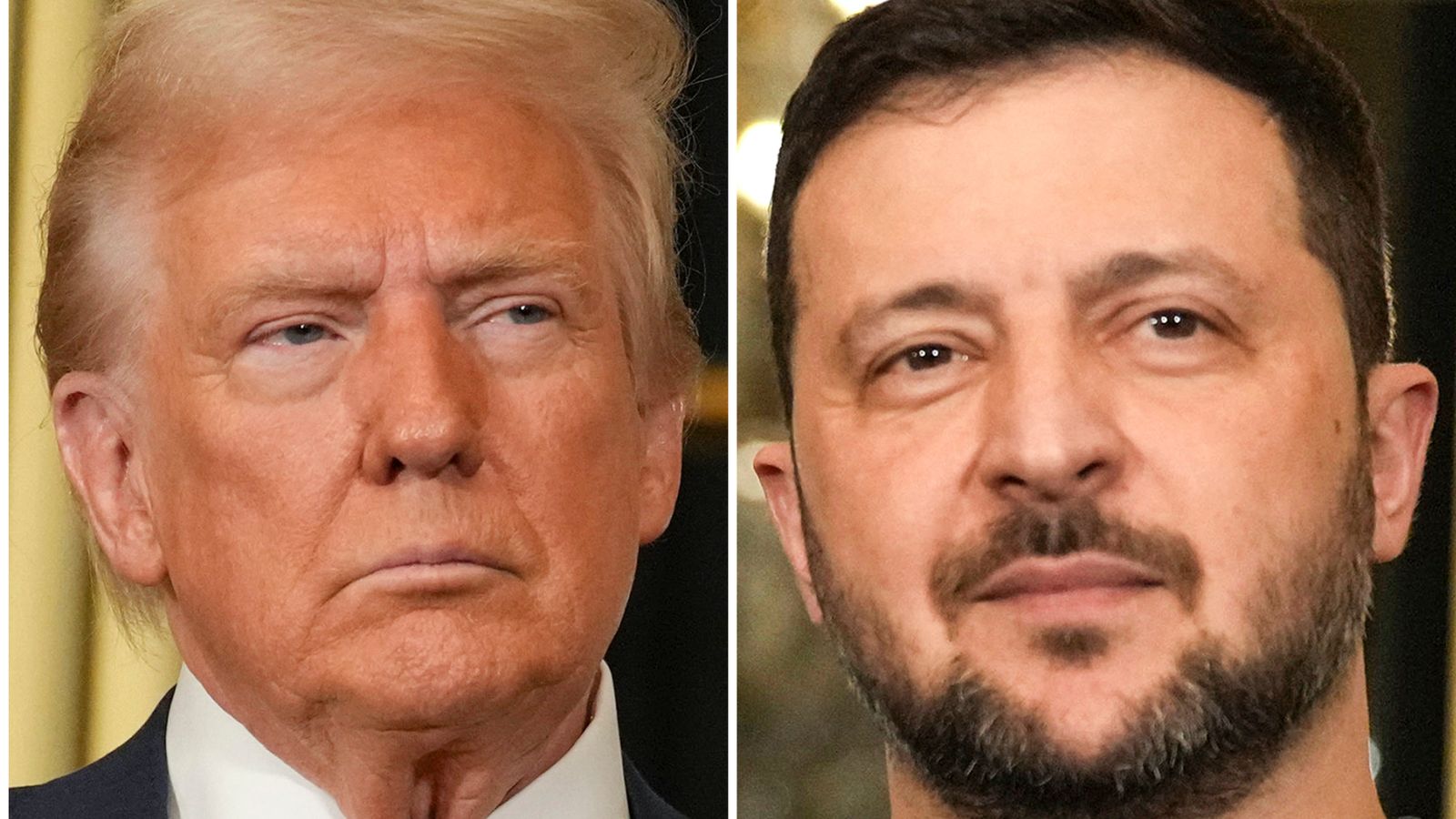
Ukrainian President Volodymyr Zelenskyy will meet US President Donald Trump to advance a roughly 20-point peace framework that Zelenskyy says is 'about 90% ready,' with security guarantees and an economic agreement high on the agenda. Key unresolved items — legally binding security guarantees (the US reportedly offered a 15‑year renewable deal), territorial status of Donbas, and control/operation of the Zaporizhzhia nuclear plant — leave substantial uncertainty for energy supply and defense spending trajectories; Kyiv has floated a referendum option contingent on a 60‑day ceasefire. Recent Russian missile and drone strikes and Putin’s insistence on territorial demands underscore the risk that talks may not produce an immediate market‑clearing outcome, making near‑term volatility in energy and defense-related assets more likely.
Market structure: A near-term Zelenskyy–Trump rapprochement compresses tail-risk pricing but leaves large structural winners (US/European defense primes LMT, NOC, RTX; uranium producers CCJ, DNN; LNG exporters) and losers (Russian energy/industrial counterparties, Ukrainian power generators). Security guarantees + reconstruction funds shift multi-year demand toward heavy equipment (CAT), construction materials (VALE/MT/CRH proxy exposure), and capital goods; oil and European gas see asymmetric upside if talks fail — expect 5–20% price swings in Brent/TTF on binary outcomes.
Risk assessment: Tail risks include a breakdown or Russian escalation (low-probability, high-impact: >$15/bbl oil spike, TTF gas +30%, NATO involvement raising US defense capex), versus a rapid peace deal that could compress defense multiples by 15–25% over 3–6 months. Immediate window (days) is headline-driven; short-term (weeks–months) will reprice guarantees and reconstruction flows; long-term (years) depends on legal force of guarantees and scale of reconstruction (>$100bn implied demand for capital goods).
Trade implications: Tactical plays: 1) establish 2–3% long in LMT/NOC for 6–12 months with 3–6 month protective puts (10–15% OTM) to hedge peace risk; 2) add 1–2% exposure to CCJ or URA for a 12–36 month uranium reflation; 3) buy oil/gas call spreads (3-month Brent 1x2) if headlines show ceasefire failure and set stop at $90/bbl. Rotate out of European utilities/EM Russia-exposed credit and into US Treasuries/IG for 1–3 month safety.
Contrarian angles: Consensus prices prolonged war; market underestimates a negotiated partial settlement that includes surface-level territorial concessions but long legal disputes — such an outcome would cause an overshoot lower in defense stocks and uranium miners (20%+). Conversely, a confirmed 15-year US guarantee without NATO entry could be treated as weaker than markets expect and keep defense elevated; watch US Congress language and Putin’s public response within 72 hours as high-info triggers.
AI-powered research, real-time alerts, and portfolio analytics for institutional investors.
Request DemoOverall Sentiment
moderately negative
Sentiment Score
-0.35
