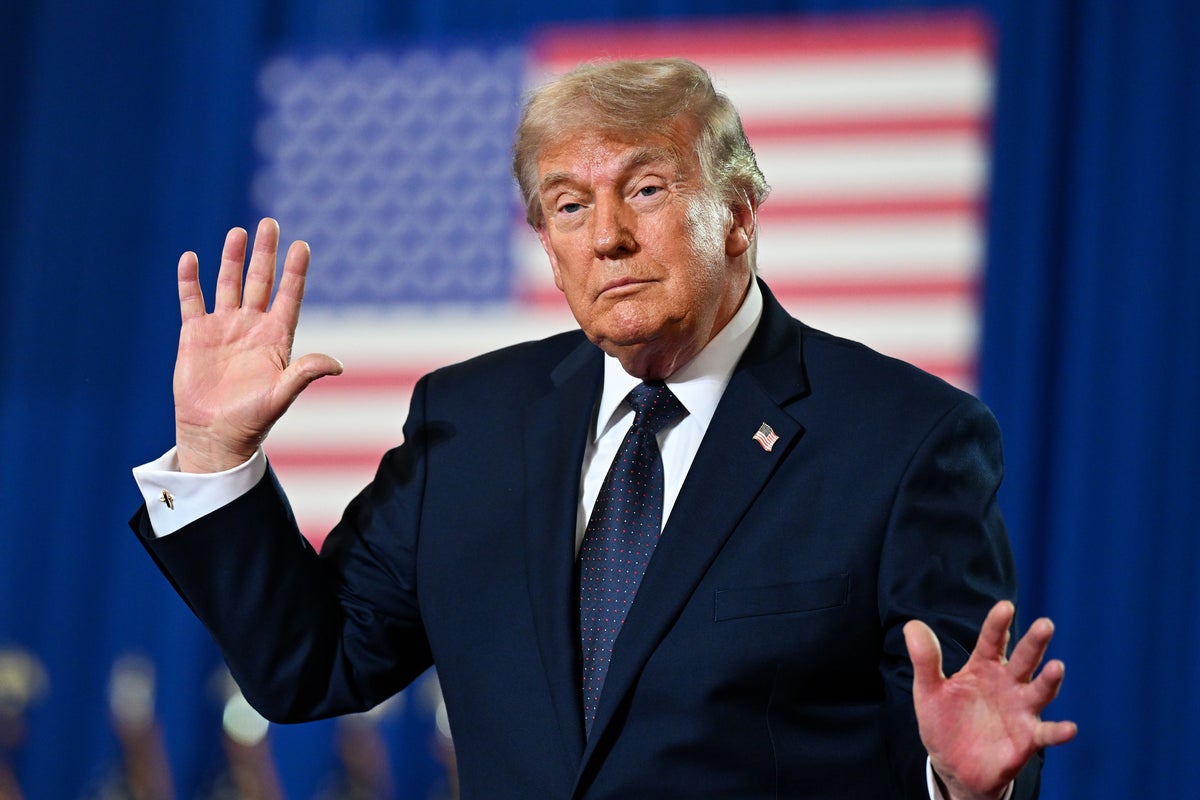
Polling shows 51% of Americans believe Trump’s mental faculties have declined over the past year, while just 40% think he has the sharpness required for the presidency. The article highlights growing concerns about his physical and mental fitness ahead of a scheduled annual physical at Walter Reed, but it does not introduce a direct market-moving policy or economic development. The impact is likely limited to political sentiment and governance concerns rather than broad financial markets.
This is less a direct market event than a regime-shaping governance risk premium. A sustained erosion in presidential credibility increases the probability of policy whiplash: more headline-driven decision-making, more intra-admin friction, and a higher chance that the White House compensates with louder, more adversarial signaling on trade, immigration, Fed pressure, and foreign policy. That tends to steepen the implied tail in volatility markets even if spot assets initially shrug, because investors start discounting a wider distribution of policy outcomes rather than a single base case.
The first-order beneficiaries are not obvious sector winners but hedges on institutional instability: front-end rate volatility, gold, and discretionary hedges tied to political shock. The second-order losers are domestic cyclicals and small caps with high policy beta, since they are most exposed to abrupt sentiment turns, regulatory changes, and consumer confidence deterioration if the narrative of executive weakness becomes bipartisan. Healthcare itself is not the trade; the more important read-through is that markets may begin assigning a higher probability to unplanned succession or 25th-Amendment-style crisis pricing over the next 3-9 months.
Catalyst timing matters. In the next few days, the physical is a binary headline risk event, but the larger catalyst is whether coverage of cognitive decline becomes self-reinforcing through summer polling and legislative conflict. If the White House can force a reset with strong optics or a clean bill of health, the trade unwinds quickly; if not, every erratic foreign-policy or tariff headline compounds the discount. The consensus may be underestimating how quickly this can move from reputational noise to a measurable risk premium in rates, FX, and equity factor leadership.
Contrarian view: the market may already be accustomed to this style of governance, so the direct equity beta could be smaller than the media intensity suggests. The more durable opportunity is in volatility structuring and relative-value rather than outright direction. The right posture is to own convexity into event windows and fade complacency in sectors priced for clean policy execution.
AI-powered research, real-time alerts, and portfolio analytics for institutional investors.
Request DemoOverall Sentiment
moderately negative
Sentiment Score
-0.35
