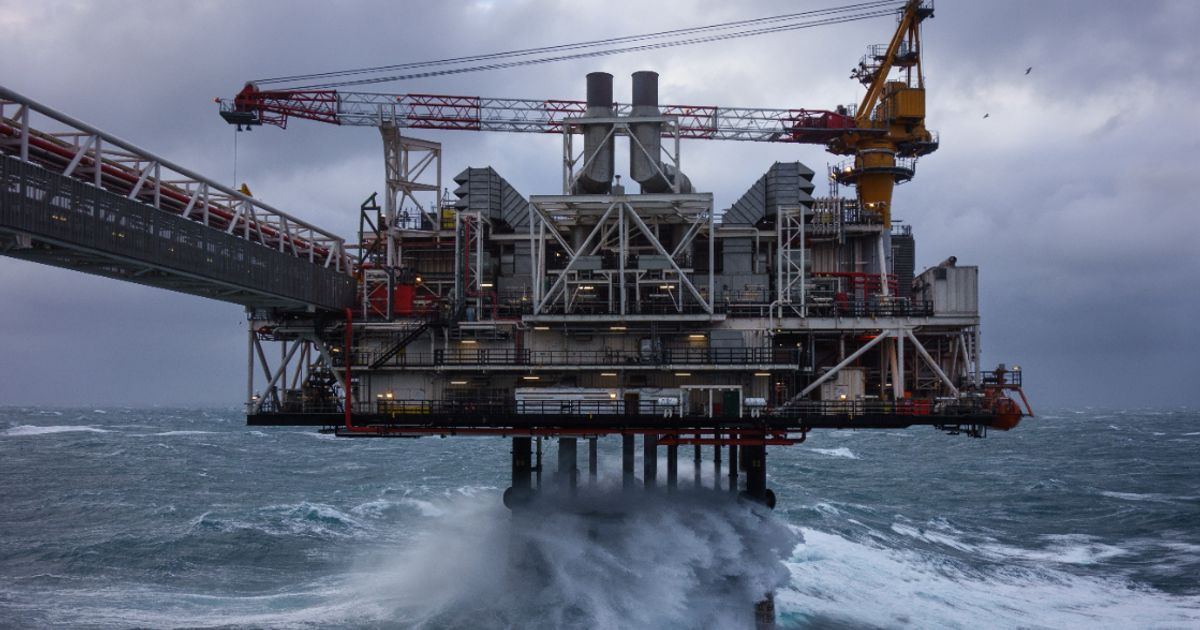
The UK reset of the Energy Profits Levy materially improves the Buchan redevelopment economics for Jersey Oil & Gas (AIM:JOG) by allowing capital spent before the levy ends in March 2030 to attract tax offsets of 84.25%, while production revenues are likely to fall into a lower permanent 40% tax regime after 2030. Jersey retains a 20% carried interest in a farmed-out development with partners NEO Energy and Serica, has cut annual cash costs to ~£1.5m, held £11m cash at end-2025 and is due £15m ($20m) on final development plan approval; it also carries >£100m of UK tax losses that improve post-2030 returns. Operational work (EIA addendum, value engineering on drilling and subsea) continues, but execution risk remains given offshore complexity and long lead times.
Market structure: The UK fiscal reset is an asymmetric win for small non‑operator partners with carried interests (direct winners: Jersey Oil & Gas AIM:JOG / OTC:JYOGF, and operators with scale such as Serica SQZ.L) because it front‑loads tax relief on capital spend through Mar 2030 while capping long‑run tax at 40%. Larger E&P players who can deploy capital quickly will gain incremental share of redevelopment projects; high‑cost marginal explorers and pure‑play greenfield drillers are losers as capital reallocates to lower‑risk redevelopments. Net supply impact is regionally constructive but modest (Buchan is material to company cash flows, not global Brent—expect <1–2% downward local pressure on UK supply scarcity premiums). Cross‑asset: modest positive for GBP (investment and jobs), neutral‑slightly supportive for UK corporates; gilt impact minimal unless program scales across basin.
Risk assessment: Key tail risks are policy reversal (legislative change before Mar 2030), JV default or dilution, and >30% CAPEX overruns that destroy the carry economics; low‑probability but >€50m downside to Jersey if partners walk. Time horizons: immediate (days) — sentiment squeeze on JOG on headlines; short (1–6 months) — EIA addendum, final development plan (FDP) and £15m JV payment are binary catalysts; long (1–5 years) — first oil timing (likely post‑2030) and utilisation of >£100m tax losses. Hidden dependencies: effective use of tax losses requires sustained UK taxable profits and HMRC interpretation; carry terms may contain clawbacks tied to cost or schedule overruns.
Trade implications: Primary actionable: establish a tactical long in Jersey Oil & Gas (AIM:JOG / OTC:JYOGF) sized 2–3% NAV with a 12–24 month horizon — thesis: 20% carried interest + £15m near‑term cash and tax‑loss optionality support >1.5x equity upside on sanction; place hard stop at −35% and scale up to 5% on FDP approval or JV cash receipt. Pair trade: long JOG vs short small‑cap AIM E&P basket (replaceable by XOP for US exposure) to isolate Buchan carry economics; use 12–18 month OTM call buys on JOG if available (or long equity if illiquid) and buy 6–12 month protective puts to cap downside. Rotate 1–2% from renewable/late‑stage green energy names into UK E&P redevelopments where fiscal tailwinds are explicit.
Contrarian angles: Consensus underweights the optionality of >£100m tax losses and the timing arbitrage created by front‑loaded relief; the market may be too pessimistic about funding because Jersey retains real cash (£11m) plus £15m JV payments. Conversely the market may under‑price execution risk (drilling delays, subsea supply chain inflation): if CAPEX overruns >30% or partners slow spend, equity downside could exceed 50%. Historical parallels (UK basin tax tweaks) show quick re‑rating on credible sanction dates but frequent re‑set on cost inflation; monitor FDP approval and partner capex commitments closely as the decisive signals.
AI-powered research, real-time alerts, and portfolio analytics for institutional investors.
Request DemoOverall Sentiment
moderately positive
Sentiment Score
0.45
