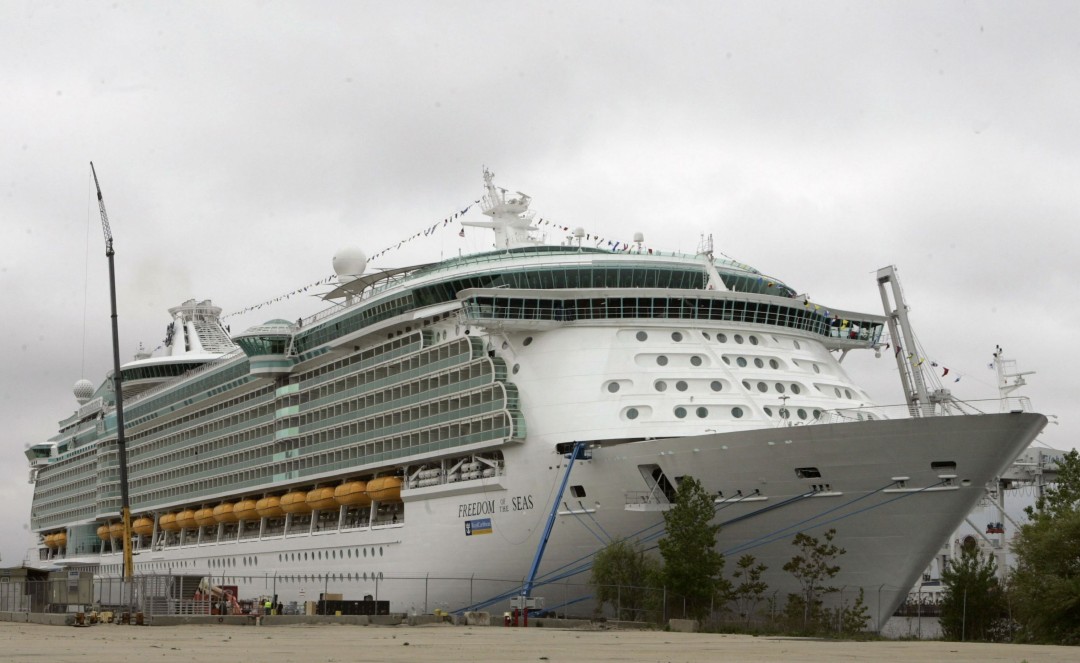
More than 20 sailings on Freedom of the Seas between May and September 2027 have been canceled, affecting thousands of passengers on a ship that can carry nearly 4,000. Royal Caribbean says the cancellations stem from its "ongoing itinerary planning process" and will redeploy the ship to Southampton, offering automatic rebooking options or full refunds and prepaid add-on reimbursements. The redeployment and wiped-out existing bookings create near-term revenue and booking disruption risks for the affected itineraries, while the company frames the change as a demand- and capacity-driven fleet strategy. Rival Carnival has taken a similar step, indicating sector-wide itinerary reshuffling rather than idiosyncratic operational failure.
This is a fleet redeployment signal more than an isolated scheduling snafu: moving high-capacity tonnage to Europe for 2027 implies management expects higher per-passenger economics (yields + ancillaries) there versus the affected Caribbean sailings. Because cruise booking lead times cluster 6–18 months, the decision both reflects and will feed into forward-booking dynamics — expect discernible pressure on RCL’s near-term cash collection and onboard revenue recognition in the next 60–120 days as refunds/rebooks settle.
Across the industry, similar moves by peers point to localized demand saturation or tactical capacity management rather than fleet health issues; the second-order winners are ports/airlines/hotels in Southampton/Europe and OTAs that capture forced rebookings, while Miami-centric service providers and Caribbean supply chains will see lower ancillary volume. Operationally, redeployment carries non-trivial one-off costs — reposition voyages, crew rotation, drydock windows, and differing port fees — which will compress incremental free cash flow in the next 1–3 quarters even if long-run ARPU improves.
Key catalysts and monitoring items: daily/weekly booking velocity vs 2019 baseline and RCL’s next booking update, incremental refund magnitude disclosed in short-term cash flow statements, and competitor redeployments that would either alleviate or exacerbate Caribbean capacity glut. Tail risks that would materially worsen the view include a macro consumer-spend shock (3–6 month horizon) or fuel cost spikes that widen marginal voyage economics; reversal catalysts are a surge in late-cycle bookings or coordinated industry capacity pulls within 3–9 months.
Tactically, this creates a bifurcated trade set-up — hedge immediate execution and guidance risk while maintaining optional upside to a successful European redeployment. Execution should be calibrated to event timing (refunds/rebooking windows over next 60–120 days) and to company disclosures (quarterly guidance and booking cadence updates).
AI-powered research, real-time alerts, and portfolio analytics for institutional investors.
Request DemoOverall Sentiment
mildly negative
Sentiment Score
-0.15
