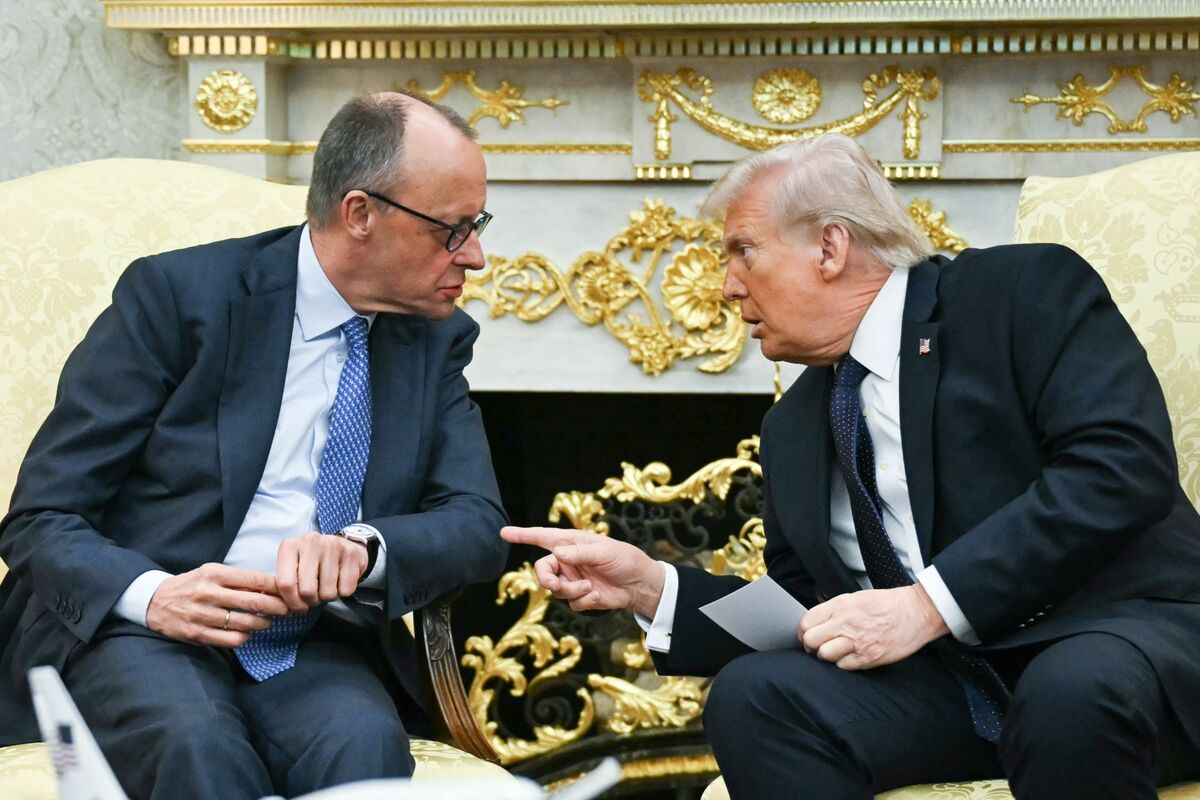
German Chancellor Friedrich Merz plans to host the E5 leaders — Germany, France, the UK, Italy and Poland — in Berlin later this month to prepare a plan for NATO talks with President Trump in July. The agenda is to show European allies are taking greater responsibility for defense spending and burden-sharing, with NATO Secretary General Mark Rutte also expected to attend. The article is geopolitical and diplomatic in nature, with limited direct market implications.
The market implication is less about any immediate defense spend and more about signaling a coordinated European attempt to pre-empt U.S. pressure over burden-sharing. That matters because the next marginal euro of defense procurement is likely to be steered toward interoperable, fast-delivery systems rather than long-cycle prestige programs, which shifts bargaining power toward missile defense, ammo, C2 software, EW, drones, and maintenance-heavy incumbents. The second-order winner set is therefore broader than primes alone: systems integrators, munition suppliers, and logistics/maintenance providers should see better order visibility if this political choreography translates into budget commitments.
The key catalyst window is the July NATO summit, but the real tradeable horizon is 6-18 months because procurement announcements tend to lag political agreements. A credible European package could steepen the defense order book for companies with NATO-standardized inventory and European manufacturing footprints, while also pressuring U.S. contractors that are overly dependent on domestic appropriations or have less exposure to Europe. If the outreach fails, the opposite risk is not lower spend per se, but greater budget fragmentation and slower procurement, which tends to favor the most politically connected national champions rather than the most efficient suppliers.
The contrarian angle is that the market may be overestimating how much of this becomes incremental spending versus re-labeled spending. European governments can recycle existing commitments into a "readiness" narrative without materially changing medium-term fiscal paths, especially with debt sensitivity rising. So the cleanest expression is not a blanket long-defense trade; it is a relative-value bet on firms with near-term backlog conversion and Europe exposure, while avoiding names that need a multi-year capex cycle to justify valuation.
Tail risk: if the summit produces a visible European pledge but U.S. rhetoric still hardens, Trump could treat it as insufficient and demand larger, more explicit increases, keeping a policy overhang on transatlantic defense coordination for months. In that case, defense equities may pop on headline flow and then mean-revert as investors realize the initiative is mostly diplomatic, not budgetary. The right time to fade would be after the first headline-driven rerating, before actual contract awards arrive.
AI-powered research, real-time alerts, and portfolio analytics for institutional investors.
Request DemoOverall Sentiment
neutral
Sentiment Score
0.00
