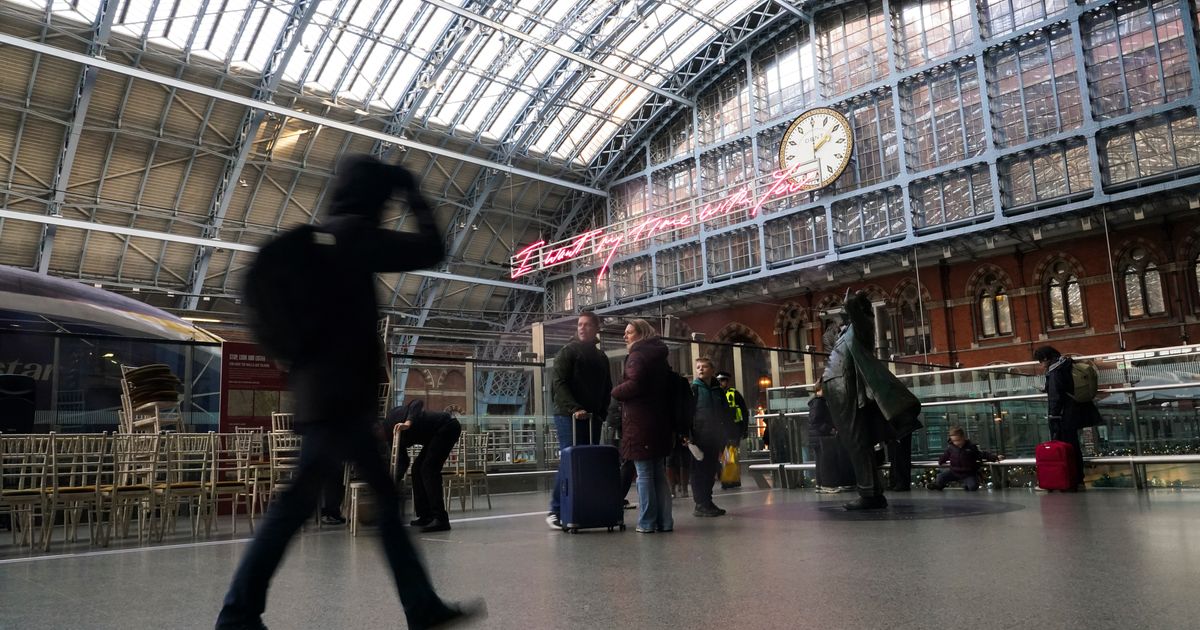
Cross-Channel rail services resumed after Eurotunnel fixed an internal power fault overnight, restoring the 50-km link to “full capacity,” but Eurostar warned of continued delays and cancellations from knock-on effects. A related overhead power cable failure on the U.K. side stranded passengers and led to multi-hour disruptions on London–Paris, London–Brussels and London–Amsterdam services, with at least one journey extended to ~11 hours without reliable power. The incident highlights operational and reputational risks for Eurotunnel/Eurostar, potential short-term shifts to air and bus travel, and lingering uncertainty given the unspecified cause and downstream scheduling impacts.
Market structure: Direct losers are Eurotunnel (GET.PA) and Eurostar (private) via reputational damage and potential compensation; immediate beneficiaries are short-haul airlines (IAG.L, EZJ.L, RYAAY) and cross-Channel ferry/coach operators (DFDS.CO, NEX.L) that can capture 5–15% incremental demand over the next 7–30 days. Infrastructure suppliers (ALO.PA, SIEGY) are medium-term winners if regulators mandate safety upgrades; expect negotiated maintenance contracts and spare-parts demand to lift their near-term order books by low double digits. Cross-asset: expect small GBP weakness vs EUR/GBP (<1%) intraday on headlines, slight widening of short-dated corporate spreads for travel names, and a transient rise in jet fuel demand but no material commodity move.
Risk assessment: Tail risks include a >1-week tunnel shutdown (low-probability, high-impact) that could cause >€100–300m cumulative compensation and lost revenue across operators and force state intervention. Immediate (days): travel diversion to air/sea; short-term (weeks–months): revenue shifts and capex tendering; long-term (quarters+): potential regulatory-mandated capex raising fixed costs for GET.PA while boosting suppliers. Hidden dependencies: insurance coverage limits, bilateral UK/EU coordination, and spare-parts lead times (4–12 weeks) that can amplify disruption. Key catalysts: regulator probe publication (0–30 days), Eurotunnel trading update (7–14 days), and holiday travel cadence (next 14 days).
Trade implications: Tactical short 1–2% portfolio GET.PA or buy 3-month put spread (sell lower strike to fund premium) with stop-loss at +30% and target 30–50% downside if further disruptions occur; simultaneously deploy 1% long positions in DFDS.CO and NEX.L to capture 5–15% upside over 2–8 weeks. Mid-term (3–12 months) establish a 1–2% long in ALO.PA and/or SIEGY to play mandated maintenance/capex with a 12-month target +15–30%. Option skew trade: buy 1–3 month IAG.L 10–20% OTM call spread sized 0.5–1% to capture displaced air demand.
Contrarian angles: The market may over-penalize GET.PA on headline risk while underpricing upside to suppliers; if investigation attributes fault to third-party power vendor, GET.PA downside is capped and suppliers win — a scenario that would flip shorts to longs within 30–90 days. Historical parallel: past Channel Tunnel incidents (~2015) compressed and then rebounded shares within 6–12 months after visible remediation and contract awards. Unintended risk: government support or forced compensation caps would limit downside for GET.PA and channel more cash to suppliers; therefore monitor regulator language and capex tender notices closely and be ready to reverse positions within 14–30 days if signs point to state intervention.
AI-powered research, real-time alerts, and portfolio analytics for institutional investors.
Request DemoOverall Sentiment
moderately negative
Sentiment Score
-0.45
