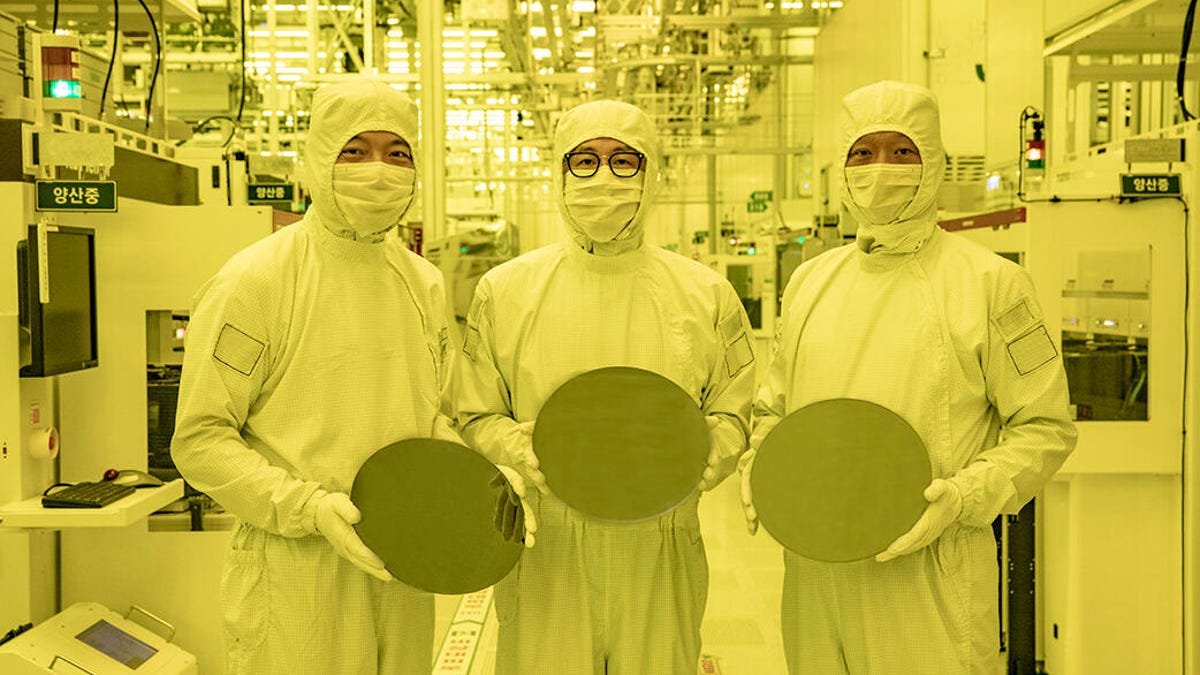
Samsung reported record first-quarter profits of $31.72 billion, up almost 500% from a year earlier, driven by a nearly 50-fold jump in chip revenue. The company said it has sold out all memory production capacity for the rest of this year and warned the global memory shortage tied to AI demand will worsen into 2027. The tight supply environment is supporting Samsung’s chip business but is also pushing up prices across electronics, from laptops and smartphones to gaming consoles.
The key second-order effect is not just stronger memory pricing, but a reallocation of capex and inventory power across the semiconductor stack. When memory becomes scarce, hyperscalers and device OEMs get forced into a rationing regime: they either slow unit growth, raise finished-goods prices, or accept lower margins to secure supply. That creates a subtle but important bid for the entire AI infrastructure complex, because any company with secure memory allocation can keep shipping accelerators, servers, and premium devices while less integrated competitors are forced to miss delivery windows.
For NVDA, the near-term issue is less about demand destruction and more about bill-of-materials inflation and customer timing friction. If memory tightens into 2026-27, some enterprise AI deployments will get delayed not because compute demand fades, but because server build-outs become constrained by components outside the GPU line item. That tends to compress unit growth rates intermittently while keeping pricing power intact for the most supply-constrained platforms.
AAPL, MSFT, and GOOGL are interesting because they are both demand drivers and quasi-competitors for memory capacity. The market may underappreciate that this can widen the gap between the largest cash-rich platform firms and smaller hardware OEMs: the megacaps can pre-buy supply, absorb working-capital drag, and pass through price selectively, while the rest of the ecosystem cannot. Over the next 6-12 months, the more visible impact may show up in consumer electronics margin commentary rather than in headline AI capex numbers.
The contrarian risk is that consensus is treating this as a clean bullish semis setup when it is partly a congestion trade. If memory prices spike too far, hyperscaler procurement teams can temporarily defer deployments, substitute architectures, or stretch server refresh cycles, which could create pockets of digestion in 2H26 rather than a straight-line uptrend. The best asymmetry is in names with secured supply or pricing leverage, not in the broader semiconductor basket where margin inflation can mask volume deceleration.
AI-powered research, real-time alerts, and portfolio analytics for institutional investors.
Request DemoOverall Sentiment
strongly positive
Sentiment Score
0.72
Ticker Sentiment
