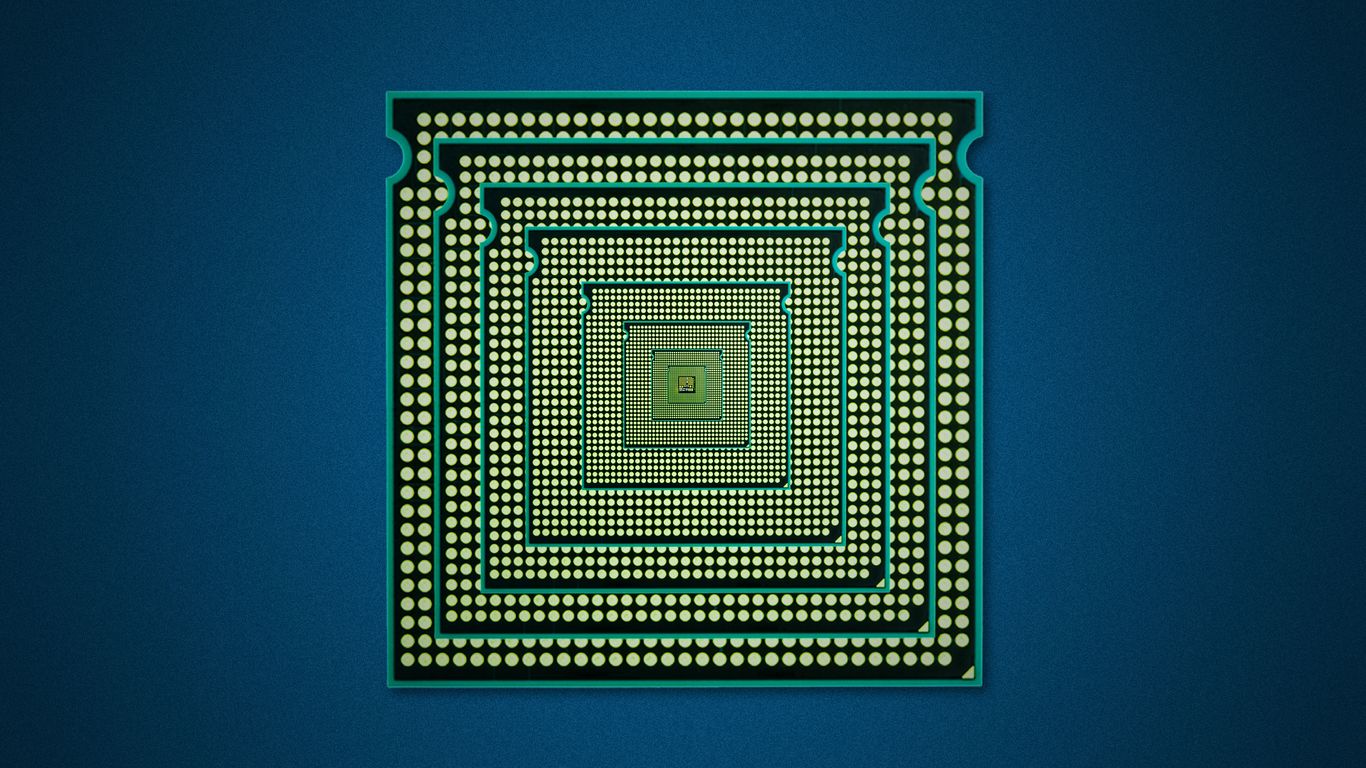
Intel is up 110% year to date and hit a new all-time high, highlighting a major turnaround as AI demand shifts value toward hardware and semiconductor suppliers. The article frames AI as a 'creative destruction' cycle, with semiconductor equipment makers up nearly 63% while IT consulting firms are down nearly 28%. Intel CEO Lip-Bu Tan said CPUs are becoming the indispensable foundation of the AI era, supporting the stock’s re-rating.
The market is no longer rewarding “AI exposure” generically; it is rewarding leverage to the buildout layer and punishing businesses whose value proposition can be compressed by automation. That makes the current leadership narrower than it looks: tools, lithography, advanced packaging, memory, and compute infrastructure are absorbing capex, while labor-heavy IT services are at risk of a multi-quarter margin reset as clients force pricing down and ask models to replace billable hours.
Intel’s move is more interesting as a capital-allocation and supply-chain signal than as a simple turnaround story. If CPUs re-enter the AI stack as inference scales, the beneficiary set could broaden from GPU-only picks-and-shovels to a more diversified compute mix, which would matter for servers, networking, and foundry equipment demand over the next 6-18 months. But that also raises the bar for execution: any slip in process roadmap, foundry yields, or customer win rate will quickly reclassify the stock from “re-rating” to “hope trade.”
The biggest second-order effect is that AI capex may be creating a temporary oligopoly premium for equipment names without guaranteeing durable operating leverage. If hyperscalers start optimizing spend, the first thing to get cut is usually incremental capacity and consulting services, which is why the downside for services can persist even after the headline AI trade cools. Conversely, the current underperformance in software-heavy and consulting-linked names may not be fully priced if management teams begin to acknowledge outright substitution risk rather than mere demand softness.
Consensus is probably underestimating how cyclical this transition is. Early winners in platform shifts often mean-revert once capacity catches up and the market moves from scarcity to efficiency, so today’s strongest names are not automatically the safest long-duration holds. The more interesting trade is to own the enablers with direct budget linkage while fading the labor-arbitrage losers and staying alert for a rotation once capex growth decelerates.
AI-powered research, real-time alerts, and portfolio analytics for institutional investors.
Request DemoOverall Sentiment
moderately positive
Sentiment Score
0.60
Ticker Sentiment
