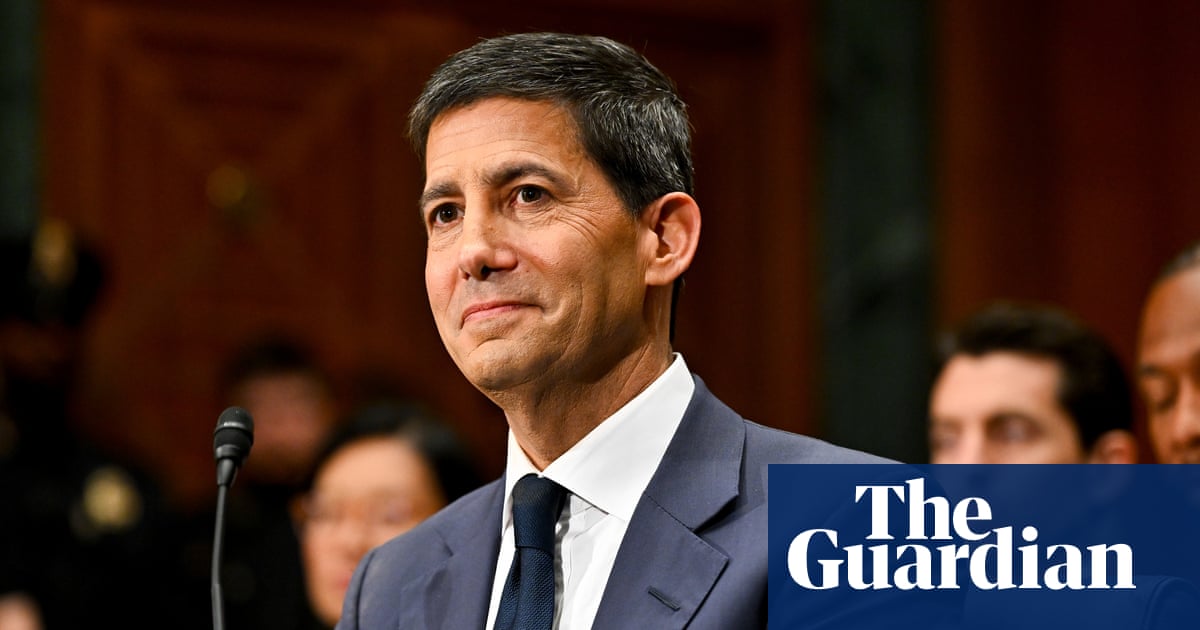
The US Senate confirmed Kevin Warsh as Fed chair by a 54-45 vote, the most divisive confirmation in the role’s history, with his 14-year board term and 4-year chair term beginning May 14. Warsh is expected to face intense pressure over rates as inflation rises to 3.8% and the Trump administration pushes for lower borrowing costs. The article highlights a sharp political split over Fed independence, but the immediate market read is driven by the leadership change at the central bank.
The immediate market implication is not a simple “dovish Fed” trade; it is a rise in the probability distribution of policy-path volatility. When the chair is perceived as politically contingent, rates markets usually price a lower terminal path in the near term but a higher term premium farther out, because investors demand compensation for regime risk and for the possibility that inflation tolerance becomes asymmetric. That combination can flatten the front end while steepening the long end, a setup that is constructive for carry trades but dangerous for duration if credibility erodes.
The second-order effect is on the dollar and real assets. A Fed chair under pressure to ease into rising inflation tends to weaken the USD on a 3-6 month horizon, which supports commodities, gold, and non-US equities, but only until the market believes inflation expectations are becoming unanchored. If that credibility break starts to show up in breakevens, nominal Treasuries can sell off even as growth data soften, creating a bad mix for traditional 60/40 positioning.
The key risk catalyst is the first few policy meetings after the transition: if the new chair signals any willingness to prioritize growth over inflation while the data remain firm, the market will quickly test the Fed’s reaction function. Conversely, if the rest of the voting bloc resists and the chair is boxed in, the initial dovish impulse could reverse sharply, especially in rates and gold. The consensus may be underestimating how little control one chair has absent broader committee alignment; that makes the trade less about immediate cuts and more about higher dispersion across rates, FX, and inflation-linked assets.
AI-powered research, real-time alerts, and portfolio analytics for institutional investors.
Request DemoOverall Sentiment
neutral
Sentiment Score
-0.05
