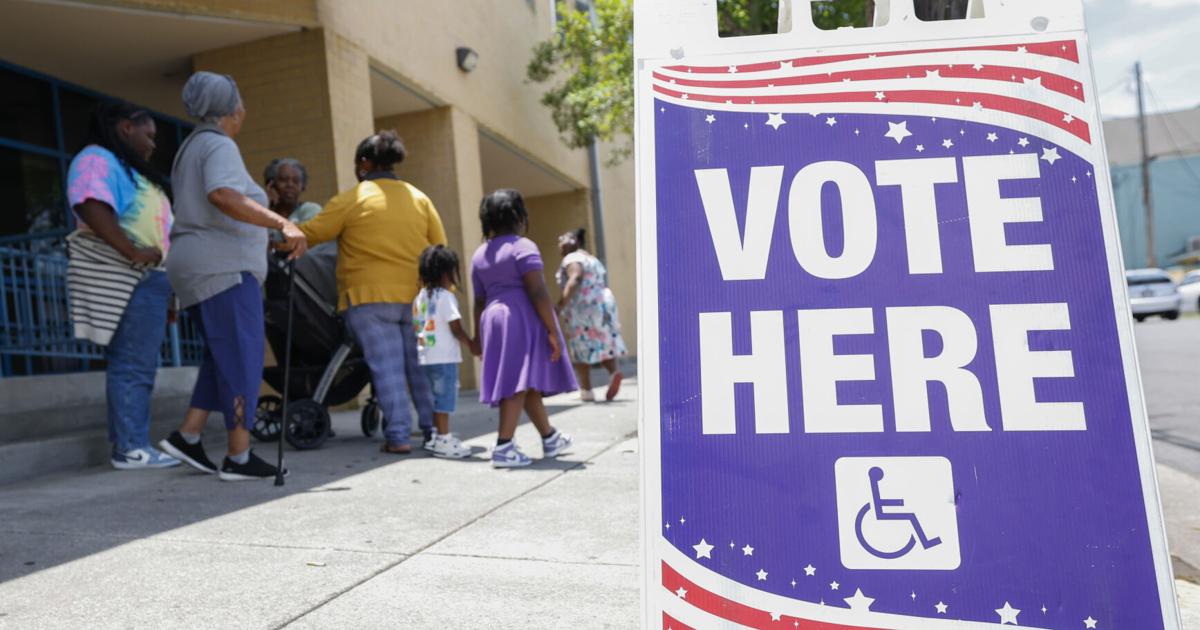
Louisiana’s election results show Julia Letlow leading the U.S. Senate race, with Bill Cassidy conceding defeat and John Fleming on track to force a runoff. All five constitutional amendments appear headed for failure, including a proposed pay raise for teachers that is trailing 43% to 56% and a St. George school district measure losing by about 62% to 38%. The article is primarily political reporting with limited direct market impact.
The immediate market implication is not the headline Senate shift itself, but the probability of a sharper populist/rightward tilt in Louisiana’s delegation and state policy machinery. That raises the odds of more aggressive fiscal conservatism at the state level, but the bigger second-order effect is on the teacher-pay amendment failure: it signals that “one-time” education stipends are unlikely to become sticky recurring compensation, which should pressure K-12 labor retention and increase the likelihood of another budget fight next session.
The St. George school-district defeat is more meaningful than it looks. It preserves the current district architecture, which avoids near-term administrative duplication and any incremental tax-base fragmentation, but it also keeps alive the underlying Baton Rouge suburban secession dynamic that can reappear in future cycles. The fact that the measure had to clear both statewide and parish thresholds means even modest local opposition can be enough to stop structural change, so this is a high-friction process with low conversion probability unless turnout demographics shift materially.
The most important risk catalyst is not election night but the next 30-90 days, when lawmakers and school boards have to translate these results into budget assumptions. If teacher compensation is not backfilled, expect pressure on staffing and bargaining across Louisiana education systems, which can ripple into charter operators, staffing vendors, and local service contractors. Conversely, a surprise special-session deal or alternate funding source would quickly reverse the negative read-through for education-related budgets.
Consensus may be underestimating how much the closed-primary confusion suppresses future participation among low-information and no-party voters. That creates a structural advantage for higher-propensity, more ideological voters in the next runoff and primary cycle, potentially making Louisiana contests less predictable and more candidate-quality driven. In that setting, the runoff is less about broad persuasion and more about who can consolidate a narrow, motivated coalition fastest.
AI-powered research, real-time alerts, and portfolio analytics for institutional investors.
Request DemoOverall Sentiment
neutral
Sentiment Score
-0.05
