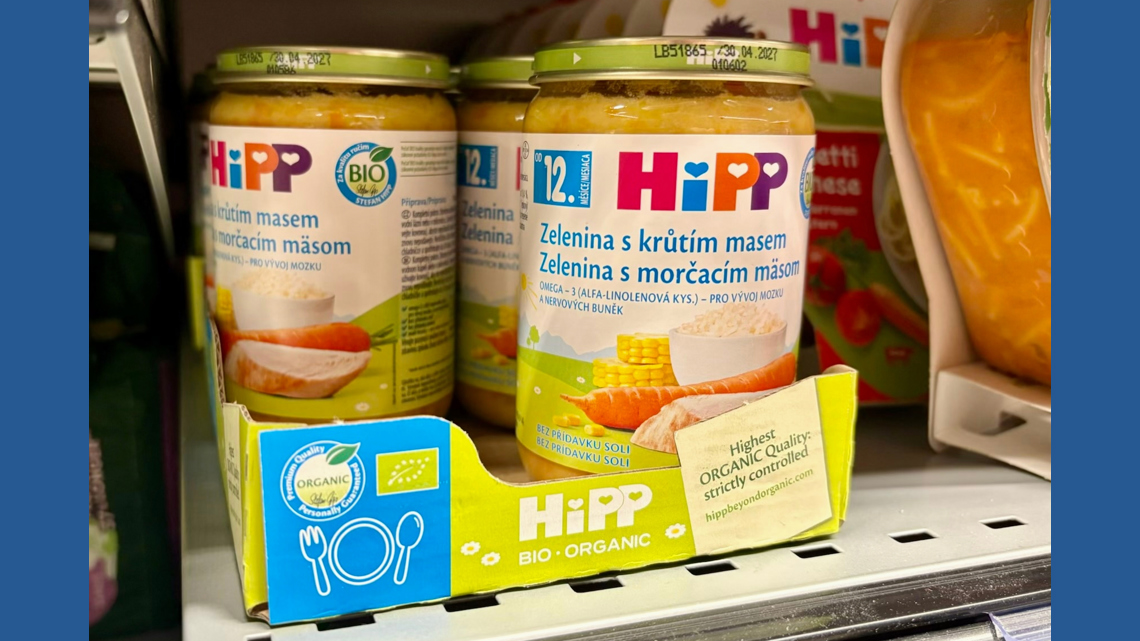
Rat poison was found in HiPP baby food jars sold across Austria, Slovakia, and the Czech Republic, prompting recalls and precautionary withdrawals from shelves. Authorities said the contaminated jars were 190-gram products for 5-month-old children sold at SPAR and other supermarkets, with possible tampering under criminal investigation. The incident creates a serious food safety and reputational hit for HiPP and a broader retail disruption in Central Europe.
This is a classic trust-shock event for a premium food brand: the direct financial hit is likely modest, but the second-order damage is in retailer behavior, shelf-space allocation, and parent willingness to repurchase the category. The immediate losers are the distributor/retail channel and any premium infant-food peers that trade on safety, provenance, and convenience; when those attributes are questioned, the category typically sees a temporary trade-down into private label, homemade alternatives, or rival brands with cleaner recall histories.
The more important catalyst is not the initial recall but the investigation timeline. If authorities frame this as tampering rather than manufacturing error, the liability path widens: enhanced security costs, potential civil claims, and a prolonged “headline overhang” that can persist for weeks even if product is fully removed. For public comparables, the margin risk is small in isolation, but investor focus can shift quickly if the incident implies broader quality-control weakness or requires cross-border remediation.
The market may be underestimating how fast retailers can weaponize this against supplier economics. Large grocery chains tend to demand reimbursement, promotional support, and more stringent vendor terms after food-safety events, which can compress gross margin for months and reduce planogram share at exactly the wrong time. The real operational risk is that the event migrates from a contained product recall into a category-wide procurement reset, especially in Central Europe where consumer trust and brand loyalty are more fragile in infant products.
Contrarian view: the selloff risk may be front-loaded if authorities continue to confirm that this is isolated tampering rather than a systemic production problem. In that case, the stock-level impact for any listed supplier would fade quickly, while the best trade may be relative rather than outright—short the retailer/brand most exposed to reimbursement and PR friction, not the whole baby-food shelf. The key is whether contamination remains a one-off criminal case or evolves into a broader food-safety narrative that changes buying behavior for one to two quarters.
AI-powered research, real-time alerts, and portfolio analytics for institutional investors.
Request DemoOverall Sentiment
strongly negative
Sentiment Score
-0.75
Ticker Sentiment
