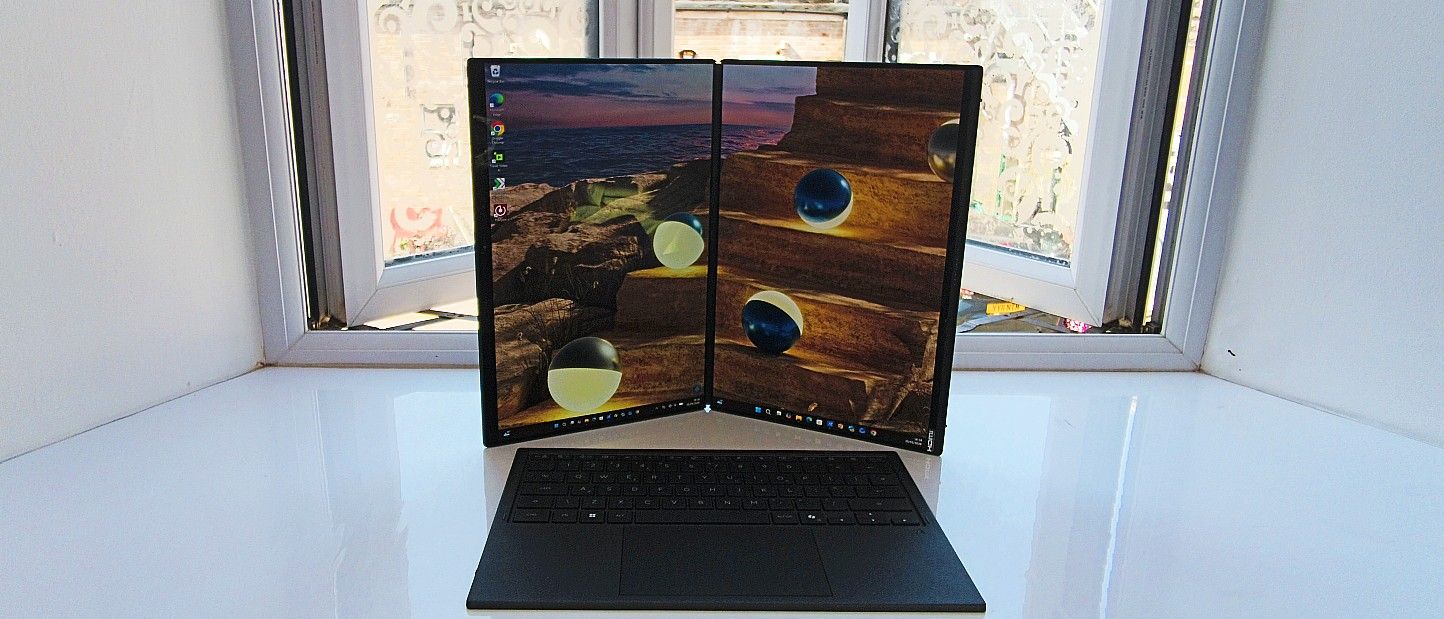
ASUS’s Zenbook Duo 2026 refresh adds Intel Core Ultra X9 388H Panther Lake performance, with a Geekbench 6 score of 3,036 single-core and 17,526 multi-core, plus a UL Procyon AI image generation score of 601. Battery life reached 14 hours 54 minutes in video playback, while dual 14-inch OLED screens and integrated AI features position it as a strong creator laptop. The main tradeoffs are no discrete GPU, limited ports, and a premium price of $2,699.99 / £2,500.
The immediate winner is less the laptop category than the x86 AI ecosystem. A credible, battery-efficient dual-screen workstation that can run meaningful local inference raises the perceived value of Intel’s AI PC stack and makes OEM attach rates for higher-end Panther Lake systems more realistic; that helps INTC at the margin because the message shifts from benchmark novelty to workflow utility. The second-order loser is any workflow still dependent on cloud rendering or hosted AI for “small but frequent” creative actions, because on-device execution compresses latency and reduces the need to pay recurring inference costs. The more interesting implication is for Apple. The article’s subtext is not that MacBook performance is weak, but that MacBook ergonomics remain a constraint for power users who think in parallel windows and pen input. That is a subtle share-risk vector for AAPL in creator and education segments where portability plus multitasking matter more than raw peak CPU, especially over the next 6-18 months as AI-native creative apps become less tolerant of missing touchscreen/pen support. The setup is bullish but not frictionless. The headline risk for INTC is that integrated NPU/Arc wins are still easily overwhelmed by any credible discrete-GPU workflow, so adoption may concentrate in a narrow “creator-on-the-move” niche rather than become a broad PC upgrade cycle. The contrarian view is that the market may be overestimating how quickly local AI meaningfully monetizes into PC unit demand; consumers often admire features but only enterprise fleet refreshes convert that admiration into volume. If Panther Lake drives better OEM pricing power, the first beneficiaries may be margin, not units.
AI-powered research, real-time alerts, and portfolio analytics for institutional investors.
Overall Sentiment
strongly positive
Sentiment Score
0.72
Ticker Sentiment
