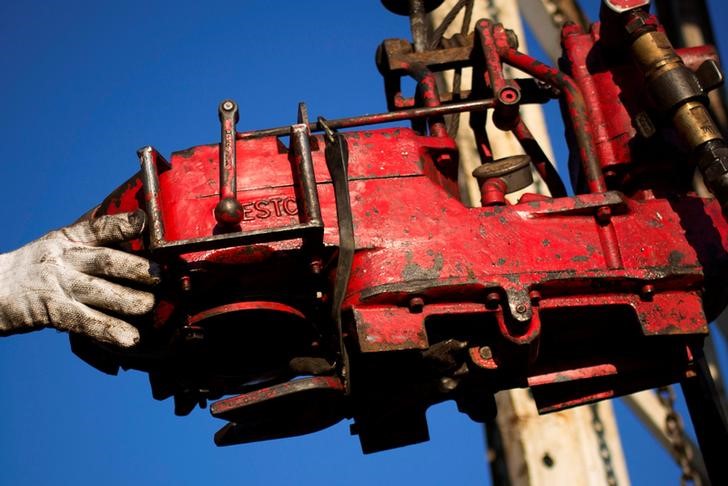
SLB, Baker Hughes and Halliburton flagged higher upstream spending and stronger post-war demand, but near-term results were pressured by the Middle East conflict. SLB’s Middle East and Asia revenue fell 10% to $2.69B and Baker Hughes’ regional revenue dropped 19% to $1.15B; Halliburton said Middle East revenue declined 12.7% and warned the conflict and Strait of Hormuz closure could cut current-quarter EPS by 7 to 9 cents. The article also cites 20% of global oil flows and 9 million barrels a day of production disrupted, with higher logistics and raw material costs.
The clean read-through is not “higher oil = buy the service names,” but that geopolitical tightening is pushing customers to protect optionality rather than maximize near-term efficiency. That shifts spend toward maintenance, intervention, deepwater, LNG, and North American projects where cycle times are shorter and permitting risk is lower, which structurally favors the highest-spec service providers and integrated project managers. The winners are likely the names with the best pricing power and the broadest international exposure once budgets re-open; the losers are more levered peers with heavier Middle East concentration and weaker mix.
The second-order effect is that disruption today may create a 12-24 month demand bridge, not just a one-quarter earnings pop. Forced rerouting and emergency repairs usually tighten the market for pressure pumping, valves, subsea equipment, and logistics capacity first, then convert into a second wave of sanctioned capex as operators rebuild buffers. That should support margins even if activity counts are choppy, because scarcity pricing in specialized equipment and labor tends to lag the headline commodity move by a couple of quarters.
The risk is that the market is extrapolating a durable capex cycle from a shock that could fade faster than expected if diplomacy restores flows or if demand destruction shows up in Asia. In that scenario, the trade becomes a “sentiment multiple” story rather than an earnings story, and the service stocks could mean-revert while oil remains elevated enough to pressure downstream customers. The more contrarian issue is that North America and LNG are already crowded consensus beneficiaries, so the better alpha may be in relative-value positioning rather than outright longs.
HAL looks like the most exposed operationally and the least clean in terms of regional mix, while SLB and BKR have the better setup for a post-shock reacceleration because they can monetize repairs, deepwater, and LNG sequencing. The market may be underestimating that restoration spending can be as important as greenfield investment when infrastructure has been interrupted, which extends the tail of the trade into 2027-2028 rather than ending with the conflict. However, if oil retraces sharply, the fastest compression will come from the service names that just rerated on narrative rather than revised long-cycle FCF expectations.
AI-powered research, real-time alerts, and portfolio analytics for institutional investors.
Request DemoOverall Sentiment
neutral
Sentiment Score
0.15
Ticker Sentiment
